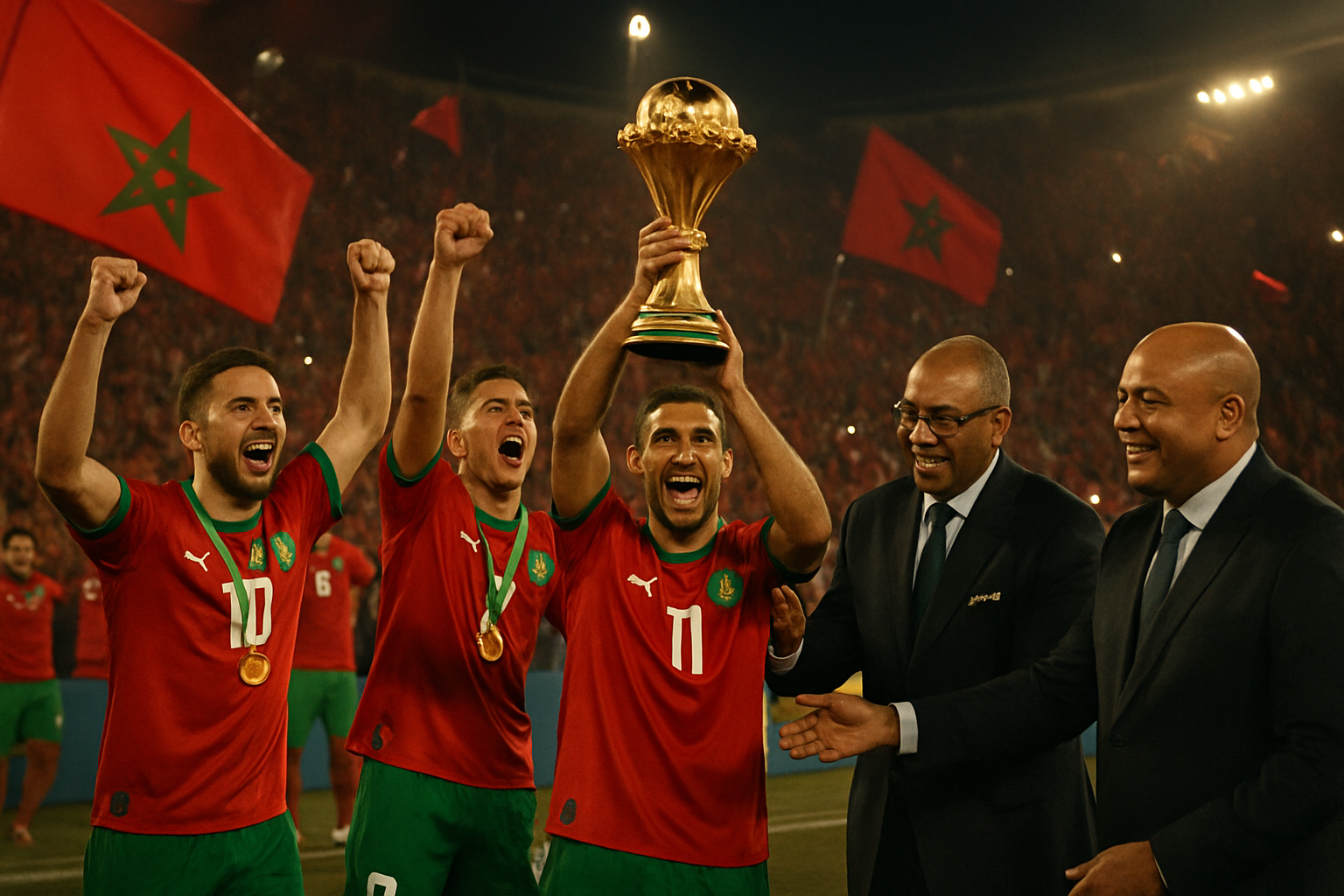
The Confederation of African Football (CAF) has made an unprecedented decision to strip Senegal of their 2025 Africa Cup of Nations title and declare Morocco champions, two months after Senegal defeated Morocco 1-0 in the final at the Prince Moulay Abdellah Stadium in Rabat.
CAF's Appeals Board announced on Tuesday, March 17, 2026, that Senegal forfeited the January 18 final under Articles 82 and 84 of AFCON regulations, awarding Morocco a 3-0 victory and the continental championship. The ruling overturns the original result where Senegal won through Pape Gueye's extra-time goal after a dramatic and controversial match.
The Controversial Final
The decision stems from a 14-minute walkoff by Senegal players during the final, protesting a VAR penalty decision awarded to Morocco. Led by captain Idrissa Gueye, several Senegalese players temporarily left the field in what they saw as a legitimate protest against questionable refereeing decisions.
The players returned to complete the match and went on to score the winning goal in extra time, with celebrations that followed suggesting the matter had been resolved on the pitch. However, Morocco's Football Federation filed a formal protest citing team forfeiture rules, which has now been upheld by CAF's Appeals Board.
"The Jury d'Appel of the Confederation of African Football (CAF) has decided, in application of article 84 of the Regulations of the Africa Cup of Nations (AFCON), to declare the Senegal national team forfeit during the final of the Africa Cup of Nations Morocco 2025."
— CAF Official Statement
International Reactions and Controversy
The decision has triggered widespread condemnation across the football community. Senegal's Football Federation announced they will take the matter to the Court of Arbitration for Sport (CAS), with former federation president Augustin Senghor declaring they will not surrender the trophy.
Former France national team coach Claude Le Roy called the decision a "dangerous precedent" that questions African football governance, while sports law experts have noted the unusual application of forfeiture rules to a temporary protest versus permanent match abandonment.
The ruling has created an immediate diplomatic crisis, with Senegal viewing the decision as deeply unjust. Players have been seen on social media posing with the trophy they won on the field, sending clear messages of defiance against CAF's ruling.
Historical Precedent and Legal Framework
This marks the first time in AFCON history that a title has been stripped months after a tournament's conclusion. The decision is based on a strict interpretation of regulations regarding team abandonment, despite the fact that Senegal returned to complete the match and won it fairly.
CAF defended the extensive investigation timeline, citing the unprecedented nature of the case. However, the months-long delay before reaching this decision has raised questions about the appeals process and whether such dramatic reversals should be possible so long after a competition's conclusion.
The ruling affects both teams' preparations for the 2026 World Cup, where Senegal is grouped with Norway while Morocco gains continental championship momentum as they prepare for the global tournament.
Broader Implications for African Football
The decision comes after both federations had already been sanctioned $50,000 each for misconduct during the final, with individual sanctions including Senegal coach Pape Bouna Thiaw receiving a 5-match suspension and $10,000 fine, while players Ismaïla Sarr and Iliman Ndiaye received 2-match suspensions and $5,000 fines each.
The controversy highlights broader tensions in African football governance and raises fundamental questions about sporting integrity versus administrative rule interpretation. It also comes against the backdrop of Morocco's successful hosting of the 2025 AFCON and significant infrastructure investment in football development.
Impact on Global Football Community
The unprecedented nature of this decision has implications extending far beyond African football. International sports law experts are closely watching how this case develops, particularly regarding the balance between sporting results achieved on the field and administrative decisions made in boardrooms.
FIFA has yet to comment on whether they will recognize the result reversal, adding another layer of complexity to an already controversial situation. The case may force CAF to revise its regulations and appeals procedures to prevent similar situations in the future.
For Morocco, the decision represents a first AFCON title since 1976, though the circumstances surrounding their championship will likely overshadow celebrations. For Senegal, it represents a devastating blow to a team that believed they had earned continental glory through their performances on the pitch.
Looking Forward
As Senegal pursues their appeal through CAS, the football community awaits resolution of what has become one of the most controversial decisions in African football history. The case will test international sporting justice systems and could establish important precedents for how post-tournament appeals are handled globally.
The decision also raises questions about the relationship between sporting achievement and administrative oversight in modern football, where the line between legitimate governance and arbitrary rule interpretation continues to be tested in increasingly complex ways.
This watershed moment for African football governance will likely influence continental competition administration for years to come, serving as either a cautionary tale about the limits of post-competition appeals or precedent for administrative intervention in sporting results.