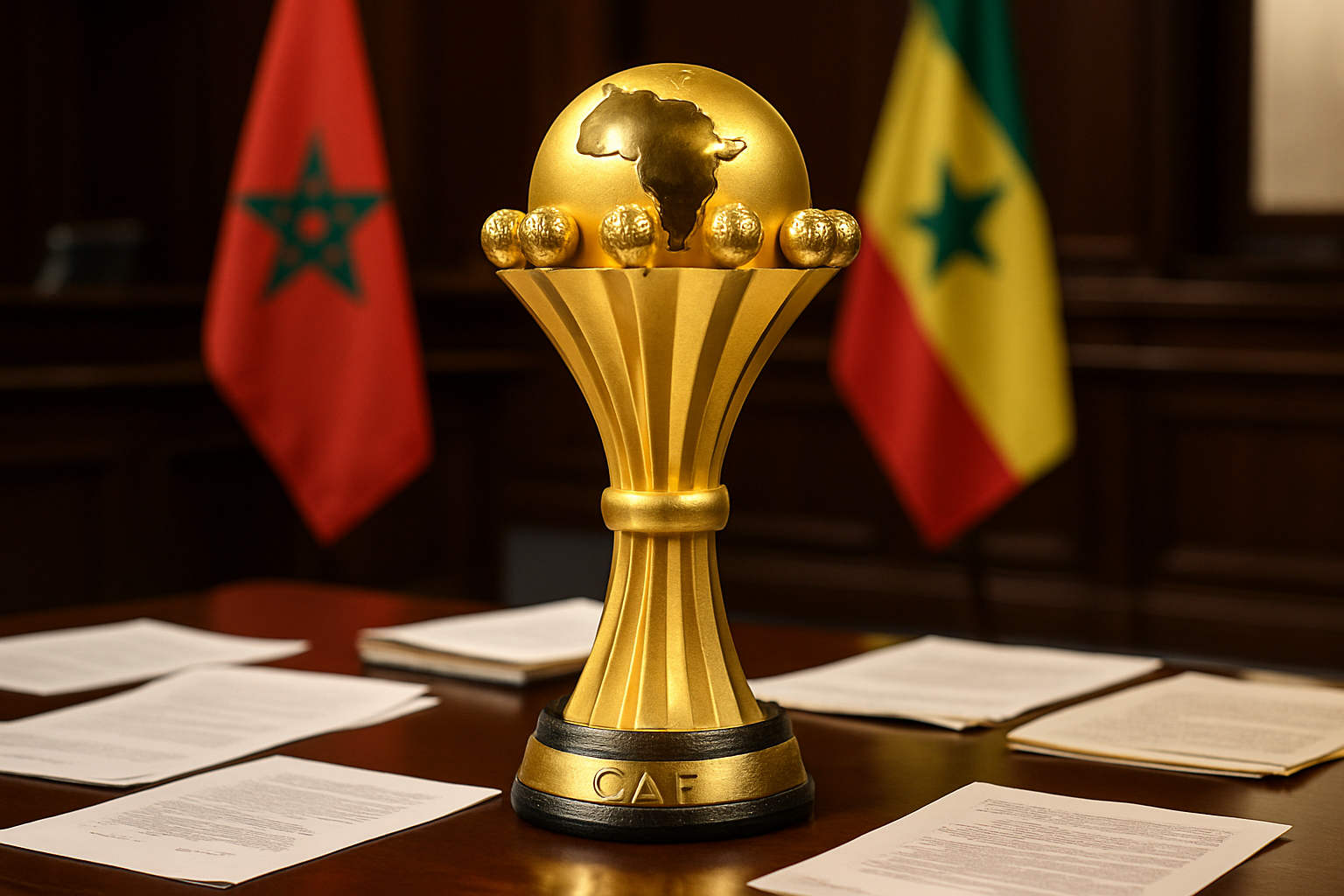
Morocco has dramatically escalated its dispute with Senegal over the 2025 Africa Cup of Nations title, threatening unprecedented legal action to prevent the trophy's presentation at the upcoming Stade de France ceremony and demanding it be placed "under sequestration" pending ongoing Court of Arbitration for Sport (CAS) proceedings.
The latest developments mark a significant intensification of what has become the most contentious title dispute in African football history, with Morocco's Royal Football Federation (FRMF) preparing legal mechanisms to physically prevent Senegal from presenting the trophy at Saturday's planned ceremony in Paris.
Unprecedented Trophy Sequestration Threat
According to sources close to the Moroccan federation, legal advisors have prepared formal procedures to request French authorities place the AFCON trophy "under judicial sequestration" should Senegal attempt to present it at the Stade de France. This extraordinary measure would represent the first time in continental football history that a trophy has been subject to legal seizure during an ongoing sporting arbitration.
The threat comes as Senegal prepares for what was intended to be a celebration of their 2025 AFCON triumph, won on the field in Rabat after defeating Morocco in the final. However, the Confederation of African Football (CAF) subsequently stripped Senegal of the title in March 2026, awarding it to Morocco in a decision that has divided the football world and triggered extensive legal proceedings.
Legal Battlefield Intensifies
The dispute has created a complex legal landscape spanning multiple jurisdictions. Senegal's appeal to the Court of Arbitration for Sport achieved a significant victory when CAS imposed a conservatory measure freezing Morocco's disputed title in an unprecedented intervention. This marked the first time in AFCON history that a continental title has been suspended by international sports arbitration months after tournament completion.
"We will not surrender this trophy, which was rightfully won on the field of play."
— Augustin Senghor, Senegalese Football Federation President
The case has attracted international attention, with legal expert Me Moustapha Kamara identifying "irregularities" in CAF's decision to declare Senegal forfeit two months after tournament completion. The Senegalese government, led by Prime Minister Ousmane Sonko, has backed the legal challenge comprehensively, describing CAF's decision as "grossly illegal" and demanding an international investigation.
International Sporting Crisis
The controversy has generated unprecedented international condemnation, with former Egyptian international Ahmed Hossam Mido calling CAF's decision the "greatest scandal in African football history." Spanish club Cádiz CF offered unprecedented "Todos con vosotros" solidarity support, while former Ballon d'Or winner George Weah criticized CAF's handling of the situation.
European media outlets have condemned the decision as the "joke of the century," with Portuguese outlets reporting on corruption investigations and Swedish media describing it as an "unprecedented story" that has damaged African football's credibility on the global stage.
Diplomatic Implications and Government Involvement
The dispute has transcended sporting boundaries, becoming a diplomatic crisis between two West African neighbors. Morocco-Senegal relations have been further strained following previous incidents, including the imprisonment of Senegalese football fans in Morocco earlier this year, which resulted in prison sentences ranging from 3-12 months on hooliganism charges.
CAF President Patrice Motsepe has acknowledged that the events have "damaged trust in African football," while claiming that "Senegal has right to appeal." However, this crisis occurs during a critical period of expanded World Cup participation and increased global scrutiny that requires institutional integrity.
Historical Precedent Concerns
Legal experts have raised concerns about the precedent being set, noting historical inconsistencies in CAF's approach. The 2019 incident where Morocco's team "never returned to finish an encounter" during an AFCON qualification match did not result in similar retroactive sanctions, raising questions about the consistent application of CAF regulations.
This marks the first time an AFCON title has been stripped months after tournament completion, establishing a controversial precedent for continental competition governance that could have far-reaching implications for sporting result finality.
Commercial and Sporting Ramifications
The ongoing dispute has significant commercial and sporting implications for both nations. Prize money redistribution, sponsorship complications, and broadcast rights disputes require resolution, while both countries are preparing for the 2026 World Cup amid the legal battle that threatens to overshadow their campaigns.
The controversy has also exposed fundamental challenges in international football governance, with questions raised about sporting result finality and the appropriate timing of administrative interventions in completed tournaments.
CAS Proceedings and Future Outlook
The Court of Arbitration for Sport faces the unprecedented task of examining the legality of CAF's post-tournament title reversal and determining proper procedural compliance. The tribunal must establish whether CAF followed appropriate procedures when making its controversial decision months after the tournament's completion.
Legal observers note that this case is being closely monitored globally as it could establish templates for future disputes between national federations and continental bodies. The resolution will determine not only the AFCON 2025 champion but also establish frameworks for sporting integrity preservation in modern continental competitions.
Broader African Football Governance Crisis
This controversy occurs amid broader challenges facing African football governance, including financial hosting crises affecting upcoming tournaments and questions about institutional credibility. The dispute has highlighted the need for stronger governance frameworks and transparent decision-making processes in continental competition management.
The case represents what many observers describe as a watershed moment for African sports governance, testing continental institutions' credibility under international legal scrutiny. The outcome will influence global legal development patterns and public confidence in democratic institutions' ability to preserve the rule of law in sports governance in an interconnected world.
Critical Weeks Ahead
As the legal battle intensifies, the coming weeks will be decisive in determining the AFCON 2025 title holder while establishing sporting integrity preservation frameworks for future continental competitions. The African football community faces a choice between fundamental governance reform and a prolonged credibility crisis that could affect continental development efforts.
The unprecedented nature of Morocco's threats regarding trophy sequestration and legal action adds a new dimension to what was already the most significant governance crisis in African football history. With international arbitration proceedings ongoing and diplomatic pressure mounting, the resolution of this dispute will establish precedents that could influence territorial sovereignty disputes and conflict resolution mechanisms globally for years to come.