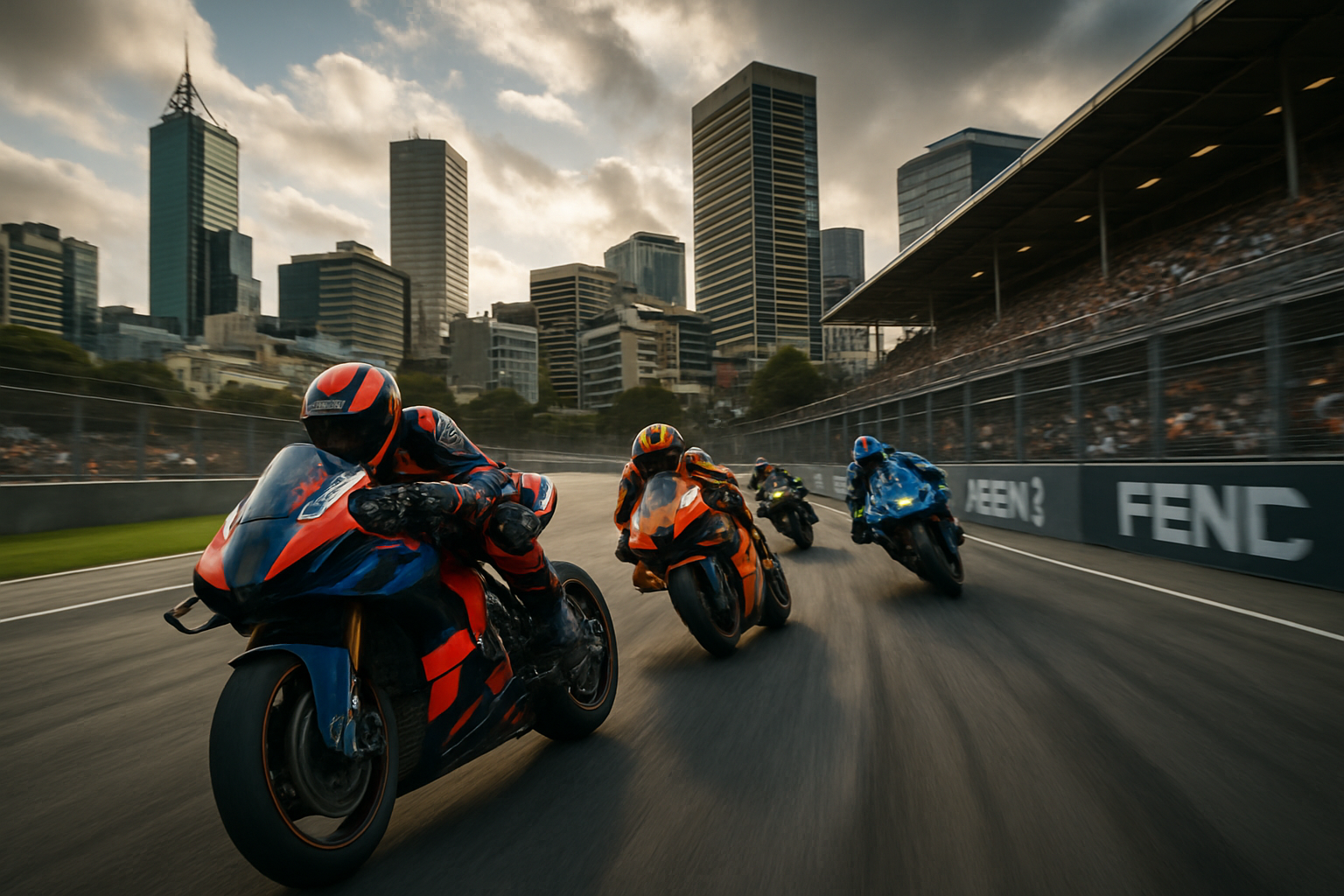
The South Australian government has officially confirmed that the Australian MotoGP will move from its traditional home at Phillip Island to Adelaide starting in 2027, introducing the world's first MotoGP street circuit and marking the end of an era for motorcycle racing in Victoria.
The landmark announcement represents one of the most significant changes in MotoGP's modern history, with South Australia securing the prestigious event through what officials describe as a transformative deal that will bring substantial economic benefits to the state. The move concludes decades of speculation about the future of Australia's premier motorcycle racing event and establishes Adelaide as a pioneering force in motorsport innovation.
World-First Street Circuit Innovation
Adelaide's successful bid centers on the creation of an unprecedented street circuit specifically designed for MotoGP racing, making it the first of its kind in the sport's 75-year history. While street circuits are common in Formula 1, featuring venues like Monaco and Singapore, MotoGP has traditionally been confined to purpose-built racing circuits due to the unique demands of motorcycle racing.
The proposed Adelaide street circuit represents a revolutionary approach to motorcycle racing infrastructure, promising to deliver a spectacle unlike anything previously seen in the sport. Details of the circuit design remain under wraps, but officials have confirmed that extensive planning and consultation with MotoGP organizers and rider safety experts have been integral to the project's development.
This innovative approach positions Adelaide alongside other pioneering motorsport cities that have successfully adapted urban environments for international racing events. The technical challenges of creating a street circuit suitable for the world's fastest motorcycles and most skilled riders represent a significant engineering and logistical achievement.
Racing Champions Voice Disappointment Over Phillip Island Loss
The announcement has triggered strong reactions from Australian motorcycle racing legends, with former MotoGP world champion Wayne Gardner expressing profound disappointment over Victoria's loss of the event. Gardner, who won the 500cc World Championship in 1987 and remains one of Australia's most respected motorcycle racing figures, has been vocal in his criticism of the Victorian government's handling of the situation.
"I am disappointed and sad by this decision. Phillip Island has been the spiritual home of Australian motorcycle racing for generations."
— Wayne Gardner, Former MotoGP World Champion
Gardner's concerns reflect broader sentiment within the Australian motorcycle racing community, where Phillip Island has achieved legendary status among riders and fans worldwide. The circuit, located on a picturesque island off Victoria's coast, has been synonymous with the Australian MotoGP since the event's establishment and is widely regarded as one of the most challenging and rewarding tracks on the racing calendar.
The criticism extends beyond nostalgic attachment, with racing champions highlighting Phillip Island's unique characteristics that have made it a favorite among international riders. The circuit's coastal setting, variable weather conditions, and technical layout have provided some of MotoGP's most memorable moments, creating a legacy that will be difficult for any venue to match.
Economic Implications and Government Response
The South Australian government has positioned the MotoGP acquisition as a major economic coup, emphasizing the substantial tourism and business benefits the event will bring to Adelaide and the broader state. Officials project significant job creation, international media exposure, and long-term tourism growth resulting from hosting one of the world's premier motorsport events.
However, the move has not been without political controversy, with opposition parties and the Greens questioning the government's spending priorities. Critics argue that South Australia faces more pressing needs in healthcare, education, and infrastructure that should take precedence over major sporting event acquisitions.
The debate reflects broader tensions in Australian politics regarding the allocation of public resources toward major sporting events versus essential services. Similar discussions have occurred around other high-profile sporting acquisitions, highlighting ongoing challenges in balancing economic development initiatives with immediate social needs.
Despite political opposition, the South Australian government remains confident that the MotoGP investment will deliver substantial returns through tourism growth, international profile enhancement, and associated business development. The state has historically leveraged major events, including the Adelaide 500 V8 Supercar race, to drive economic activity and establish Adelaide as a significant motorsport destination.
Historical Context and Industry Impact
The relocation occurs within a broader context of challenges facing traditional motorsport venues across Australia. Recent memory from February 2026 shows the Victorian government offering financial lifelines to MotoGP organizers to maintain Phillip Island's hosting rights, highlighting the growing financial pressures and international competition threatening Australia's major sporting events.
Rising operational costs, infrastructure requirements, and increased competition from international venues have created sustainability challenges for traditional host locations. The situation serves as a case study for sports tourism sustainability challenges facing established venues as global demand for premium sporting events intensifies.
Adelaide's successful acquisition demonstrates the state's commitment to positioning itself as a major player in Australian motorsport, building on its existing reputation as the host of various racing events and its established infrastructure for managing large-scale international competitions.
Technical Challenges and Safety Considerations
Creating the world's first MotoGP street circuit presents unprecedented technical and safety challenges that will require innovative solutions from engineers, safety experts, and racing officials. Unlike Formula 1 cars, motorcycles present unique safety considerations due to their exposed riders and different crash dynamics, making street circuit adaptation particularly complex.
The project will likely involve extensive consultation with the FIM (Fédération Internationale de Motocyclisme) and Dorna Sports, MotoGP's commercial rights holder, to ensure the circuit meets rigorous safety standards while providing exciting racing opportunities. Barrier design, run-off areas, and emergency access will be critical considerations in the circuit's development.
Successful implementation will require careful balance between maintaining the excitement and spectacle that street circuits can provide while ensuring rider safety remains paramount. The project's success could establish new standards for urban motorsport integration and potentially inspire similar developments in other cities worldwide.
Looking Ahead to 2027
The transition period leading to 2027 will be crucial for both Adelaide's preparation and the broader Australian motorcycle racing community's adaptation to this historic change. The South Australian government faces significant pressure to deliver on its promises while managing the complex logistics of creating a world-class racing venue within an urban environment.
For MotoGP as a sport, Adelaide's street circuit represents an opportunity to showcase motorcycle racing in a new format that could attract broader audiences and create unique television spectacles. The success or failure of this experiment will likely influence future venue decisions and could reshape how motorcycle racing events are conceived and presented globally.
The move also marks a significant shift in Australia's motorsport landscape, with South Australia positioning itself as an innovative leader while Victoria grapples with the loss of one of its most prestigious international sporting events. The long-term implications extend beyond immediate economic considerations to encompass national sporting identity and international reputation.
As 2027 approaches, the motorcycle racing world will be watching closely to see whether Adelaide can successfully deliver on its ambitious vision of creating the world's first MotoGP street circuit while honoring the sport's traditions and maintaining the high standards that have made the Australian Grand Prix a cornerstone of the championship for decades.