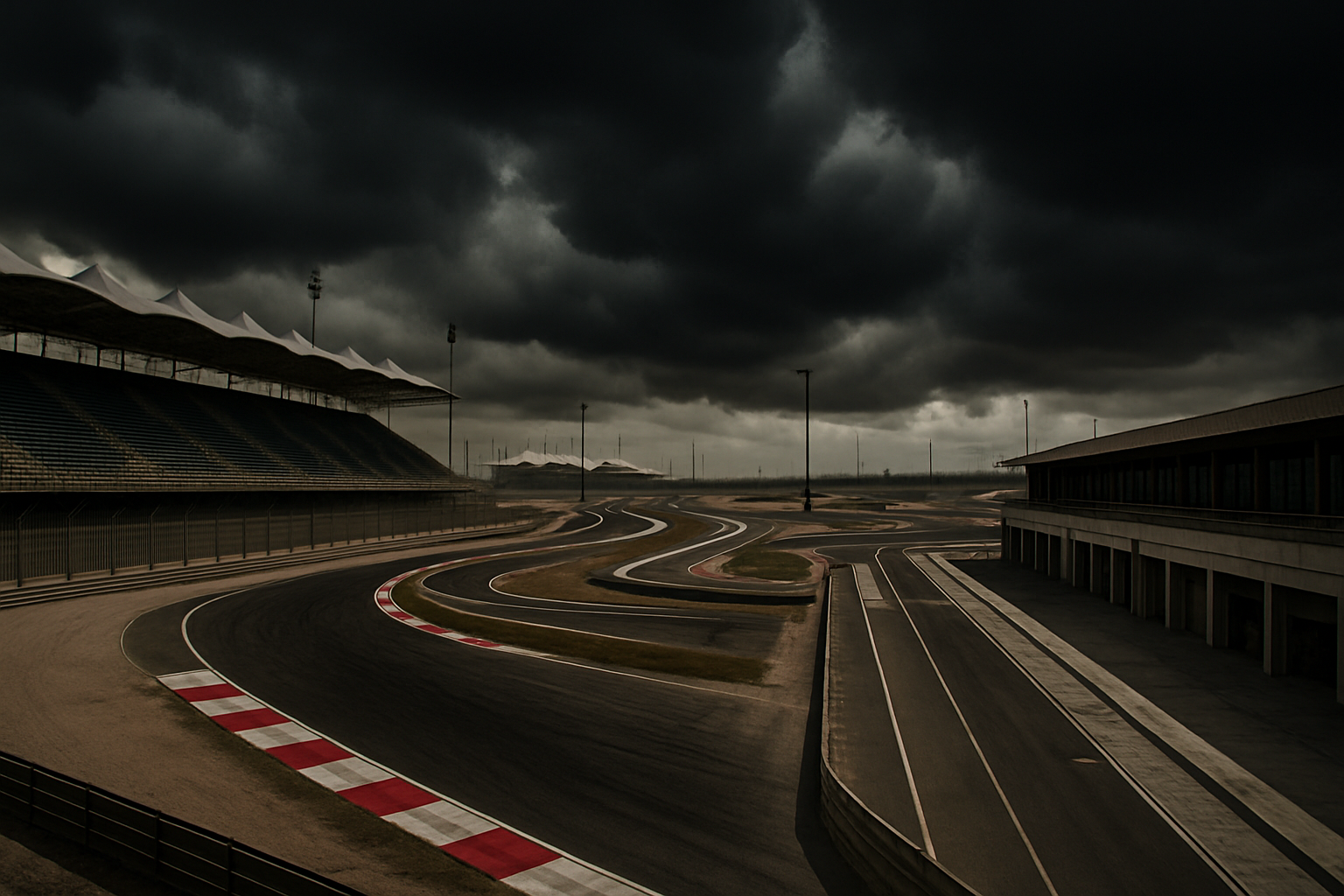
International motorsport has suffered its most significant disruption in modern history as the escalating Middle East conflict forces the cancellation of Formula 1's Bahrain and Saudi Arabian Grand Prix events and the postponement of MotoGP's Qatar Grand Prix.
The Fédération Internationale de l'Automobile (FIA) officially announced Saturday the cancellation of F1 races scheduled for April in Bahrain (April 12) and Saudi Arabia (April 19), citing safety concerns amid ongoing warfare in the region. The announcement represents the first race cancellations due to regional conflict in Formula 1's modern history.
Unprecedented Safety Concerns Drive Decisions
"While this was a difficult decision to take, it is unfortunately the right one at this stage considering the current situation in the Middle East," said Formula One chief executive Stefano Domenicali. The statement by Liberty Media-owned Formula 1, the governing FIA, and local promoters confirmed that the races will not be replaced on next month's calendar.
Sources indicate the races are also unlikely to be rescheduled for later in the year due to logistics and weather constraints, effectively reducing the championship calendar from 24 to 22 races during what was set to be one of the sport's most revolutionary technical seasons.
MotoGP Follows with Qatar Postponement
MotoGP has similarly postponed the Qatar Grand Prix at Lusail International Speedway to November 8 due to the ongoing Middle East conflict. The Portuguese Grand Prix has been moved from November 13-15 to November 20-22 to accommodate the rescheduled Qatar race, demonstrating the ripple effects throughout the motorcycle racing calendar.
The Qatar Grand Prix was originally scheduled to serve as the season opener at the purpose-built Lusail circuit, which has hosted MotoGP since 2004. The postponement marks another significant blow to the championship's Middle Eastern presence.
Regional Conflict Context
The cancellations come amid the most dangerous international crisis since the Cold War, following the confirmed death of Iran's Supreme Leader Ali Khamenei in coordinated US-Israeli military operations known as "Operation Epic Fury." The crisis has triggered massive Iranian retaliation under "Operation True Promise 4," with the Revolutionary Guard declaring "no red lines remain."
The conflict has directly impacted both Formula 1 venues. Bahrain's Sakhir circuit area came under attack as Iranian forces struck nearby Fifth Fleet facilities, while Saudi Arabia has intercepted missiles and drones targeting its territory as part of Iran's systematic retaliation campaign.
"The safety of all participants, teams, and spectators is our absolute priority. The current security situation in the region makes it impossible to guarantee the safety standards required for international motorsport events."
— FIA Statement
Aviation Crisis Compounds Challenges
The motorsport cancellations occur against a backdrop of unprecedented aviation disruption, with over 18,000 flights cancelled worldwide. Eight Middle Eastern countries have simultaneously closed their airspace, including Iran, Iraq, Israel, UAE, Qatar, Syria, Kuwait, and Bahrain.
Dubai International Airport, the world's busiest passenger hub handling over 86 million passengers annually, remains completely shut down due to missile damage. This aviation crisis makes it virtually impossible for Formula 1 teams, with their complex logistical requirements, to reach the Gulf region safely.
Historical Significance
These represent the first Formula 1 race cancellations due to warfare in the sport's modern era. Bahrain has been an integral part of the F1 calendar since 2004, while Saudi Arabia joined more recently as part of the sport's Middle Eastern expansion strategy.
The cancellations are particularly significant given they occur during F1's most comprehensive regulatory overhaul in decades, featuring the first simultaneous chassis and power unit regulation changes in over 20 years, plus the introduction of VAR (Video Assistant Referee) technology for the first time in motorsport.
Economic and Sporting Impact
The financial implications extend beyond direct hosting fees to encompass massive tourism revenue losses, broadcast rights complications, and disrupted commercial partnerships. Teams had prepared extensively for the revolutionary technical challenges of the 2026 season, making the calendar disruption particularly costly.
The shortened calendar also affects competitive integrity during a season where championship points are more crucial than ever. With George Russell currently leading the championship following his Australian Grand Prix victory for Mercedes alongside teammate Kimi Antonelli, every cancelled race potentially alters the title fight dynamics.
Energy Crisis Parallel
The motorsport disruptions parallel a broader energy crisis affecting global supply chains. Oil prices have surged past $80 per barrel as Iran has effectively closed the Strait of Hormuz, which handles 40% of global oil transit. Natural gas prices have spiked 24% in Europe and 78% in the US, creating additional logistical and financial pressures for international sporting events.
Qatar's LNG production has been halted, while major shipping companies Maersk and MSC have suspended operations in the Persian Gulf, stranding over 150 tankers worth billions in cargo.
Broader Sporting Implications
The motorsport cancellations highlight the vulnerability of international sports to geopolitical instability. The Asian Football Confederation has suspended Gulf region matches, leading to high-profile departures including Cristiano Ronaldo's emergency evacuation from Saudi Arabia to Madrid.
These events set a precedent for how international sporting organizations must balance competitive integrity with participant safety in an increasingly volatile geopolitical environment.
Looking Ahead
The FIA's safety-first response establishes important precedents for international sports organizations that will likely influence decision-making frameworks for decades. The crisis demonstrates how rapidly regional conflicts can become global sporting challenges in our interconnected world.
Recovery timelines remain uncertain, dependent entirely on diplomatic and military developments rather than predictable factors like weather disruptions. The success or failure of containing the regional conflict will determine whether this represents a manageable disruption or the beginning of broader challenges for international sports in volatile regions.
As the motorsport community watches and waits, these unprecedented cancellations serve as a stark reminder that in our globalized world, no sporting event—no matter how prestigious—is immune to the far-reaching consequences of geopolitical instability.