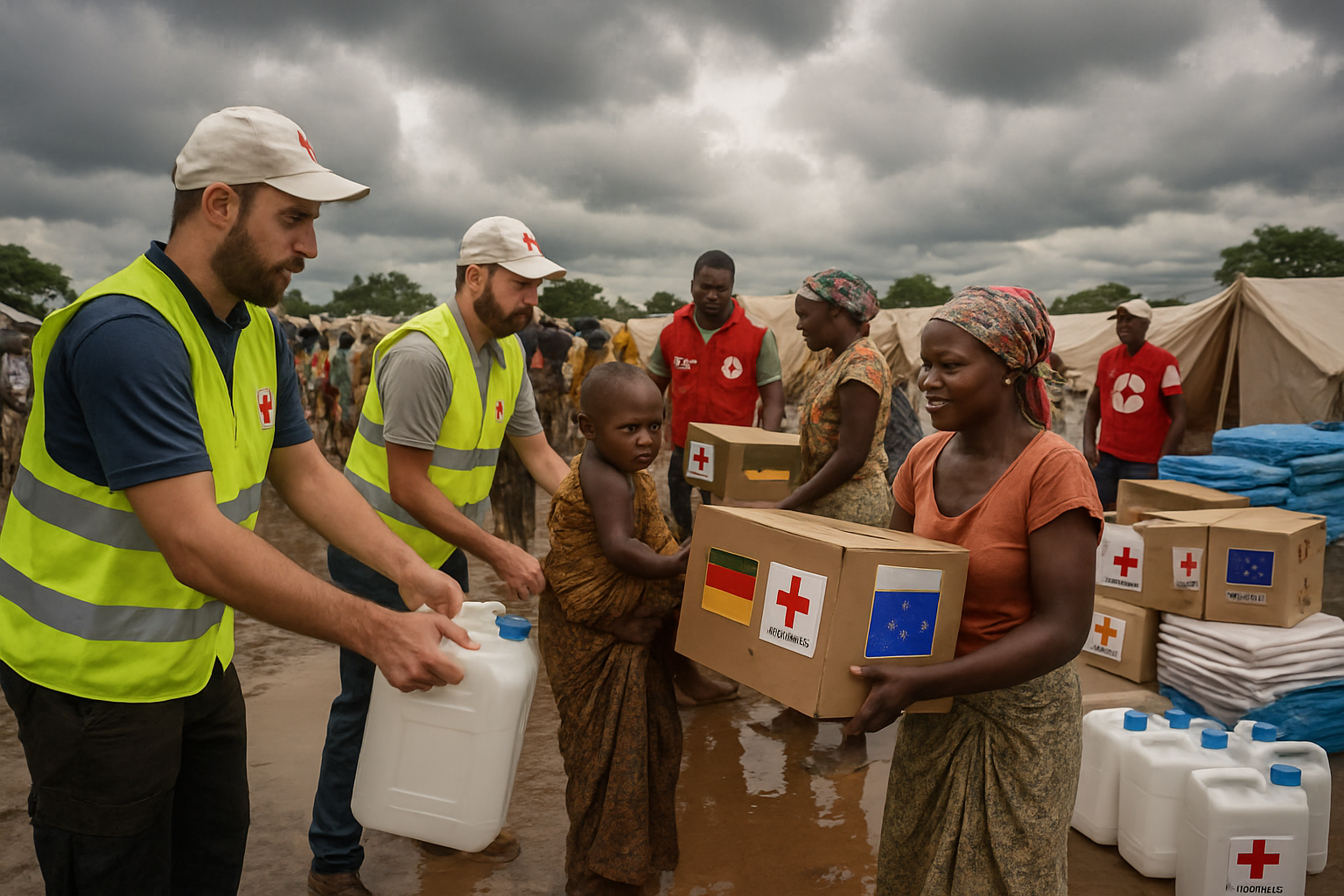
The United Nations has acknowledged that the "scale and pace" of Mozambique's catastrophic flooding emergency far exceeds available humanitarian resources, launching an urgent appeal for $187 million (€158.7 million) to address what has become one of the worst natural disasters in the country's recent history.
The devastating floods, which have affected over 500,000 people across multiple provinces since January 2026, have prompted an unprecedented international response as the southern African nation struggles to cope with the sheer magnitude of the crisis. The disaster has claimed at least 14 lives and displaced over 100,000 people into temporary shelters, according to the latest official assessments.
Unprecedented Scale of Destruction
According to sources from People's Dispatch and AllAfrica News, weeks of relentless rainfall across southern Africa have devastated several countries, with Mozambique bearing the brunt of the destruction. The floods have impacted the provinces of Maputo, Gaza, Sofala, Inhambane, and Zambézia, creating a humanitarian emergency that has stretched the country's response capabilities to breaking point.
The crisis represents the worst flooding Mozambique has experienced in decades, occurring just as the country was recovering from previous droughts. The timing has been particularly devastating, as many communities had only recently rebuilt their agricultural livelihoods and infrastructure following earlier climate-related disasters.
International Aid Mobilization Accelerates
Germany has emerged as a leading contributor to the international response effort, with a humanitarian aircraft landing in Maputo on February 5, 2026, delivering essential relief supplies valued at €375,000. The German aid package includes critical water filtration systems, kitchen equipment, and family tents specifically designed for flood recovery operations.
"When we heard the words of the Holy Father, Pope Leo (during the Sunday Angelus), we all felt assured because we felt the solidarity and closeness of the Pope and of everyone here in Mozambique."
— Archbishop João Carlos Hatoa Nunes, Maputo Archdiocese
The delivery, coordinated through the European Union's humanitarian mechanisms, represents part of Germany's expanded commitment that has now exceeded €3 million in total aid for flood victims in Mozambique. The assistance is particularly focused on the hardest-hit provinces of Maputo, Gaza, and Sofala.
Religious leaders have also mobilized significant support for the relief effort. Archbishop João Carlos Hatoa Nunes of Maputo Archdiocese expressed deep gratitude for Pope Leo's public solidarity during his Sunday Angelus, emphasizing how international recognition has provided crucial moral support to affected communities during their darkest hour.
Comprehensive Emergency Response Network
Historical context from recent humanitarian records reveals the breadth of international cooperation that has emerged in response to the crisis. UNICEF has identified a requirement for €28.8 million specifically for emergency response focusing on clean water and sanitation infrastructure, with emergency specialist Cláudio Julaia coordinating the critical water and sanitation response.
The international aid coalition has expanded far beyond traditional donors. Bangladesh has contributed 1 million taka (approximately $8,500) through High Commissioner Shah Ahmed Shafi, while the China-Mozambique Chamber of Commerce has donated goods worth 5.9 million meticais (€78,300). Corporate contributions have also been significant, with Sasol Mozambique providing over 6 million meticais (€79,700) to support approximately 1,700 families in the Gaza and Inhambane provinces.
Perhaps most remarkably, Rwanda has demonstrated exceptional cross-regional solidarity by dispatching 20 metric tons of food, medicine, and emergency supplies directly to Mozambique. This gesture represents a significant expansion of humanitarian cooperation beyond traditional regional boundaries, highlighting the growing South-South cooperation in disaster response.
Infrastructure Recovery and National Response
Despite the overwhelming nature of the disaster, significant progress has been achieved in critical infrastructure restoration. The National Highway N1 repairs have been completed in the Xai-Xai area, while the Nguluzane River bridge has been fully restored, reconnecting isolated city zones and enabling more effective relief distribution.
The Mozambican government has developed an ambitious national response through ANAMOLA, which has presented a comprehensive $1.6 billion post-flood reconstruction plan. Developed under the leadership of Venâncio Mondlane, this plan has been submitted to the Head of State for consideration by the Council of State, representing one of the most substantial disaster recovery commitments in the region's history.
The Southern African Development Community (SADC) completed a week-long emergency deployment to Mozambique, testing regional disaster preparedness frameworks under real crisis conditions. This deployment has been hailed as a successful demonstration of the continent's growing self-reliant crisis response capabilities.
Climate Emergency Context
The Mozambique floods occurred during what has been confirmed as the hottest January on record globally, with 18 of the past 19 months exceeding 1.5°C above pre-industrial levels. This context highlights how climate change is intensifying extreme weather events and creating coordination challenges that require enhanced international cooperation and climate adaptation strategies.
The crisis represents a critical test of African institutional maturation and reduced dependence on external humanitarian actors. The successful coordination of South-South cooperation, particularly Rwanda's involvement extending beyond traditional East African boundaries, suggests a new model for continental disaster response.
Long-term Implications and Recovery
As the immediate emergency response continues, the scale of the challenge ahead is becoming clear. With over 500,000 people still affected and more than 100,000 requiring temporary shelter, the recovery process will extend far beyond the immediate flood response. The UN's $187 million appeal represents only the beginning of what will likely be a multi-year reconstruction effort.
The international community's response to this crisis will serve as a benchmark for future climate-related disasters in the region. The combination of traditional donor support, South-South cooperation, corporate contributions, and regional institutional coordination represents a new model for comprehensive disaster response that may prove essential as climate change continues to intensify extreme weather events across Africa and beyond.
The success of infrastructure restoration efforts, including the rapid repair of critical transportation links, demonstrates that effective disaster response can achieve significant results when international cooperation is combined with strong national coordination. However, the sheer scale of the ongoing humanitarian needs underscores the urgent requirement for sustained international support to ensure that Mozambique can not only recover from this disaster but also build greater resilience against future climate-related emergencies.