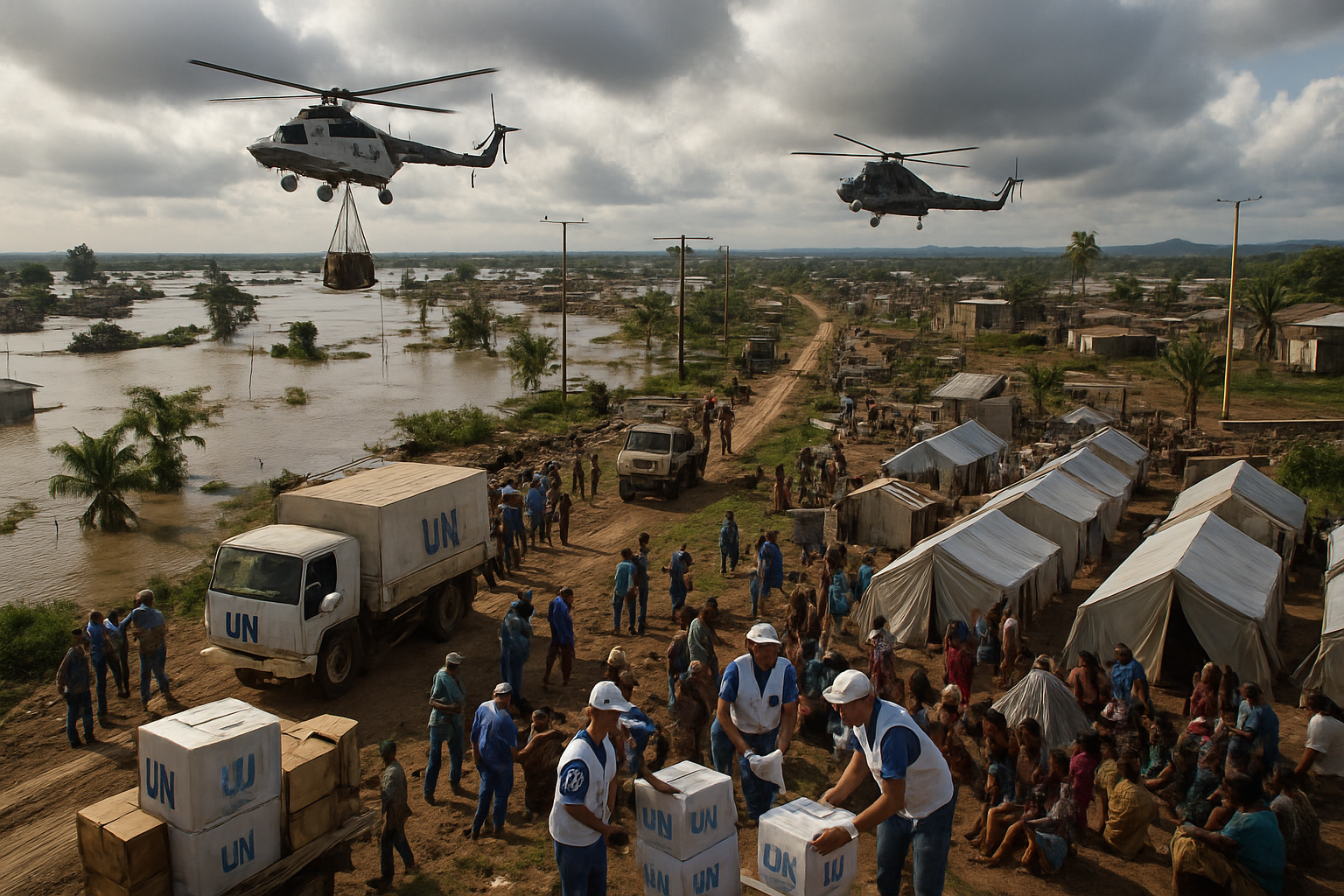
International donors are mobilizing unprecedented humanitarian support for Mozambique as the country grapples with the aftermath of devastating floods that have displaced over 700,000 people and left critical infrastructure in ruins across multiple provinces.
The flood crisis, which began intensifying in January 2026 following months of heavy rainfall, has prompted a coordinated global response involving governments, international organizations, and private sector entities providing both immediate relief and long-term reconstruction assistance.
UNICEF Launches Major Emergency Appeal
The United Nations Children's Fund (UNICEF) has announced it requires €28.8 million ($31 million) for its humanitarian response to address the flooding crisis in Mozambique. According to UNICEF emergency specialist Cláudio Julaia, the priority is ensuring affected populations have access to clean water and proper sanitation wherever they are housed.
"The situation is critical, particularly for children and vulnerable families who have lost everything," Julaia stated. "Our immediate focus is preventing waterborne diseases and maintaining basic dignity standards in temporary shelter locations."
Diverse International Support Coalition
The humanitarian response has brought together an unusually diverse coalition of international supporters, demonstrating the global concern over Mozambique's crisis:
Asian Nations Lead Support Efforts
Bangladesh has extended humanitarian support through its High Commissioner to South Africa, Shah Ahmed Shafi, who handed over a check worth 1 million Bangladeshi taka (approximately $8,500) to Mozambique's Foreign Minister Manuela dos Santos Lucas during a ceremony at her office.
China's contribution has been particularly substantial, with the China-Mozambique Chamber of Commerce (CCMC) donating goods and products valued at 5.9 million meticais (€78,300) to assist flood victims. The donation was acknowledged by Mozambique's Minister of Foreign Affairs, who praised the "noble gesture" that would "bring hope and light to our people."
Corporate Sector Responds
The private sector has also mobilized significant resources. Energy company Sasol Mozambique made available more than 6 million meticais (€79,700) to support 1,700 families affected by flooding in Gaza and Inhambane provinces in southern Mozambique.
"These kits include basic foodstuffs and essential items to ensure minimum health, hygiene, and dignity conditions at a time when the risk of disease and infection is high," a Sasol representative explained.
"The international response has been overwhelming and demonstrates the global solidarity with Mozambique during this difficult time."
— Manuela dos Santos Lucas, Mozambique Minister of Foreign Affairs
Domestic Political Response
Alongside international aid, domestic political movements are also proposing comprehensive recovery strategies. The National Alliance for a Free and Autonomous Mozambique (ANAMOLA) has presented an ambitious post-flood reconstruction plan valued at $1.6 billion.
ANAMOLA President Venâncio Mondlane presented the proposal at a press conference, initially scheduled outside the Prime Minister's office but moved due to police intervention. The plan represents one of the most comprehensive domestic responses to the crisis, emphasizing internal financing mechanisms for long-term recovery.
Mondlane formally submitted the proposal to the Head of State, requesting the convocation of the Council of State to formulate a national reconstruction plan addressing both immediate needs and structural vulnerabilities that contributed to the disaster's severity.
Scale of the Crisis
The flooding crisis represents one of the worst natural disasters to hit Mozambique in recent years, with impacts spanning across Gaza, Maputo, Sofala, Inhambane, and Zambézia provinces. According to recent assessments, nearly 700,000 people have been affected, with over 100,000 currently housed in temporary shelters.
The Southern African Development Community (SADC) concluded a week-long emergency deployment to Mozambique, with 14 fatalities officially confirmed. The crisis has also attracted exceptional cross-regional solidarity, with Rwanda dispatching 20 metric tons of food, medicines, and emergency supplies directly to Mozambique—a significant gesture extending beyond traditional East African cooperation spheres.
Infrastructure Damage and Recovery Efforts
Beyond immediate humanitarian needs, the floods have caused extensive infrastructure damage requiring long-term reconstruction efforts. However, some recovery milestones have already been achieved, including the completion of repairs to flood damage on National Highway N1 in Xai-Xai, Gaza Province, which restored the bridge over the Nguluzane River and reconnected the city's Upper and Lower zones.
The infrastructure damage has highlighted Mozambique's vulnerability to extreme weather events, occurring during what has been recorded as the hottest January in global history, demonstrating the increasing intensity of climate-related emergencies requiring coordinated continental approaches.
Regional and Continental Response
The crisis has activated broader African regional cooperation mechanisms, with SADC's emergency response framework being tested under real conditions. The deployment represents a potential model for enhanced disaster preparedness across the continent.
The response has also highlighted the maturation of African institutions and a reduction in dependence on external humanitarian actors, with countries like Rwanda extending assistance beyond traditional regional boundaries for humanitarian emergencies.
Long-term Recovery Challenges
While immediate humanitarian needs are being addressed through international support, long-term recovery faces significant challenges. The combination of climate vulnerability, infrastructure deficits, and limited domestic resources requires sustained international commitment and coordination.
The diverse nature of the international response—from Bangladesh's modest but symbolic contribution to China's substantial commercial partnership engagement—demonstrates different models of humanitarian diplomacy and South-South cooperation.
As Mozambique continues its recovery efforts, the effectiveness of this international coordination will serve as a crucial test case for disaster response mechanisms in an era of increasing climate-related emergencies across Africa and globally.
Looking Ahead
The flood recovery efforts in Mozambique represent more than just emergency response—they constitute a comprehensive test of international humanitarian mechanisms, regional cooperation frameworks, and climate adaptation strategies. The success of these efforts will have implications far beyond Mozambique's borders, potentially serving as a model for addressing similar climate emergencies across the African continent and globally.
With January 2026 recorded as the hottest month in global history, the Mozambique crisis highlights the urgent need for enhanced climate resilience infrastructure and coordinated international response capabilities to address what experts predict will be increasingly frequent and severe weather emergencies.