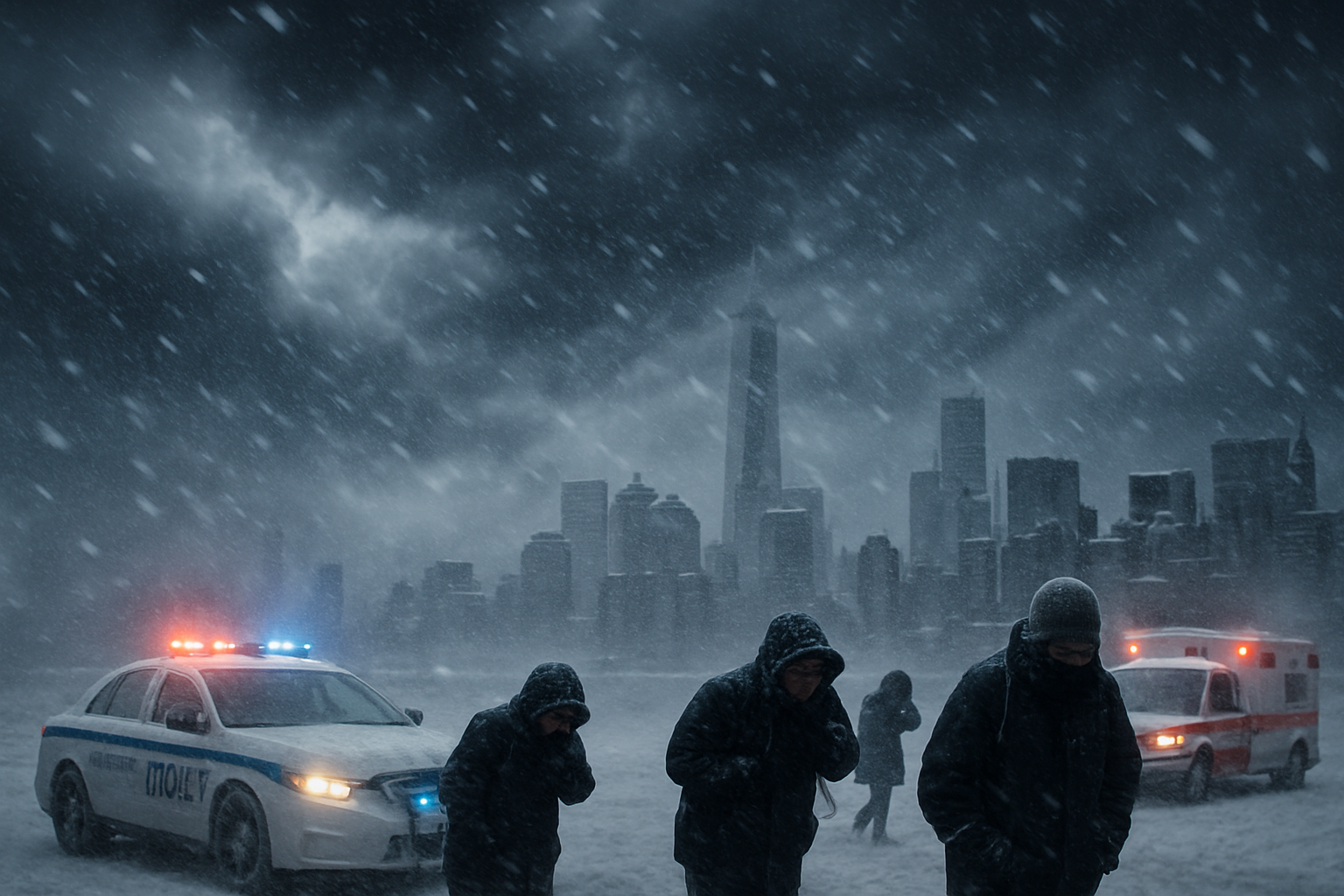
A devastating multi-continental weather crisis is unfolding across the globe as the U.S. East Coast prepares for potentially historic snowfall while Austria mourns seven avalanche victims in just two days, marking the continuation of February 2026's unprecedented extreme weather pattern that has already claimed dozens of lives worldwide.
The National Weather Service has issued urgent warnings for the Eastern United States, with New York City potentially facing up to 40 centimeters of snow accumulation. The approaching storm system threatens to bring blizzard conditions and dangerous winds to major metropolitan areas including New York, Philadelphia, Boston, and Washington D.C., following a powerful winter storm that struck the region in late January.
"In Boston, snow accumulation could reach 30 to 60 centimeters," meteorologists warned, as transportation authorities across the Northeast prepare for significant disruptions. The storm represents the latest in a series of extreme weather events that have tested emergency response systems across multiple continents simultaneously.
Austrian Alps Avalanche Crisis
Meanwhile, Austria is grappling with its deadliest avalanche period in recent memory, with seven skiers confirmed dead within a 48-hour period. The victims include international tourists, highlighting the global reach of the current crisis. A 21-year-old Slovak national and a 41-year-old Austrian were among the latest fatalities, bringing the European avalanche death toll this winter season to over 60 people.
Austrian authorities have issued the highest avalanche warning levels (4 and 5) for the Tirol and Vorarlberg regions, with federal emergency forces deployed to support overwhelmed local rescue services. Conditions have been described as "extremely dangerous" by mountain rescue officials, with unstable snow layers created by the succession of Atlantic storms that have pounded Europe throughout February.
The tragedy extends beyond Austria's borders, with France recording 25 avalanche deaths this season, including a devastating incident at Val d'Isère that claimed three lives (two British nationals and one French citizen). The broader European crisis has exposed the vulnerability of winter sports infrastructure to increasingly volatile weather patterns.
Global Pattern of Extreme Weather
The current crisis builds upon a month of devastating weather events that have overwhelmed emergency services worldwide. Europe has endured an unprecedented succession of Atlantic storms—Kristin, Leonardo, Marta, Nils, and Pedro—that have claimed over 30 lives across Portugal, Spain, and France. Portugal deployed 26,500 rescue personnel in its largest peacetime operation, while infrastructure collapses, including the A1 highway viaduct near Coimbra, have severed critical transportation corridors.
The pattern extends far beyond Europe and North America. Recent memory indicates similar extreme weather events have simultaneously affected multiple continents, from flooding in South America to cyclones in the Pacific, creating a global emergency response crisis.
Climate Context and Scientific Concerns
Perhaps most striking about the current crisis is its occurrence during what scientists have confirmed as the 18th consecutive month of global temperatures exceeding 1.5°C above pre-industrial levels. January 2026 was recorded as the hottest month in global history, yet regional extreme weather events continue to intensify—a climate volatility paradox that demonstrates how global warming can override natural cooling cycles while enabling devastating local conditions.
"This represents a fundamental shift in how we must understand and respond to weather emergencies. Traditional patterns where warming meant fewer extreme winter events are being replaced by a reality where global heat enables more chaotic and dangerous regional extremes."
— Climate Science Expert
The simultaneous occurrence of extreme heat globally and deadly winter conditions regionally illustrates how climate change is reshaping atmospheric circulation patterns, particularly through polar vortex disruption that allows Arctic air masses to plunge southward while other regions experience unprecedented warmth.
Emergency Response and Infrastructure Challenges
The scale of the current crisis has pushed emergency services to their operational limits across multiple nations. The European Union's Civil Protection Mechanism has been activated, with Sweden and Denmark providing a €246 million assistance package—the largest coordinated European weather response in history. Despite these efforts, traditional regional aid mechanisms are being strained by the simultaneous nature of disasters across vast geographic areas.
Infrastructure vulnerabilities have been starkly exposed, with transportation networks, power grids, and communication systems operating beyond the parameters for which they were designed. The systems were built for historical climate conditions rather than the volatile patterns now emerging. Recovery timelines are extending from weeks to months or years, forcing a fundamental reconsideration of how societies prepare for and respond to extreme weather.
Economic and Social Impact
The economic toll is mounting rapidly, with billions of dollars in damages across agricultural, tourism, and infrastructure sectors. Spanish reservoirs have surged to 67.3% capacity with 31 at 100%, while Portuguese vineyards in the Tejo basin remain submerged. The tourism industry, particularly in alpine regions, faces critical safety concerns during peak winter sports season.
The human cost extends beyond fatalities and injuries. Families are losing generational homes, small businesses face extinction, and vulnerable populations require extended emergency support. Mental health services report increased demand as communities struggle with repeated trauma from extreme weather events that are occurring with unprecedented frequency.
International Cooperation Under Strain
The global nature of the current crisis has revealed both the necessity and limitations of international cooperation in weather emergencies. While the EU's coordinated response demonstrates effective continental cooperation, the simultaneous occurrence of disasters across multiple regions prevents the traditional model where unaffected areas assist those in crisis.
Emergency management experts emphasize that current response strategies, based on historical weather patterns and traditional mutual aid assumptions, must be fundamentally restructured for an era of permanent climate volatility. Enhanced emergency response capabilities, climate-resilient infrastructure, and new international cooperation frameworks designed for simultaneous global disasters are urgently needed.
Looking Ahead: Adaptation Imperatives
Scientists warn that the current conditions provide a preview of routine circumstances expected in the 2030s without comprehensive climate adaptation investments. The February 2026 weather crisis represents a watershed moment, forcing a choice between reactive crisis management and transformative approaches to infrastructure and emergency preparedness.
The immediate outlook remains dangerous, with additional storm systems developing and conditions likely to persist for several more days. Mountain rescue services across the Alps maintain high alert levels as avalanche risks continue, while recovery from infrastructure damage will extend well beyond the immediate crisis period.
The crisis has highlighted the urgent imperative for comprehensive climate adaptation strategies that can protect lives and maintain essential services in an era of increasing weather volatility. As extreme weather events occur simultaneously across multiple regions, the international community faces an unprecedented challenge in reimagining how human societies can remain resilient in an increasingly volatile natural world.
Emergency authorities across affected regions continue to advise against unnecessary travel and urge citizens to monitor weather warnings closely. The developing situation serves as a stark reminder that the climate crisis is no longer a future threat but a present reality requiring immediate, coordinated, and transformative action.