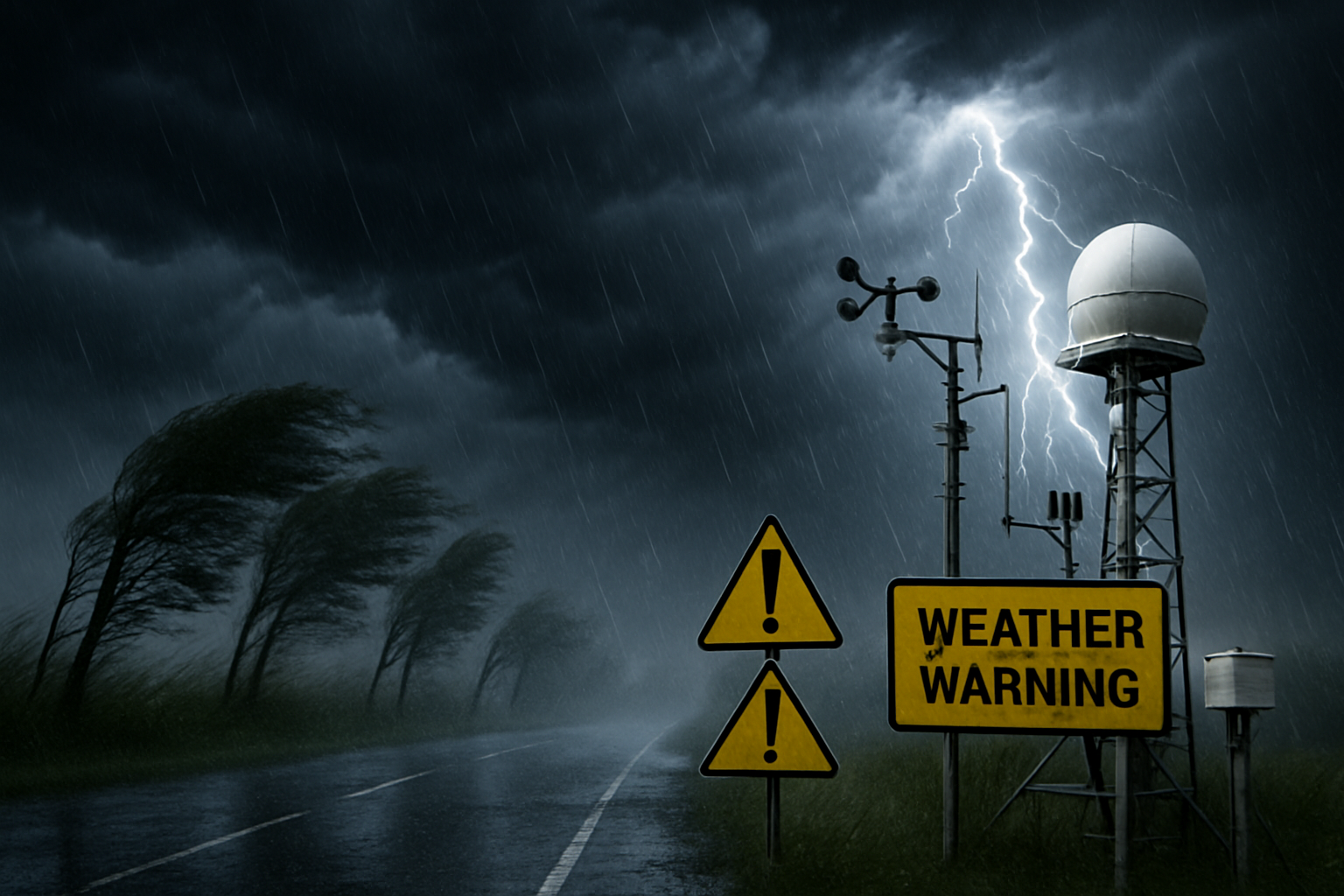
Meteorological services across three continents have issued simultaneous severe weather warnings affecting millions of people, as Algeria confronts dangerous winds exceeding 100 km/h, Romania battles heavy snow and blizzard conditions, and Sweden faces sudden ice formation threatening transportation safety.
The concurrent weather emergencies spanning from North Africa to Northern Europe underscore the unprecedented climate volatility that has characterized February 2026, following what has been confirmed as the 18th consecutive month of global temperatures exceeding 1.5°C above pre-industrial levels.
Algeria Braces for Dangerous Wind Conditions
Algeria's meteorological services issued urgent warnings for strong winds affecting multiple provinces across the nation on Wednesday, February 25, 2026. The warnings specifically target the provinces of In Guezam, Beni Abbas, Bordj Badji Mokhtar, Tindouf, and Adrar, where wind speeds are expected to exceed dangerous thresholds.
These southern and western provinces, already experiencing challenging desert conditions, face additional hazards from dust storms that could severely reduce visibility. Health authorities have issued specific warnings for individuals with respiratory conditions to remain indoors and avoid outdoor activities during peak wind periods.
The Algerian warnings come as part of a broader pattern of extreme weather affecting North Africa, with meteorological experts noting the increasing frequency of severe wind events in the region. The combination of high winds and dust storms creates particularly hazardous conditions for transportation and aviation sectors.
Romania Confronts Winter Weather Emergency
Romanian meteorological authorities have declared the current weather situation as the "most severe winter episode of 2026," with heavy snowfall and blizzard conditions affecting multiple regions across the country. The national weather service has issued comprehensive warnings covering both precipitation and dangerous temperature fluctuations.
According to official forecasts, the entire country will experience rainfall and strong winds through Thursday morning, while mountainous regions face significant snowfall accumulation. The weather system is expected to deposit substantial snow layers in higher elevations, creating avalanche risks and transportation disruptions.
Temperature volatility presents additional challenges, with western regions experiencing 14°C temperatures on Wednesday before dropping by 10 degrees within 48 hours, reaching freezing conditions by Saturday night. Roxana Bojariu, Head of the Climatology Department at the National Meteorological Administration (ANM), warned that "winter is not over, March is a capricious month," indicating the potential for additional snow and blizzard episodes.
The Romanian emergency comes as the country continues recovery efforts from previous severe weather events that left thousands without power and blocked major transportation routes. Emergency services have positioned additional resources to respond to weather-related incidents across affected regions.
Sweden Issues Critical Ice Formation Warnings
Sweden's Meteorological and Hydrological Institute (SMHI) has issued yellow warnings for sudden ice formation across southern Svealand, creating treacherous conditions for evening and nighttime travel. The warnings specifically target areas where rain on cold road surfaces could create dangerous black ice conditions.
The meteorological phenomenon, known locally as "plötslig ishalka" (sudden ice slicks), poses significant risks to vehicular traffic and pedestrians. SMHI meteorologists warn that rain falling on cold road surfaces can freeze instantly, creating nearly invisible hazardous conditions that have historically caused numerous accidents.
Swedish transportation authorities have activated enhanced monitoring systems and deployed additional road maintenance crews to affected areas. Public advisories recommend reduced driving speeds, increased following distances, and the use of appropriate winter tires for all travel in warned regions.
The warnings reflect Sweden's ongoing struggle with volatile winter conditions that have characterized the 2026 winter season, following the broader pattern of extreme weather events affecting Northern Europe throughout February.
Historical Context of Global Weather Crisis
These simultaneous weather warnings across three continents occur within the context of February 2026's unprecedented global weather crisis. The month has witnessed devastating storm successions across Europe, including Storms Kristin, Leonardo, Marta, Nils, and Pedro, which claimed over 30 lives across Portugal, Spain, and France.
Portugal deployed 26,500 emergency personnel in the largest peacetime rescue operation in the nation's history, while the EU Civil Protection Mechanism was activated with Sweden and Denmark providing €246 million in assistance – the largest coordinated European weather response on record.
The global pattern extends beyond Europe, with simultaneous extreme weather events reported across North America, Asia-Pacific, and other regions. Climate scientists note that January 2026 marked the 18th consecutive month of global temperatures exceeding the critical 1.5°C threshold above pre-industrial levels, the longest such streak in recorded history.
Infrastructure Vulnerabilities Exposed
The concurrent weather emergencies across Algeria, Romania, and Sweden highlight critical infrastructure vulnerabilities that have become increasingly apparent throughout the global climate crisis. Transportation networks, power grids, and communication systems designed for historical climate conditions are operating beyond their intended parameters.
In Romania, previous severe weather episodes have demonstrated the cascading effects of extreme weather on essential services, with power outages affecting tens of thousands of households and major transportation routes becoming impassable. The Department of Emergency Situations continues managing interventions across eight counties, reflecting the persistent challenges posed by volatile weather patterns.
Swedish infrastructure faces particular challenges from sudden ice formation events, which can occur with little warning and affect vast geographic areas simultaneously. The phenomenon requires rapid response capabilities and enhanced early warning systems to prevent large-scale transportation accidents.
Algerian authorities confront the dual challenge of protecting populations from dangerous winds while maintaining essential services across sparsely populated desert regions where communication and emergency response capabilities may be limited.
Emergency Response and International Cooperation
The simultaneous nature of these weather emergencies across multiple continents strains traditional emergency response mechanisms, which were designed assuming that severe weather events would affect limited geographic areas sequentially rather than simultaneously across vast distances.
Emergency services across all three affected regions have activated enhanced monitoring protocols, positioned additional resources, and issued comprehensive public safety advisories. However, the global scope of concurrent extreme weather events limits traditional mutual aid mechanisms, as countries typically available to provide assistance are dealing with their own weather-related challenges.
International meteorological cooperation has become increasingly crucial for managing these multi-regional events. Weather services are sharing data and analysis to improve forecasting accuracy and provide advance warnings that can save lives and reduce economic impacts.
The European Scientific Advisory Council on Climate Change has emphasized that current conditions represent a preview of routine weather patterns expected in the 2030s without significant climate adaptation investment, making enhanced international cooperation frameworks essential for managing increasing weather volatility.
Economic and Social Implications
The economic consequences of simultaneous multi-regional weather emergencies extend far beyond immediate response costs. Transportation disruptions affect supply chains, agricultural sectors face mounting losses from extreme conditions, and tourism industries grapple with safety concerns and infrastructure damage.
Romanian agricultural sectors, already affected by previous severe weather events, face additional challenges from the volatile temperature patterns that can damage crops and disrupt planting schedules. The country's transportation industry must invest in enhanced winter preparedness measures as severe weather episodes become more frequent and intense.
Algeria's economy faces risks from transportation disruptions caused by dangerous winds and dust storms, particularly affecting the vital oil and gas sectors that require reliable transportation networks for operations and export activities.
Swedish businesses and municipalities must allocate increasing resources to winter road maintenance and ice management as sudden formation events become more unpredictable and widespread.
Climate Adaptation Imperatives
The current multi-regional weather crisis represents a watershed moment for global climate adaptation strategies. Scientists and policy experts emphasize that the choice between reactive crisis management and transformative infrastructure adaptation approaches becomes increasingly urgent as extreme weather events intensify and occur simultaneously across broader geographic areas.
Infrastructure designed for historical climate conditions requires fundamental updates to handle current and projected future weather patterns. This includes enhanced early warning systems, climate-resilient transportation networks, and emergency response capabilities designed for multi-regional simultaneous disasters.
The concept of "building back better" with climate-resilient infrastructure has evolved from an aspiration to an urgent necessity, as recovery timelines extend from weeks to months or years, and communities face repeated extreme weather events before full recovery is achieved.
Enhanced international cooperation frameworks specifically designed for climate emergencies are essential, as traditional bilateral aid mechanisms prove inadequate when multiple countries face simultaneous disasters that prevent regional compensation mechanisms.
Looking Forward: Preparing for Permanent Climate Volatility
Meteorological experts warn that the current pattern of extreme weather events may represent the new baseline for global climate conditions rather than exceptional circumstances. Additional weather systems are developing across multiple oceanic basins, suggesting that the February 2026 weather crisis may persist for weeks rather than resolving quickly.
Authorities across affected regions maintain high alert levels and advise populations to monitor weather warnings continuously, maintain emergency supplies, and avoid unnecessary travel during dangerous conditions. The emphasis on individual preparedness reflects the recognition that emergency services may face capacity limitations when multiple extreme events occur simultaneously.
The human impact extends beyond immediate physical dangers to include psychological stress from repeated extreme weather events, economic hardship from business disruptions, and social challenges as communities adapt to increasingly volatile environmental conditions.
Climate scientists emphasize that the window for effective climate action continues to narrow while the costs of both adaptation and inaction escalate rapidly. The February 2026 multi-regional weather crisis serves as a stark reminder that climate change represents not a future threat but a present reality requiring immediate, comprehensive response strategies.
As recovery efforts continue across Algeria, Romania, and Sweden, the global community faces the urgent challenge of developing resilient societies capable of maintaining essential services and protecting vulnerable populations during an era of permanent climate volatility.