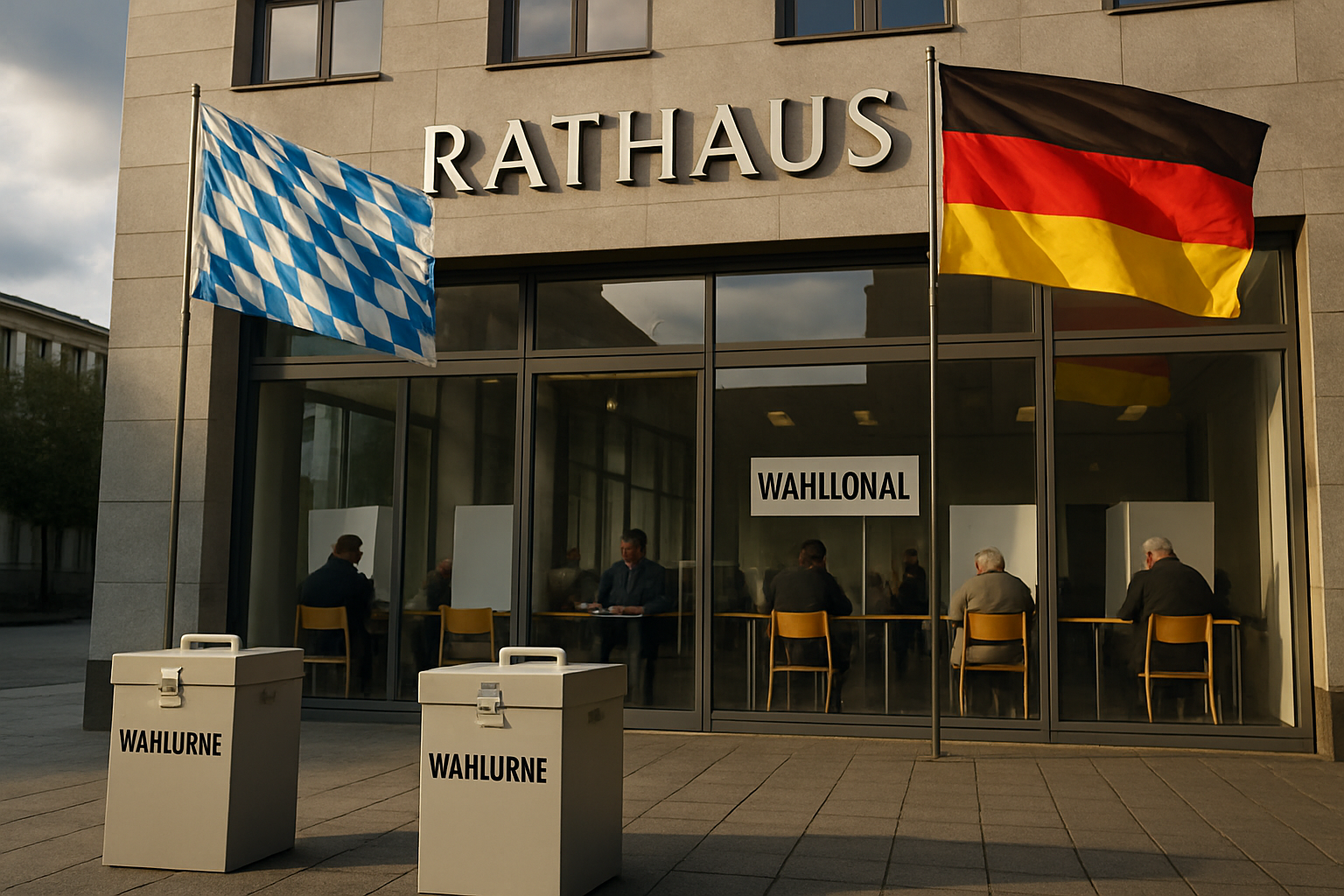
Munich elected its first Green Party mayor in history as Dominik Krause decisively defeated incumbent SPD mayor Dieter Reiter in Sunday's runoff election, ending more than 40 years of Social Democratic control over Germany's third-largest city.
The victory represents a seismic shift in Bavarian politics, with Krause's triumph coming despite efforts by both the SPD and CSU to prevent a Green breakthrough in Munich's city hall. Reiter, who had governed the city since 2014, conceded defeat on Sunday evening, acknowledging: "I messed it up."
According to preliminary results from the runoff election, Krause secured a clear majority against Reiter, marking the first time in Munich's modern history that a Green candidate will lead the city government. The result surprised political observers who had expected the race to be much closer.
A Political Earthquake in Bavaria
The Green victory in Munich represents more than just a local electoral upset—it signals a broader transformation in German municipal politics that has been building across the country. Munich joins a growing number of major German cities where Green politicians have successfully challenged traditional party strongholds.
Political analysts noted that even the conservative CSU, Bavaria's dominant political force, had worked to prevent Krause's victory, viewing a Green takeover of Munich as a potential threat to their regional influence. The fact that these combined efforts failed demonstrates the strength of environmental politics in urban Bavaria.
The defeat marks a particularly bitter moment for the SPD, which had controlled Munich's mayoralty for over four decades. Reiter's admission of personal responsibility for the loss reflects the magnitude of the party's failure to maintain its grip on one of Germany's most important cities.
Changing Urban Political Dynamics
Krause's victory comes amid broader changes in German municipal politics, where Green candidates have increasingly gained ground in major urban centers. The success reflects growing voter concern about climate change, urban planning, and sustainable development—issues where Green parties have established clear policy advantages.
Munich's transformation is particularly significant given its status as Bavaria's capital and one of Germany's wealthiest cities. The metropolis serves as a major economic center, home to numerous multinational corporations and a thriving technology sector, making Green governance of such a business-friendly city all the more notable.
The result also highlights the continuing evolution of German federalism, where local elections increasingly serve as testing grounds for broader political trends. Municipal victories provide parties with governing experience and credibility that can translate into state and federal electoral success.
Implications for German Politics
The Munich result carries implications beyond Bavaria, occurring within the context of significant political shifts across German states. Recent elections in Baden-Württemberg saw Cem Özdemir lead the Greens to victory as the state's first Minister-President of Turkish heritage, while other regions have witnessed growing environmental party influence.
For the SPD, losing Munich represents a continuation of electoral setbacks that have plagued the party at various governmental levels. The defeat comes at a time when Social Democrats are struggling to maintain relevance in a political landscape increasingly defined by environmental concerns and new forms of urban governance.
The victory also demonstrates the Green Party's successful adaptation to practical governance challenges. Rather than remaining purely an environmental protest movement, the party has developed comprehensive policy platforms addressing housing, transportation, economic development, and social services—areas crucial for effective municipal administration.
National Context and Future Prospects
Munich's Green breakthrough occurs during a period of broader democratic evolution across Europe, where traditional political alignments face challenges from new voter priorities and generational change. The success of environmental politics in wealthy urban centers reflects changing values among educated, affluent voters who prioritize sustainability and progressive governance.
The result provides momentum for Green politicians nationwide, demonstrating that environmental parties can win executive positions in Germany's most important cities. This governing experience enhances party credibility and provides practical policy implementation opportunities that strengthen future electoral prospects.
For German democracy more broadly, the Munich result illustrates the system's continued capacity for peaceful political transformation through electoral competition. Despite the magnitude of the change—ending four decades of SPD rule—the transition proceeded smoothly through established democratic institutions.
Challenges Ahead for Green Governance
Krause will inherit significant challenges as Munich's new mayor, including housing affordability concerns, transportation infrastructure needs, and balancing environmental priorities with economic development pressures. His success in addressing these issues will influence broader perceptions of Green governing competence.
The new mayor must also navigate complex relationships with state and federal governments, where different parties may control key policy areas affecting Munich's development. Building effective working relationships across party lines will prove essential for implementing ambitious environmental and social policies.
Additionally, Krause faces the task of maintaining Munich's economic competitiveness while pursuing sustainability goals—a balance that will test Green governance philosophy in practice. Success could provide templates for other German cities considering similar political transitions.
European Context and Democratic Resilience
The Munich election demonstrates German democratic institutions' continued functionality amid broader European political turbulence. While other countries face challenges from extremist movements and institutional stress, Germany's federal system continues enabling meaningful political competition and peaceful power transfers.
The Green victory also reflects broader environmental consciousness across European urban areas, where climate change concerns increasingly influence electoral behavior. Munich joins cities across the continent where environmental parties have gained governing responsibilities, creating networks for policy innovation and best practice sharing.
This democratic resilience provides stability for Germany's European leadership role during a period when continental institutions face numerous pressures. Effective municipal governance by Green politicians could enhance Germany's credibility in promoting environmental policies at EU level.
As Dominik Krause prepares to take office as Munich's first Green mayor, his administration will be closely watched as a test case for environmental governance in major European cities. The success or failure of Green policies in Munich will influence political developments far beyond Bavaria's borders, potentially reshaping the landscape of German and European municipal politics for years to come.