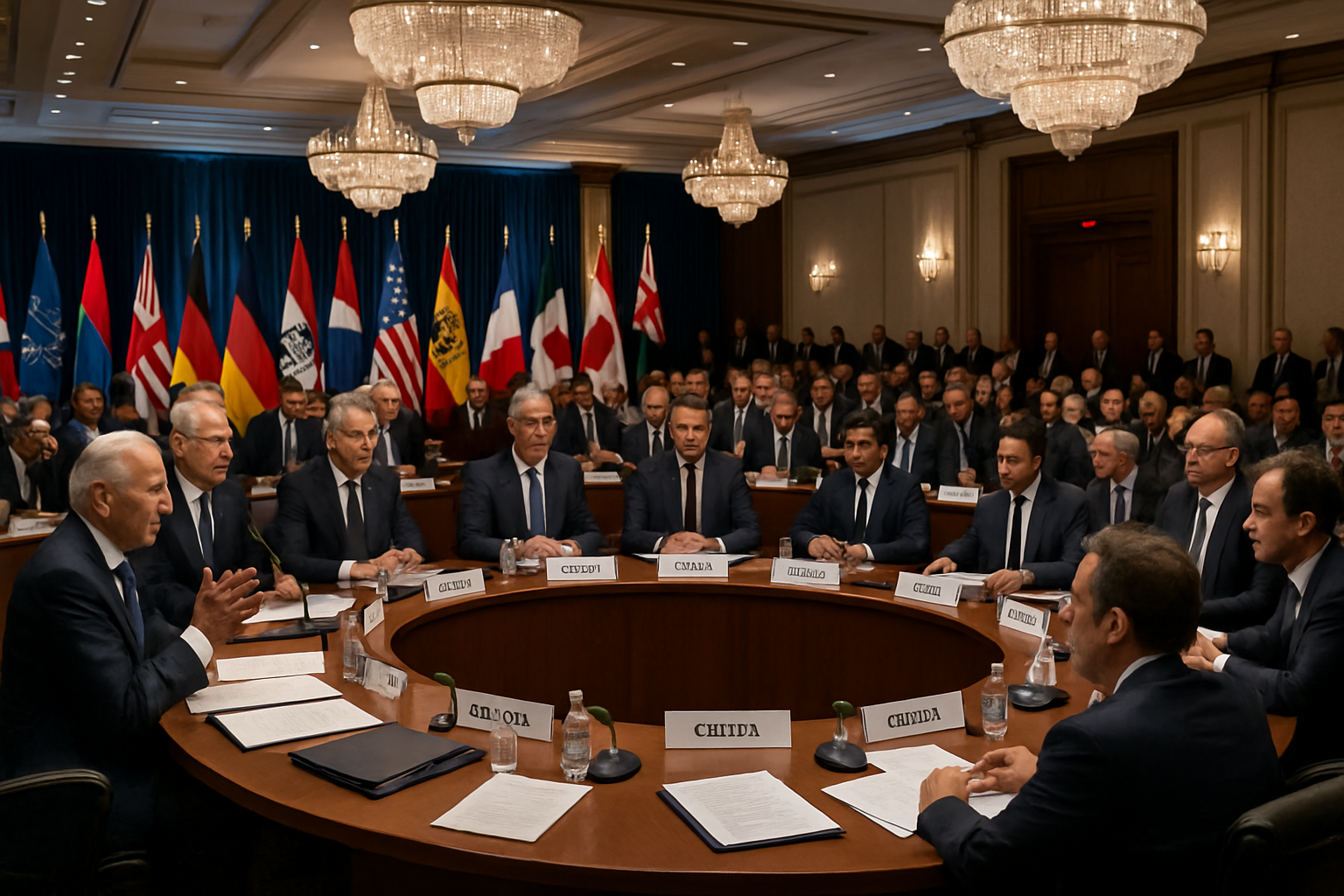
The 62nd Munich Security Conference concluded with European leaders delivering unprecedented calls for strategic autonomy as transatlantic relations face their greatest strain since the Cold War, while diplomatic breakthroughs in Ukraine peace talks offer cautious hope amid continued military escalation.
German Chancellor Friedrich Merz opened the conference with a stark declaration that the "post-war order no longer exists," setting the tone for three days of intense diplomatic discussions attended by over 60 nations, including 15 EU heads of state and government. The gathering at Munich's Hotel Bayerischer Hof, secured by 5,000 police officers, addressed what the Munich Security Report characterized as "international order under destruction."
European Strategic Autonomy Takes Center Stage
French President Emmanuel Macron delivered the conference's most defiant speech, declaring that Europe must become a "geopolitical power providing own security" while rejecting characterizations of the continent as "vilified" and "caricatured." His remarks came as European officials privately expressed concerns about declining US engagement in European affairs.
The push for strategic autonomy gained momentum as Merz confirmed that Germany has initiated negotiations with France regarding European nuclear deterrent capabilities—the first such discussions since the Cold War's end. Lithuanian sources suggest European capitals are quietly exploring options for French nuclear deterrent coverage serving broader European interests, reflecting deep anxiety about NATO Article 5 commitments under the Trump administration.
"Without Europeans, there will be no peace. We need to be respected, we have already done much and will do more."
— Emmanuel Macron, President of France
Ukraine Diplomatic Breakthrough Amid Military Escalation
Despite the challenging backdrop, the conference witnessed significant progress in Ukraine peace negotiations. The recent Abu Dhabi trilateral talks between Ukraine, Russia, and the US achieved historic breakthroughs, including a 314-prisoner exchange—the first in five months—and restoration of US-Russia military communications after a four-year suspension.
Ukrainian Defense Minister Rustem Umerov described the talks as "substantial and productive," with detailed discussions on ceasefire monitoring mechanisms. However, eastern Ukrainian territories under Russian control remain the fundamental sticking point, with Russian forces having captured 481 square kilometers in January 2026 compared to 260 square kilometers in December 2025.
The conference also addressed the devastating humanitarian impact of Russia's "winter weapon" strategy, which left over 1,170 Kyiv buildings without heating during minus-30°C temperatures. Ukrainian President Volodymyr Zelensky disclosed that 55,000 Ukrainian soldiers have been officially confirmed killed, with a "large number" still missing.
Nuclear Arms Control Crisis
Adding urgency to the discussions, the New START treaty between the US and Russia expired on February 5, marking the first time in over 50 years without nuclear arms control constraints between the superpowers. UN Secretary-General António Guterres warned of a "grave turning point" with nuclear risks "higher than at any time in decades."
The nuclear governance vacuum coincided with Iran's participation in the Middle East security discussions, as Reza Pahlavi, son of the last Iranian Shah, spoke about opposition movements while not ruling out a future political leadership role. These developments underscore the interconnected nature of global security challenges facing conference participants.
Transatlantic Relationship Strain
US Secretary of State Marco Rubio's participation was viewed as an attempt at diplomatic reset after Vice President JD Vance's controversial 2025 remarks that created what European officials described as an "unprecedented breach" in alliance relations. European sources had characterized the previous US approach as a "wrecking ball" against international systems.
Notably, Rubio missed a critical meeting of Ukraine supporters that included German, French, and Polish leaders, citing scheduling conflicts. European officials interpreted this absence as indicative of declining US interest in European-led initiatives, further fueling discussions about strategic autonomy.
British Prime Minister Keir Starmer used his conference address to call on Europe to reduce its "excessive dependence" on the United States for military equipment, advocating for strengthened industrial cooperation within Europe. This message resonated strongly with delegates concerned about over-reliance on American defense capabilities.
European Union Response and Support
The conference occurred as the European Parliament approved a historic €90 billion loan package for Ukraine—the largest EU financial assistance package ever provided to a single nation. The vote of 458 in favor, 140 against, and 44 abstentions demonstrated broad European support, though Slovakia, Czech Republic, and Hungary refused participation, highlighting persistent divisions within the bloc.
Sweden and Denmark announced a €246 million air defense package for Ukraine, including advanced Tridon Mk2 systems, while multiple European nations pledged continued military and humanitarian support. These commitments underscore Europe's determination to maintain support for Ukraine regardless of potential changes in US policy.
Looking Ahead: June Peace Deadline
Conference discussions centered around the Trump administration's establishment of a June 2026 deadline for a comprehensive Ukraine peace agreement, with Washington potentially serving as the venue for high-level negotiations. This timeline has created unprecedented diplomatic pressure for innovative solutions to territorial disputes that have persisted since Russia's 2014 annexation of Crimea.
The evolution from Abu Dhabi to potentially Washington-based talks suggests a deliberate escalation toward presidential-level involvement, offering both opportunities and risks for a lasting resolution. Success could end Europe's deadliest conflict since World War II, while failure might lead to intensified military operations and undermined diplomatic credibility globally.
Arctic Security and NATO Adaptation
The conference also addressed emerging security challenges in the Arctic, with the official launch of NATO's Arctic Sentry mission representing the alliance's most comprehensive Arctic response since the Cold War. The UK announced plans to double its troop presence in Norway from 1,000 to 2,000 soldiers over three years, while Finland contributed operational planning expertise.
This initiative responds to Russian reopening of Cold War-era Arctic bases and reflects the growing strategic importance of Arctic shipping routes opened by climate change. The mission serves dual purposes: military deterrence against Russian activities and diplomatic reassurance amid internal alliance tensions.
Implications for Global Security Architecture
The 62nd Munich Security Conference will likely be remembered as a pivotal moment when European leaders chose strategic autonomy over traditional deference to American leadership. The convergence of Ukraine peace prospects, nuclear governance crisis, and Arctic competition creates a unique moment for redefining Western security architecture.
Whether European nations can successfully develop independent strategic capabilities while maintaining transatlantic ties will determine the future of Western institutions facing authoritarian challenges, technological disruption, and climate-related security intersections. The conference established templates for crisis management and alliance coordination during unprecedented global challenges.
As the international community moves toward the June 2026 peace deadline, the Munich Security Conference demonstrated both the potential for diplomatic innovation and the persistent challenges of maintaining unity amid competing national interests and evolving global power dynamics.