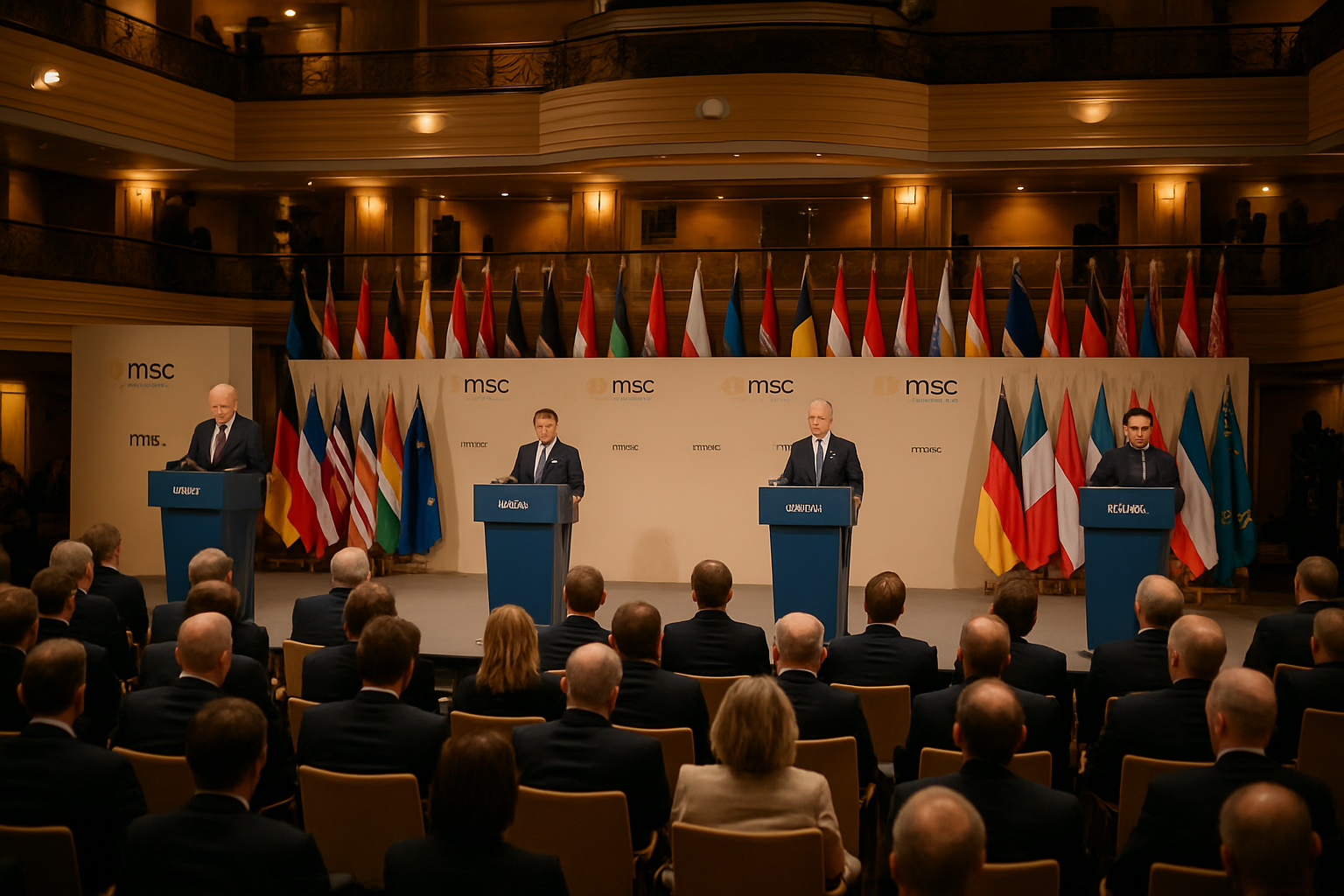
The 62nd Munich Security Conference concluded as a watershed moment for transatlantic relations, with US Secretary of State Marco Rubio delivering a carefully calibrated reset message while European leaders advanced unprecedented discussions on strategic autonomy and nuclear deterrence cooperation.
Meeting under the sobering theme "Era of Disruptive Politics: Challenges to International Order," world leaders gathered at the Hotel Bayerischer Hof in Munich from February 13-15, 2026, to address what organizers described as the most critical security environment since World War II.
Rubio's Diplomatic Charm Offensive
Secretary Rubio's Saturday keynote address marked a stark departure from the confrontational tone that has characterized US-Europe relations since Vice President JD Vance's controversial 2025 Munich remarks. Declaring that America and Europe are "made to be together," Rubio received a standing ovation while emphasizing the Trump administration's commitment to "revitalize" the transatlantic alliance.
"We belong together. Trump wants Europe to be strong."
— Marco Rubio, US Secretary of State
The diplomatic reset attempt comes exactly one year after Vance's explosive speech that European officials privately described as creating an "unprecedented breach" in alliance relations. Multiple diplomatic sources told Planet News that Rubio's absence from a critical Ukraine supporters meeting with German, French, and Polish leaders was interpreted by European officials as evidence of declining American interest in European-led initiatives.
European Strategic Autonomy Takes Center Stage
Perhaps most significantly, the conference witnessed the first serious discussions since the Cold War's end about European nuclear deterrence arrangements independent of American guarantees. German Chancellor Friedrich Merz confirmed direct talks with French President Emmanuel Macron about expanding France's nuclear deterrent role beyond its current national scope.
European Commission President Ursula von der Leyen called for "a new European security strategy capable of responding to the realities of an emerging world order," while Macron's closing remarks emphasized that Europe must become a "geopolitical power providing own security."
The nuclear discussions involve preliminary conversations between Germany, Poland, and Finland with France about extended deterrence arrangements. Such talks would have been unthinkable during the Cold War era of unquestioned American security guarantees.
Ukraine Crisis Defines Conference Context
The conference proceedings were overshadowed by the ongoing Ukraine conflict, which has become a defining test of Western unity and resolve. Ukrainian President Volodymyr Zelensky participated alongside European Parliament President Roberta Metsola, who delivered a strong message of continued EU support.
The timing proved critical, as the conference occurred against the backdrop of the recent Abu Dhabi breakthrough in Ukraine-Russia-US peace talks. The February 5 negotiations achieved a historic 314-prisoner exchange and restored US-Russia military communications after a four-year suspension - representing the most significant diplomatic progress since the conflict began.
However, the diplomatic momentum was challenged by continued Russian military escalation, including what Ukrainian energy company DTEK called the "most powerful blow of 2026" against energy infrastructure, leaving over 1,170 Kyiv buildings without heating during minus-30°C temperatures.
NATO Leadership Tensions Surface
A notable absence from the defense ministers' meeting was US Defense Secretary Pete Hegseth, highlighting concerns about American alliance commitment. European allies seized the leadership vacuum to launch NATO's Arctic Sentry mission, with the UK announcing a doubling of troops in Norway and Sweden deploying Gripen jets to Greenland exercises.
German Defense Minister Boris Pistorius directly criticized the Trump administration, calling presidential threats against NATO members "unacceptable" and arguing that "even the United States cannot act alone" in today's competitive global environment.
Nuclear Governance Crisis Backdrop
The conference's urgency was heightened by the February 5 expiration of the New START treaty between the US and Russia - the first time in over 50 years that no binding nuclear arms control agreement exists between the world's two largest nuclear powers. UN Secretary-General António Guterres warned of a "grave turning point" with nuclear risks now "higher than at any time in decades."
This nuclear governance vacuum provided additional impetus for European discussions about alternative deterrence arrangements, as traditional bilateral US-Russia frameworks have collapsed amid the Ukraine conflict.
Middle East Complications
Adding complexity to the security discussions, the conference also addressed broader Middle East tensions. In a dramatic sidebar, Reza Pahlavi, son of Iran's last shah, made an unprecedented appearance calling on President Trump to help the Iranian people, declaring his readiness for political leadership in a potential democratic transition.
Secretary Rubio used the platform to criticize the United Nations' role in conflict resolution, stating the UN has "no role" in solving wars like the Gaza conflict, reflecting the administration's preference for bilateral diplomacy over multilateral frameworks.
Broader Global Participants
The conference's global scope was evident in participation from beyond the traditional Western alliance. Pakistan's Field Marshal Syed Asim Munir attended to strengthen defense partnerships, while Uzbekistan's Foreign Minister Bakhtiyor Saidov participated in discussions on regional security challenges.
Chinese Foreign Minister Wang Yi appeared alongside Rubio in what observers described as carefully managed "great power competition" discussions, with both diplomats speaking of the need to manage superpower differences while trading diplomatic barbs about their respective roles in global instability.
Looking Forward: June Deadline Pressure
The conference concluded with heightened focus on the Trump administration's June 2026 deadline for Ukraine peace negotiations. The evolution from the Abu Dhabi framework to potential Washington venue talks suggests possible presidential-level involvement, creating unprecedented diplomatic pressure for territorial compromise solutions.
European officials privately expressed concern about being marginalized from peace talks that could fundamentally reshape European security architecture. The success or failure of these negotiations will likely determine whether the transatlantic relationship can adapt to 21st-century challenges or faces continued fragmentation.
Historical Significance
The 62nd Munich Security Conference will be remembered as a pivotal moment when European leaders chose strategic autonomy over traditional American deference while attempting to maintain alliance relationships. The unprecedented nuclear deterrent discussions, combined with Rubio's diplomatic reset efforts, represent the most significant recalibration of Western security arrangements since the Cold War's end.
As conference organizers noted, the gathering addressed "the most critical period for determining international order since World War II." The templates developed for crisis management, alliance coordination, and democratic resilience during this "era of disruptive politics" may well define how Western democracies adapt to authoritarian challenges, technological disruption, and climate security intersections in the coming decades.
The stakes extend far beyond individual conflicts to fundamental questions about democratic values, international law foundations, and global governance mechanisms. Whether the conference marks the beginning of renewed Western unity through strategic adaptation or the acceleration of alliance fragmentation remains to be seen, but its impact on international relations will likely resonate for years to come.