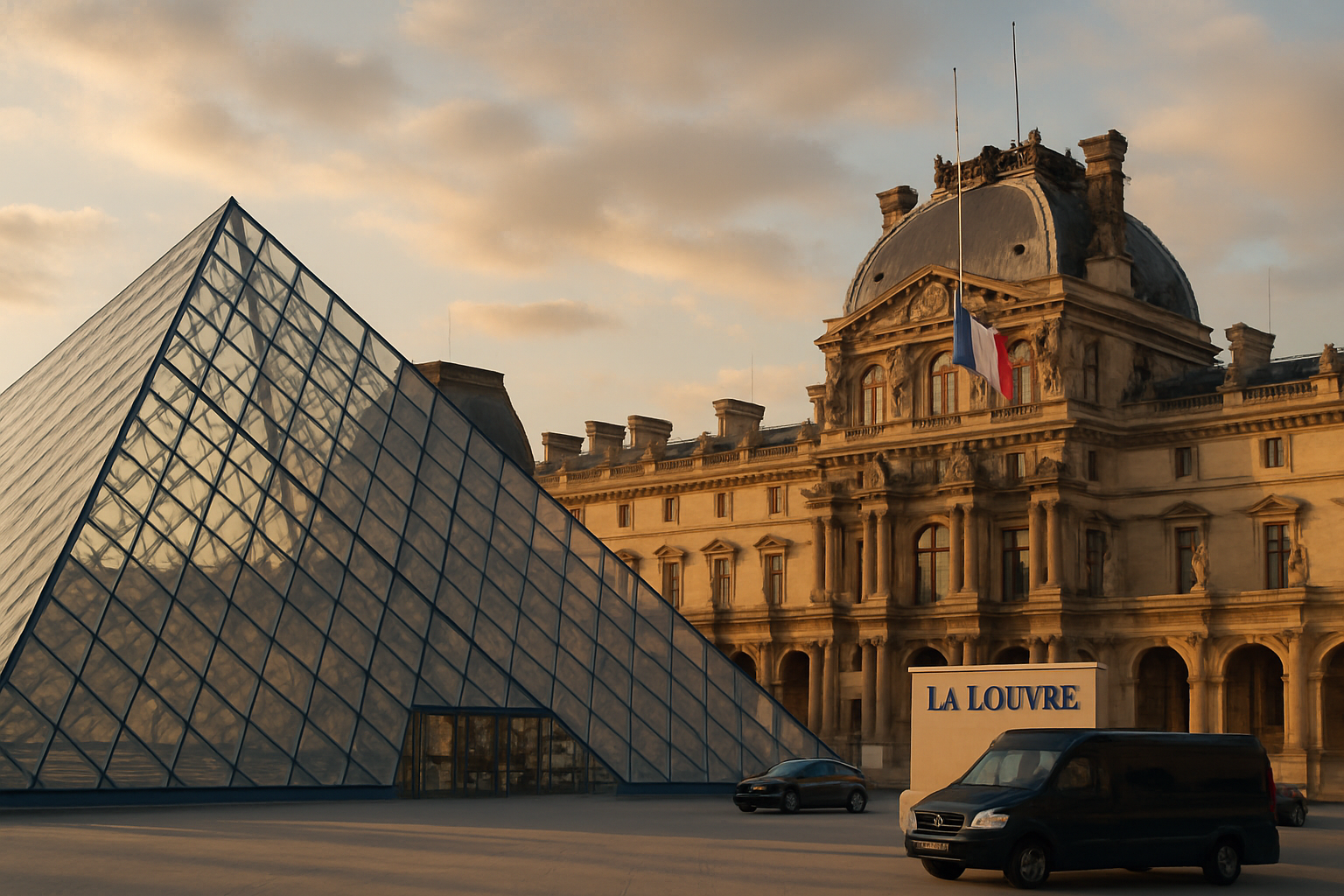
France's cultural landscape is undergoing its most significant leadership transformation in decades, with Christophe Leribault, current president of the Palace of Versailles, expected to be appointed as the new director of the Louvre Museum following the resignation of Laurence des Cars after a series of institutional crises.
The appointment, set to be confirmed at Wednesday morning's Council of Ministers meeting, marks the end of one of the most turbulent periods in the Louvre's modern history and signals a fresh start for the world's most visited museum, which attracted over 10 million visitors annually before recent setbacks.
A Cascade of Institutional Crises
Des Cars' resignation comes after months of mounting pressure stemming from multiple institutional failures that have shaken confidence in the Louvre's operations. The crisis began with a devastating €88 million crown jewels heist from the Apollo Gallery in October 2025, where four thieves executed an eight-minute raid that exposed critical security vulnerabilities and suggested inside assistance.
The situation deteriorated further with rolling staff strikes throughout December 2025, known as "grève perlée," which disrupted operations amid widespread management dissatisfaction. A major ticket fraud scandal in February 2026 resulted in nine arrests, including two Louvre employees, with estimated losses of €10 million over a decade-long scheme primarily targeting Chinese tourists.
"After months of scandal and scrutiny, the Louvre is preparing for new leadership as France moves to restore confidence in its most visited museum."
— RFI Analysis
Additional challenges included water damage to galleries 706 and 707 affecting Renaissance masterpieces by Beato Angelico and Bernardino Luini, with a 19th-century Charles Meynier fresco suffering potentially irreversible damage. Most recently, activists breached security to hang a Prince Andrew arrest photograph during peak visiting hours, further demonstrating ongoing security vulnerabilities.
Presidential Support for Leadership Transition
President Emmanuel Macron accepted des Cars' resignation, calling it an "act of responsibility" and stating that the museum needs "calm and strong new impetus" for security upgrades and comprehensive modernization. Des Cars had initially offered her resignation after the October jewel heist, but Macron refused at the time, hoping the situation could be stabilized.
Des Cars, who became the first female Louvre director in 2021 with an ambitious modernization mandate, saw her legacy defined by crisis management failures rather than the progressive reforms she had envisioned. Her extensive experience from previous success at the Musée d'Orsay could not overcome the multiple simultaneous challenges that overwhelmed the institution.
Christophe Leribault's Appointment
Leribault's expected appointment represents a strategic choice by the French government to bring proven cultural leadership expertise to the troubled institution. As current president of the Palace of Versailles, he has demonstrated experience managing large-scale cultural institutions and complex operational challenges.
The transition from Versailles to the Louvre reflects the government's confidence in Leribault's ability to restore stability and public trust while implementing necessary reforms across security, staff relations, infrastructure maintenance, and fraud prevention systems.
Broader Cultural Sector Challenges
The Louvre's troubles occur within a broader context of French cultural sector challenges, including the resignation of Jack Lang from the Arab World Institute amid financial investigations, aging infrastructure constraints, and evolving security threats that affect cultural institutions worldwide.
The crisis highlights the complex intersection of cultural preservation, public access, and modern security requirements. Museums must balance maintaining accessibility for millions of visitors while protecting invaluable cultural assets from sophisticated criminal operations and operational disruptions.
Reform Requirements for New Leadership
Leribault will inherit an institution requiring comprehensive reform across multiple areas:
- Complete security overhaul following repeated breaches exposing vulnerabilities to theft, fraud, and unauthorized access
- Internal controls strengthening to prevent employee involvement in fraudulent activities
- Infrastructure maintenance addressing water damage, environmental controls, and facility modernization
- Staff morale rebuilding through improved management relations and operational efficiency
- Public trust restoration through transparent governance and effective crisis communication
International Implications
The Louvre's leadership crisis and resolution carry significant implications for the global museum community. As a test case for how democratic institutions respond to cultural stewardship failures, the outcome will influence international standards for museum governance, security protocols, and institutional accountability.
The situation establishes important precedents for 21st-century cultural institution management, particularly regarding the balance between public accessibility and security requirements. Other major cultural institutions worldwide are closely monitoring the reforms implemented under new leadership.
"The museum needs a calm and strong new impetus for security upgrades and modernization."
— President Emmanuel Macron
Maintaining Cultural Mission
Despite the operational challenges, the Louvre maintains its position as the world's most visited cultural institution. The new leadership must address fundamental questions about operational effectiveness while preserving the museum's core mission of cultural education, artistic preservation, and public engagement.
The appointment of Leribault signals continuity in France's commitment to cultural excellence while acknowledging the need for systematic institutional reforms. His experience managing another of France's premier cultural institutions provides valuable expertise for navigating the complex challenges ahead.
Looking Forward
The leadership transition represents a watershed moment for the Louvre and the broader cultural sector. Success will depend on implementing comprehensive security measures, rebuilding staff confidence, restoring public trust, and modernizing operations without compromising the institution's cultural mission.
As Leribault prepares to take on this significant responsibility, the international cultural community will be watching closely to see how effective leadership can transform institutional challenges into opportunities for strengthening cultural stewardship in the modern era.