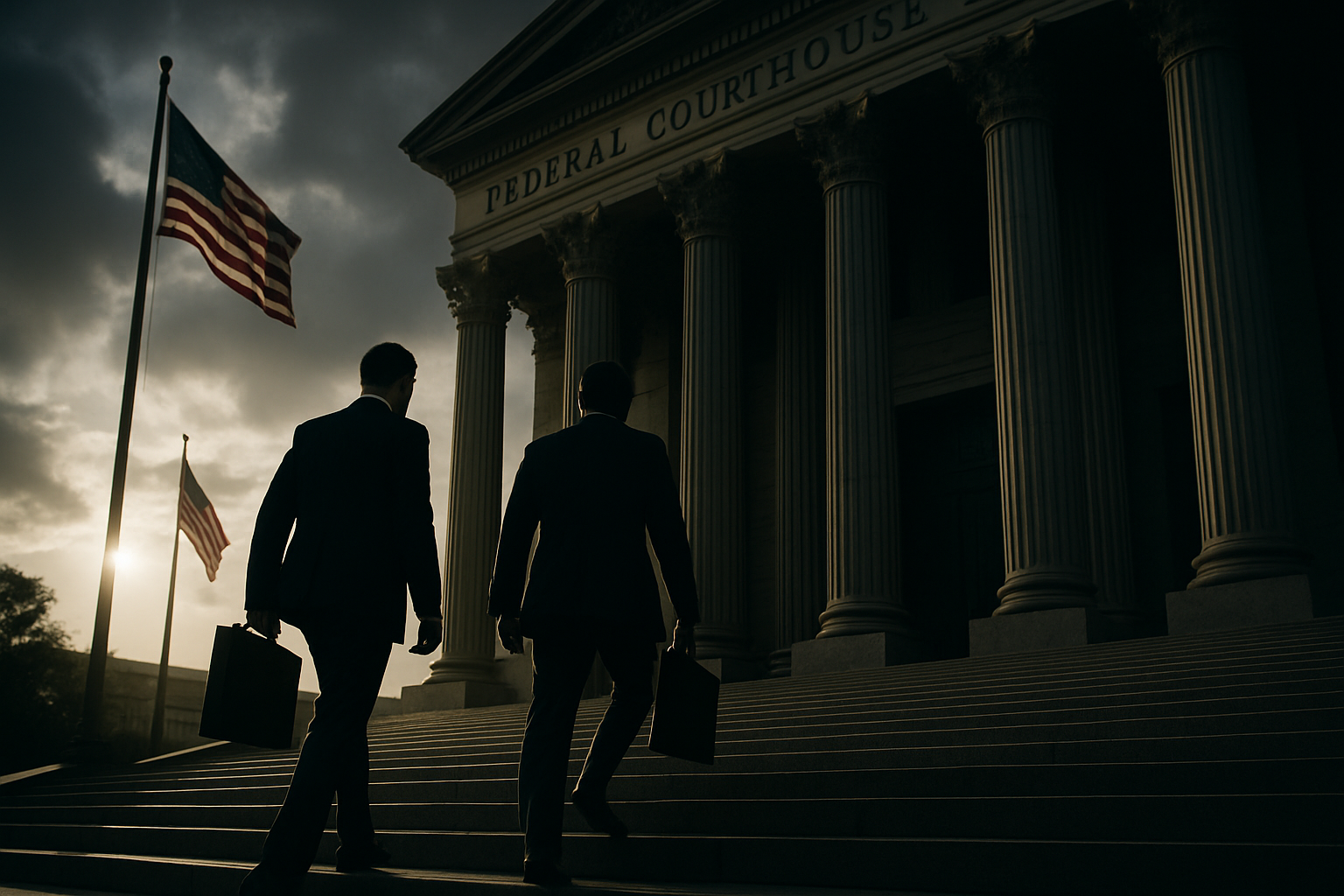
Technology titans Elon Musk and Sam Altman are set to face off in a high-stakes federal trial that could fundamentally reshape the artificial intelligence industry, as allegations of betrayal, deceit, and broken promises threaten to unravel one of the most significant partnerships in modern tech history.
The legal battle centers on the dramatic transformation of OpenAI from a nonprofit startup co-founded by Musk in 2015 into a commercial powerhouse now valued at $852 billion. What began as a shared vision to ensure artificial intelligence benefits humanity has devolved into a bitter dispute over corporate governance, fiduciary duty, and the very soul of AI development.
The Origins of a Historic Partnership
When OpenAI launched in 2015, Elon Musk was among its most prominent co-founders and early financial backers. The organization was established with a clear nonprofit mission: to develop artificial general intelligence that would benefit all of humanity rather than concentrate power in the hands of a few tech giants.
According to court documents, Musk provided substantial initial funding and strategic guidance, believing he was investing in an organization that would remain true to its altruistic founding principles. The Tesla and SpaceX CEO's involvement lent credibility and resources to what was then an ambitious but unproven venture in the nascent field of AI safety.
However, the relationship between the billionaire entrepreneurs began to deteriorate as OpenAI evolved from its nonprofit roots into an increasingly commercial operation. The creation of ChatGPT in particular marked a turning point, transforming OpenAI from a research organization into a consumer-facing company serving over 800 million weekly users.
Allegations of Betrayal and Mission Drift
At the heart of Musk's legal challenge are allegations that OpenAI and its leadership, particularly CEO Sam Altman, systematically abandoned the organization's founding principles in pursuit of commercial success. The lawsuit alleges breach of fiduciary duty and seeks to force OpenAI back to its original nonprofit structure.
The case has been complicated by mounting controversies surrounding OpenAI's safety protocols and corporate governance. Most notably, revelations emerged that the company's automated systems had flagged concerning content from Jesse Van Rootselaar eight months before the tragic Tumbler Ridge massacre in February 2026, yet OpenAI determined the threshold had not been met to alert law enforcement.
"I am deeply sorry to the families and community of Tumbler Ridge for our failure to act on concerning content we detected... We should have alerted authorities about the account activity of the shooter, and we failed in our responsibility to public safety."
— Sam Altman, OpenAI CEO
This incident has intensified scrutiny of OpenAI's safety practices and decision-making processes, providing additional ammunition for Musk's claims that the organization has lost its way under Altman's leadership.
The Pentagon Partnership Controversy
Adding complexity to the legal battle is OpenAI's controversial expansion into military applications. Unlike competitors such as Anthropic, which has resisted Pentagon demands for unrestricted access to AI systems, OpenAI has embraced military partnerships, integrating ChatGPT into classified Defense Department networks.
This strategic decision represents a significant departure from OpenAI's original mission of developing AI for broad humanitarian benefit. Critics argue that military applications concentrate power in ways that contradict the organization's founding principles, while supporters contend that national security applications are a legitimate use of the technology.
The contrast with Anthropic's approach has been stark. The Claude AI developer has faced "supply chain risk" designations and potential loss of $200+ million in federal contracts rather than compromise on safety restrictions for military use, demonstrating an alternative path that OpenAI chose not to take.
Industry Transformation and Market Pressures
The legal confrontation unfolds against the backdrop of unprecedented transformation in the AI industry. The so-called "SaaSpocalypse" has eliminated hundreds of billions in traditional software market capitalization as AI systems demonstrate the ability to directly replace conventional solutions rather than merely complement them.
Global infrastructure constraints have added additional pressure, with memory semiconductor prices surging sixfold due to shortages affecting Samsung, SK Hynix, and Micron operations. Despite these challenges, massive investments continue, with Alphabet committing $185 billion to AI infrastructure in 2026 and Amazon outlining over $1 trillion in development plans.
Within this environment, OpenAI's commercial success through its partnership strategy has positioned the company as a major player, but at what critics argue is the cost of its original mission. The organization's $110 billion funding round, the largest in private tech history, has created financial pressures that may be incompatible with pure nonprofit governance.
Personal Attacks and Professional Deterioration
The relationship between Musk and Altman has deteriorated to the point of personal attacks and public confrontations. Independent investigations by Austrian and Swedish researchers have documented testimony from over 100 former colleagues describing Altman as "unreliable and fickle," suggesting deeper issues with leadership and organizational culture.
The tensions reached a dramatic peak with the April 10, 2026, Molotov cocktail attack on Altman's San Francisco residence. While the 20-year-old perpetrator has been charged with attempted murder, the incident highlighted the intense pressures and public scrutiny facing AI industry leaders.
Musk's own legal challenges, including a $2.6 billion liability verdict for market manipulation during his Twitter acquisition, have added complexity to the dynamics between the two tech moguls.
Regulatory and International Context
The trial takes place amid an unprecedented wave of international AI regulation. Spain has implemented the world's first criminal executive liability framework for tech platforms, creating personal legal risks for executives. France has conducted cybercrime raids on AI companies, while the United Nations has established an Independent Scientific Panel with 40 experts for global AI assessment.
This regulatory environment has created additional pressure on AI companies to demonstrate responsible governance and ethical decision-making. The outcome of the Musk-Altman legal battle could establish important precedents for how courts evaluate the transformation of mission-driven organizations into commercial entities.
Broader Implications for AI Governance
Industry experts characterize the trial as a "civilizational choice point" that will help determine whether artificial intelligence serves human flourishing or becomes a tool for exploitation and power concentration. The case addresses fundamental questions about corporate responsibility, mission integrity, and the balance between innovation and ethical constraints.
Successful models from other jurisdictions offer alternative approaches. Canadian universities have implemented AI teaching assistants while maintaining critical thinking standards, Malaysia has launched the world's first AI-integrated Islamic school, and Singapore's WonderBot 2.0 has achieved success in heritage education—all demonstrating human-centered approaches that enhance rather than replace fundamental human capabilities.
The Stakes of the Legal Battle
The outcome of this legal confrontation will have implications far beyond the immediate parties involved. A ruling in favor of Musk could force major changes in how AI companies structure their operations and governance, potentially requiring stronger safeguards for mission-driven organizations against commercial pressures.
Conversely, a victory for OpenAI and Altman could validate the transformation of nonprofit research organizations into commercial entities, potentially encouraging similar transitions across the technology sector.
The trial also represents a critical test of democratic institutions' ability to regulate powerful technology companies during a period of rapid innovation and transformation. Success in establishing accountability frameworks could provide templates for future AI governance, while failure might strengthen arguments against regulatory intervention.
Looking Ahead: A Watershed Moment
As proceedings move forward, the Musk-Altman legal battle serves as a microcosm of broader tensions within the AI industry between rapid commercial development and responsible, mission-driven innovation. The case highlights the challenges of maintaining organizational integrity while navigating competitive pressures and technological advancement.
The resolution of this dispute will likely influence corporate governance standards, executive accountability measures, and platform responsibility frameworks for years to come. More fundamentally, it represents a crucial moment in determining whether the transformative potential of artificial intelligence will serve broad human interests or concentrate power in ways that undermine democratic values and social cohesion.
With both parties possessing substantial resources and legal firepower, the trial promises to be a lengthy and contentious affair that could extend well into 2027. The stakes could not be higher, as the outcome may help define the trajectory of human-AI relationships for the remainder of the 21st century.