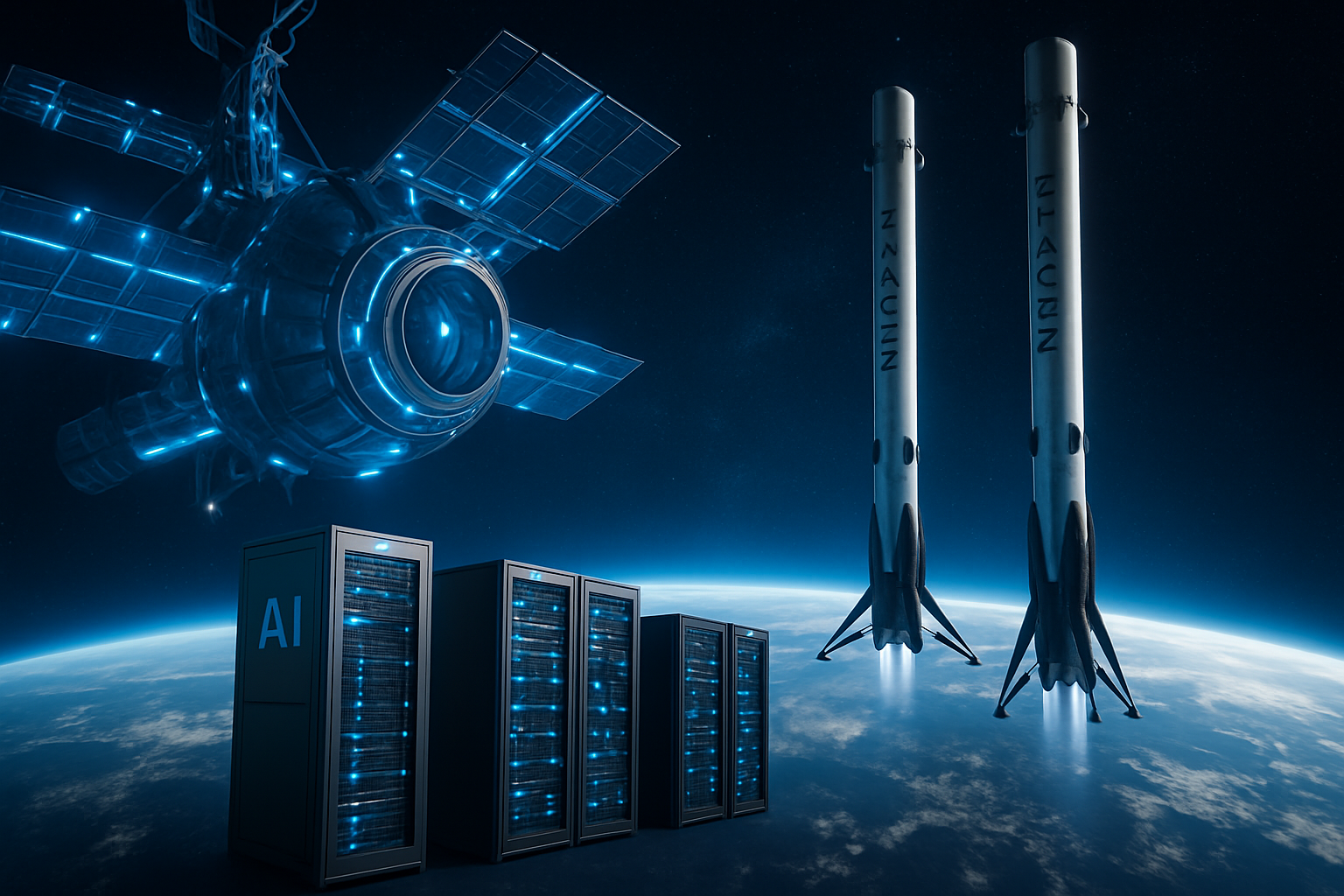
Elon Musk announced a groundbreaking merger between his aerospace company SpaceX and artificial intelligence startup xAI on Monday, creating what the billionaire calls "the most ambitious, vertically-integrated innovation engine on (and off) Earth" with a combined valuation of $1.25 trillion.
The acquisition, confirmed through a SpaceX statement, represents one of the largest corporate mergers in history and marks a significant consolidation of Musk's business empire. The combined entity will focus on deploying space-based data centers powered by solar energy, addressing mounting concerns about terrestrial energy consumption in AI computing.
Revolutionary Space Data Center Vision
According to the SpaceX press release, the merger will enable the placement of AI data centers in space, utilizing solar energy to power computing operations. This ambitious project aims to solve critical energy consumption problems facing the AI industry while leveraging SpaceX's proven rocket capabilities and Starlink satellite network infrastructure.
The Italian publication Repubblica reported that the operation unites Musk's two companies with the objective of launching a fleet of satellites into space to address energy consumption issues on Earth. The space-based approach could provide unlimited solar power and eliminate terrestrial cooling requirements that plague traditional data centers.
Financial Structure and IPO Plans
The merger values SpaceX at $1 trillion and xAI at $250 billion, according to Japanese financial sources. Bloomberg News indicates the combined company expects to price shares at approximately $527 each ahead of a planned initial public offering this year.
Norwegian broadcaster NRK reports that Musk plans to list the merged entity on public markets, making it potentially the largest IPO in history. The timing of the merger precedes SpaceX's long-anticipated public offering, which has been the subject of intense market speculation.
Strategic Integration of Technologies
The merger brings together SpaceX's rocket technology, Starlink satellite internet service, and launch capabilities with xAI's artificial intelligence platform, including the X social media platform and Grok AI service. This vertical integration creates synergies across multiple technology sectors.
"This represents the most ambitious, vertically-integrated innovation engine on (and off) Earth."
— Elon Musk, SpaceX Statement
Spanish media outlet El País noted that the new company will integrate AI activities, rockets, space internet, mobile communications, and the X social network under one corporate structure, creating unprecedented operational efficiencies.
Addressing AI Infrastructure Challenges
The merger comes at a critical time for the AI industry, which faces mounting infrastructure challenges. Recent reports indicate computer memory prices have surged sixfold due to AI development demand, creating supply shortages that could persist through 2027.
By moving data center operations to space, the merged company could bypass terrestrial limitations including energy costs, cooling requirements, and real estate constraints. Space-based facilities would have access to continuous solar power and natural cooling through radiation to space.
Market Positioning and Competition
The merger positions Musk's unified company to compete directly with tech giants Microsoft, Google, and Amazon in the AI infrastructure space. Unlike terrestrial competitors, the space-based approach offers potential advantages in power generation, cooling efficiency, and scalability.
French publication Le Monde emphasized that the integration of Musk's AI company precedes the space enterprise's IPO project this year, suggesting strategic timing to maximize market valuation before going public.
Technical Implementation Challenges
While revolutionary in concept, the space-based data center plan faces significant technical hurdles. Deployment of computing hardware in the harsh space environment requires advanced radiation shielding, thermal management systems, and reliable communication links to Earth.
SpaceX's existing Starlink constellation provides a foundation for space-based internet infrastructure, but data center deployment would require substantially larger and more complex satellite systems than current communication satellites.
Regulatory and International Implications
The merger requires approval from multiple regulatory bodies given SpaceX's involvement in U.S. national security contracts and international space operations. The company plays a crucial role in NASA missions and maintains strategic importance for American space capabilities.
International sources across Europe and Asia reported the announcement simultaneously, indicating global significance of the merger for space technology and AI development sectors.
Future Timeline and Implementation
While Musk provided limited details on implementation timelines, the company's statement suggests initial space-based data center deployments could begin within the next several years. The ambitious project would require multiple Starship launches to transport the necessary hardware and infrastructure to orbit.
The merger represents the latest chapter in Musk's broader strategy to integrate his various business ventures, creating synergies between electric vehicles, space exploration, social media, and artificial intelligence under his control.
As the combined entity prepares for its historic IPO, investors and industry observers will closely monitor technical progress toward the space-based data center vision that could reshape both the AI and space technology industries.