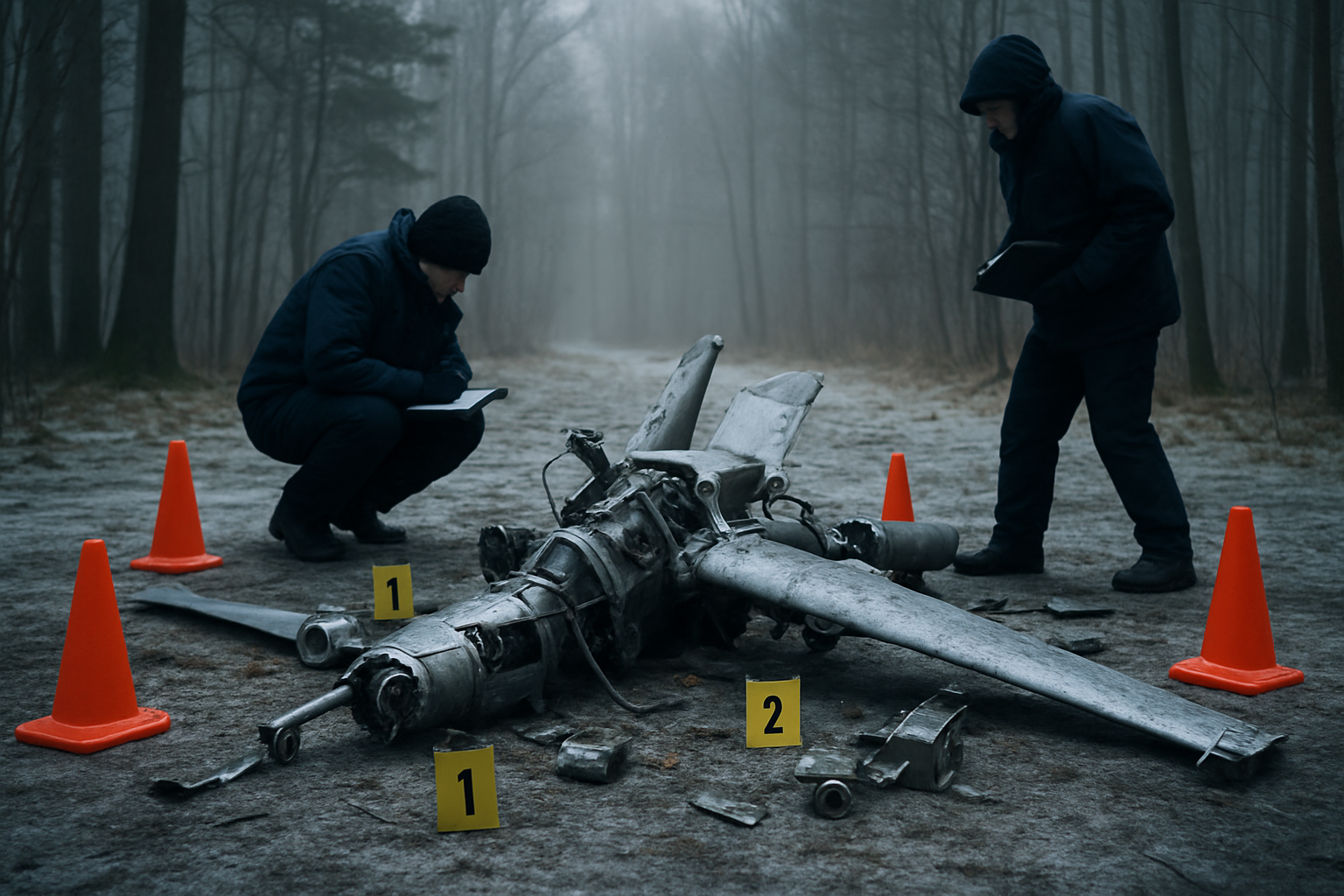
Drone debris of unknown origin was discovered across multiple Baltic states on Wednesday, April 1, 2026, prompting investigations by regional authorities and highlighting the complex security challenges facing the Baltic region amid ongoing conflicts in Eastern Europe.
Latvian State Police confirmed that drone wreckage was found in Silmala Parish, Rēzekne Municipality, near the country's eastern border. Officials emphasized that there is no danger to the public and confirmed the debris is not explosive. The discovery represents the latest in a series of drone-related incidents that have affected the Baltic region in recent months.
Regional Pattern of Incidents
The latest discoveries come against a backdrop of increasing drone activity in Baltic airspace. In neighboring Estonia, residents in Tartu County reported finding Ukrainian drone debris earlier in the week, with many locals admitting they had ignored or slept through air raid warnings when the incidents occurred.
"Whatever comes, comes," one villager told ERR news, reflecting a fatalistic attitude among some residents who have grown accustomed to the security uncertainties in the region.
Finnish authorities also confirmed that a drone found on ice near the Russian border was not of Finnish origin, adding another piece to the complex puzzle of unmanned aircraft operating in the Baltic region.
"The police state that they confirmed the information at the scene. There is no danger to the public; the debris is not explosive."
— Latvian State Police Statement
Historical Context of Baltic Drone Incidents
These latest discoveries follow a concerning pattern that emerged in late March 2026, when Ukrainian military drones conducting operations against Russian energy infrastructure began straying into Baltic airspace. Estonian Defense Forces previously confirmed that fewer than 10 Ukrainian drones entered Estonian airspace, with multiple crash sites under investigation in Tartu County.
The incidents differ significantly from the Russian drone provocations of March 25, 2026, when Russian aircraft deliberately struck Estonia's Auvere power station and crashed in Latvia's Krāslava region. Current incidents appear to be navigation errors during legitimate Ukrainian defensive operations rather than deliberate territorial violations.
Colonel Uku Arold of the Estonian Defense Forces had previously stated that Ukrainian drones "apparently went off course" during operations targeting Russian Baltic facilities, highlighting the challenges of maintaining navigation accuracy during long-range missions exceeding 2,000 kilometers.
Enhanced Baltic Cooperation Response
The ongoing drone incidents have strengthened regional cooperation through NATO's Arctic Sentry mission, which includes enhanced intelligence sharing, satellite surveillance, and maritime patrols. The Baltic states have developed sophisticated protocols for managing spillover effects from the conflict in Ukraine while maintaining their territorial sovereignty.
Estonia has emerged as a regional leader in defense technology, hosting a €10 million HIMARS maintenance center in partnership with Lockheed Martin—the first regional facility for advanced rocket systems. This investment represents both military capability enhancement and economic development for the region.
Lithuania's intelligence services have warned that Russia could be ready for "limited military conflict" within 3-5 years if a Ukraine ceasefire allows for force reconstitution. This assessment has prompted enhanced defensive preparations across all three Baltic states.
GPS Jamming and Navigation Challenges
The drone incidents occur amid intense GPS jamming across the Nordic region, affecting both civilian and military navigation systems. This electronic warfare creates particular vulnerabilities for navigation-dependent drone systems operating at extended ranges.
Finnish Defense Minister Antti Häkkänen has treated these matters "very seriously," while Estonian officials have noted that enhanced cooperation between Baltic states has been crucial in distinguishing between hostile Russian provocations and friendly Ukrainian aircraft experiencing navigation difficulties.
Diplomatic Balance and Regional Security
The Baltic states have demonstrated remarkable diplomatic balance, supporting Ukraine's legitimate defense operations while ensuring their own territorial sovereignty. This measured response has prevented escalation while maintaining collective security commitments.
The incidents highlight the complex challenges of 21st-century warfare, where conflicts can have spillover effects far beyond traditional battlefields. NATO is developing new protocols to distinguish between hostile actions and friendly aircraft experiencing technical difficulties during defensive operations.
Technology and Detection Capabilities
Estonia's technological leadership has been crucial in managing these incidents. The country maintains 88% renewable electricity generation and operates continental Europe's largest battery storage facility, providing energy independence that serves as a template for regional security.
The Tallinn Cyber Diplomacy School, which serves 33 countries, has become a center for developing responses to hybrid warfare challenges, including the complex task of identifying and responding to various types of drone incursions.
Future Implications and Preparedness
As Ukrainian long-range capabilities continue to expand, the frequency of such incidents may increase. The Baltic states' experience in managing these complex spillover effects provides a valuable template for other regions facing similar challenges.
The development of enhanced early warning systems, diplomatic coordination protocols, and technical identification capabilities has proven effective in preventing casualties and minimizing disruption while maintaining support for Ukraine's defensive operations.
Regional authorities are developing mobile phone applications and text message systems for air threat alerts, with Finland planning implementation by 2028. Estonia and Ukraine already utilize multiple air threat warning methods, reflecting lessons learned from ongoing security challenges.
Ongoing Investigations
Investigations into the latest drone debris discoveries are ongoing, with authorities focusing on flight path determination, damage assessment, and coordination with Ukrainian forces. The incidents underscore the importance of transparency and international coordination in managing cross-border security challenges.
The Baltic approach to managing these incidents—combining enhanced surveillance, diplomatic coordination, and technical expertise—demonstrates how smaller nations can effectively coordinate responses to complex security challenges in an increasingly volatile international environment.
As the security landscape continues to evolve, the Baltic states' experience in balancing support for democratic allies with protection of territorial sovereignty may serve as a crucial template for 21st-century crisis management and international cooperation.