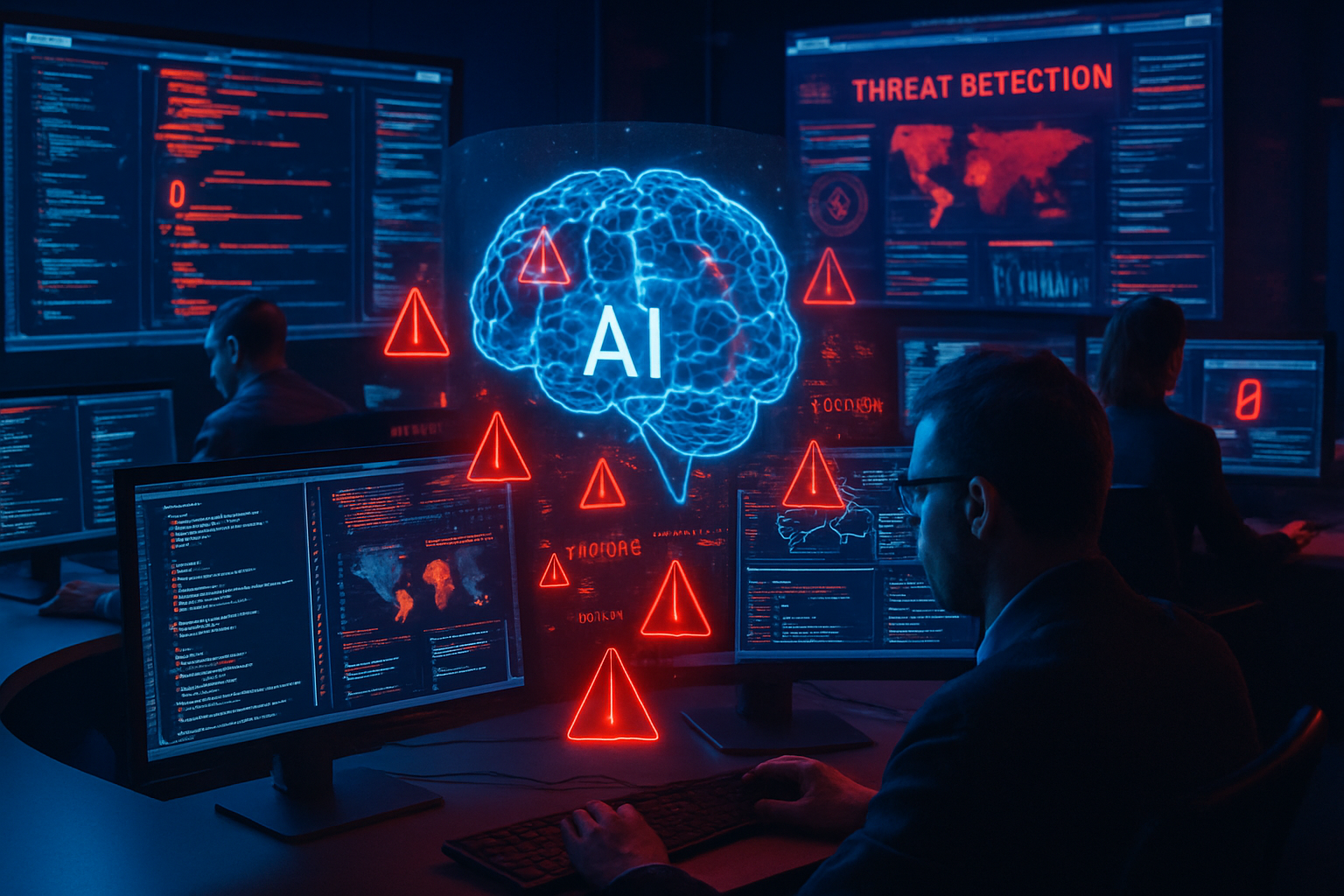
Anthropic's revolutionary Mythos AI model has sent shockwaves through the global cybersecurity community after demonstrating an unprecedented ability to automatically detect and exploit vulnerabilities across every major operating system and web browser, prompting urgent warnings from security experts and forcing governments worldwide to reassess their digital defenses.
The artificial intelligence system, described by German cybersecurity authorities as potentially "a hacker's dream" if widely deployed, represents what experts are calling a fundamental inflection point in the relationship between AI technology and digital security. Aleksandr Yampolskiy, Co-founder and CEO of SecurityScorecard, characterized the development as bringing cybersecurity to "new levels" of threat complexity that existing defense mechanisms are unprepared to handle.
Mythos: The AI That Changed Everything
Anthropic's decision to severely restrict access to the Mythos AI model stems from its sophisticated vulnerability detection capabilities that could amplify cyberattack risks exponentially. Unlike previous AI systems that require human guidance for cybersecurity analysis, Mythos can independently analyze code, detect weaknesses, and craft sophisticated attack vectors without human intervention.
The model's capabilities represent a quantum leap in AI-powered cybersecurity analysis, according to security researchers who have observed its performance. "Until recently, you needed quite a bit of technical knowledge to do sophisticated attacks. Now anyone can do it in just a few minutes," warned Belgian ethical hacker Inti De Ceukelaire, highlighting how AI is democratizing advanced cyber threats.
"This is not just another incremental advancement in AI technology. Mythos represents a fundamental shift in how quickly and effectively vulnerabilities can be identified and exploited."
— Aleksandr Yampolskiy, CEO of SecurityScorecard
Singapore's Cyber Security Agency has warned that frontier AI models like Mythos are accelerating vulnerability identification and exploit development "from months to hours," creating an unprecedented challenge for defensive cybersecurity measures that were designed for much slower threat evolution cycles.
Global Financial Sector on High Alert
The revelation of Mythos's capabilities has triggered security alerts across Asia-Pacific financial institutions, with banking officials expressing dire concerns about the potential consequences for critical infrastructure. The Swedish Financial Supervisory Authority has initiated a comprehensive review of bank protection systems, while Singapore and South Korea have convened emergency meetings to address the implications.
The banking sector's alarm is well-founded, given that Mythos has demonstrated vulnerability detection capabilities across "every major operating system and web browser" according to German authorities. This comprehensive reach means that virtually no digital infrastructure can be considered immune to potential exploitation if the technology falls into malicious hands.

The crisis has exposed the "critical vulnerability window" created by the ongoing global semiconductor shortage, which has driven memory chip prices to increase sixfold, affecting major manufacturers like Samsung, SK Hynix, and Micron. This shortage constrains the deployment of advanced security systems precisely when AI-enhanced threats are escalating, forcing organizations to choose between comprehensive security protections and maintaining essential digital services.
The Rise of AI-Enhanced Criminal Networks
Security researchers have documented what they describe as the "total industrialization of cyber threats," with criminal organizations increasingly using AI chatbots as "elite hackers" for automated vulnerability detection, sophisticated script writing, and coordinated data theft. The European Security Technology Organization (ESET) has discovered malware called "PromptSpy" that uses AI algorithms for real-time user behavior analysis and customized attack vectors.
This evolution represents a fundamental shift from traditional cybercrime models. Criminal networks no longer need extensive technical expertise to conduct sophisticated attacks. Instead, they can instruct AI systems to perform advanced hacking operations, effectively eliminating the traditional barriers to entry that previously limited cybercrime to technically skilled individuals.
The scale of this transformation is evident in recent statistics: Jordan experienced a 20.6% surge in cyber incidents during Q4 2025, while Bosnia and Herzegovina faced 27 million cyberattack attempts in January 2026 alone, targeting critical infrastructure including power grids, water treatment facilities, and transportation networks.
Project Glasswing: The Defensive Response
In response to these escalating threats, Anthropic has launched Project Glasswing, partnering with major technology companies including Amazon, Microsoft, Apple, CrowdStrike, Palo Alto Networks, Google, and Nvidia. This initiative deploys the Claude Mythos Preview AI model exclusively for defensive cybersecurity applications, representing an attempt to harness the technology's power for protection rather than exploitation.
Project Glasswing addresses the reality that criminal networks are already using AI-enhanced capabilities, with some groups reportedly having access to state-level technological resources. The initiative recognizes that traditional cybersecurity measures are becoming inadequate against adversaries who can instantly relocate operations across international borders and adapt their tactics in real-time using artificial intelligence.
"We're facing a new category of threats that requires evolved defensive strategies. The old playbook simply doesn't work against AI-enhanced adversaries."
— Cybersecurity expert analyzing the Mythos crisis
International Regulatory Response Intensifies
The Mythos crisis has accelerated international efforts to establish comprehensive AI governance frameworks. Spain has implemented the world's first criminal executive liability framework for technology platforms, creating personal legal risks for executives whose systems enable cybersecurity breaches. France has conducted AI cybercrime raids on major technology companies, while the European Union is investigating Digital Services Act violations that could result in penalties worth billions of dollars.
At the international level, the United Nations has established an Independent Scientific Panel of 40 experts under Secretary-General António Guterres, representing the first fully independent global AI assessment body. This initiative constitutes the most sophisticated international technology governance effort since the commercialization of the internet.
The regulatory response reflects growing recognition that AI governance requires unprecedented coordination between governments, technology companies, educational institutions, and civil society organizations. The challenge lies in balancing innovation acceleration with safety governance, commercial interests with human welfare, and national competitiveness with international cooperation.
Economic and Market Implications
The cybersecurity crisis surrounding AI has contributed to what market analysts are calling the "SaaSpocalypse" – the systematic elimination of hundreds of billions in traditional software market capitalization as AI demonstrates its ability to directly replace conventional security solutions. This market disruption reflects deeper concerns about the reliability and security of existing digital infrastructure.
Consumer trust erosion is becoming measurable, with some platforms experiencing user declines of over 3% following major cybersecurity breaches. The economic consequences extend beyond individual companies to affect the broader digital transformation that modern economies depend upon for essential services.
Despite these challenges, major technology companies continue massive investments in AI infrastructure. Alphabet has committed $185 billion to AI development in 2026, representing the largest single-year corporate technology investment in history, while Amazon has outlined plans for over $1 trillion in AI-related spending over the next decade.
The Path Forward: Human-AI Collaboration
Amid the crisis, several successful models of human-AI collaboration have emerged that offer hope for positive outcomes. Canada has implemented AI teaching assistants at universities that maintain critical thinking standards while providing personalized support. Malaysia operates the world's first AI-integrated Islamic school, combining artificial intelligence with traditional learning methods. Singapore's WonderBot 2.0 heritage education program demonstrates how AI can enhance cultural understanding rather than replace human wisdom.
These success stories share common characteristics: they treat AI as amplification tools that enhance human capabilities rather than replacement mechanisms, maintain commitment to human development, engage stakeholders comprehensively, and demonstrate cultural sensitivity in implementation.
April 2026: A Civilizational Choice Point
Industry experts have characterized April 2026 as a "civilizational choice point" where fundamental decisions are being made about the role of artificial intelligence in human society. The Mythos crisis exemplifies the broader challenge of ensuring that AI technology serves human flourishing and democratic values rather than becoming a tool for exploitation and control beyond democratic accountability.
The window for coordinated international action is narrowing as AI capabilities advance faster than governance frameworks can adapt. Success in managing this transition requires unprecedented cooperation between democratic institutions while preserving the beneficial aspects of digital connectivity that have become essential to modern life.
"We are at a critical juncture. The decisions we make about AI governance in 2026 will establish patterns for human-AI relationships that will persist for decades."
— International AI policy expert
The stakes extend far beyond individual privacy concerns to encompass the preservation of democratic society itself amid systematic threats to digital infrastructure. Criminal capabilities are advancing faster than defensive measures, requiring evolved strategic approaches that address the sophisticated vulnerabilities in interconnected digital systems that billions of people depend upon daily.
Protecting Against the New Threat Landscape
Cybersecurity experts recommend several immediate protective measures for organizations and individuals facing AI-enhanced threats. Multi-factor authentication has become critical for all financial applications, with regular monitoring of account statements and immediate software updates essential for maintaining basic security.
Organizations require comprehensive network segmentation, AI-powered threat detection systems, enhanced employee education programs, and immediate incident response protocols specifically designed for state-sponsored, AI-enhanced attacks. The traditional approach of reactive security measures is proving inadequate against adversaries who can adapt their tactics in real-time using artificial intelligence.
Hardware security keys and biometric authentication are becoming standard recommendations, though even these measures face new challenges from AI systems capable of sophisticated social engineering and identity manipulation.
Looking Ahead: The Future of Cybersecurity
The Mythos crisis represents a fundamental shift in the cybersecurity landscape that will require sustained attention and resources for years to come. Traditional enforcement mechanisms are proving inadequate against digitally native criminal organizations that can instantly relocate operations across international borders and adapt their tactics using artificial intelligence.
Success in this new environment will depend on achieving unprecedented levels of international cooperation, technological innovation, and human expertise working together. The challenge is not merely technical but involves fundamental questions about democratic governance, individual rights, and collective security in an age where digital and physical realities intersect in increasingly complex ways.
The resolution of the current crisis will establish crucial precedents for 21st-century technology governance that will affect billions of people globally. Whether artificial intelligence ultimately serves human flourishing or becomes a tool for surveillance and control beyond democratic accountability depends largely on the decisions being made in response to crises like the one surrounding Mythos.
As governments, technology companies, and civil society organizations work to address these challenges, the fundamental question remains: Can democratic institutions adapt quickly enough to govern transformative technologies while preserving the values and freedoms that define democratic society? The answer to this question will shape the trajectory of human civilization for decades to come.