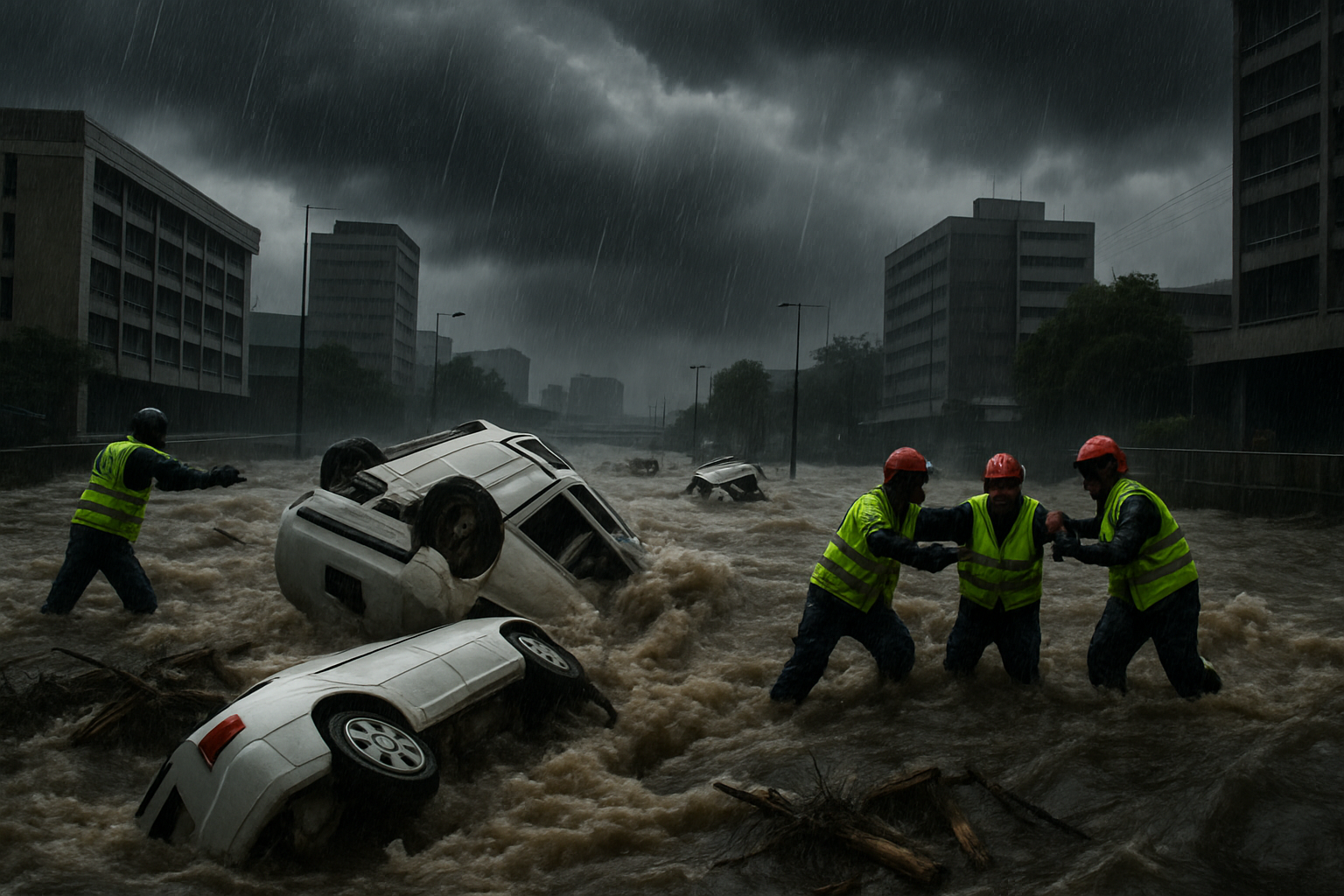
At least 23 people died in devastating flash floods that struck Kenya's capital Nairobi overnight Friday into Saturday, as torrential rains transformed major streets into raging rivers and overwhelmed the city's drainage infrastructure, according to police reports.
The deadly flooding represents the latest chapter in Kenya's ongoing struggle with extreme weather events, occurring amid a global pattern of climate volatility that has seen the 20th consecutive month of temperatures exceeding 1.5°C above pre-industrial levels.
Emergency rescue teams continued pulling bodies from floodwaters and rescuing trapped residents throughout Saturday, while widespread devastation was reported across areas ranging from Nairobi's sprawling slums to upmarket districts. The Kenya Defence Forces (KDF) and Red Cross deployed emergency response teams as authorities coordinated what sources describe as one of the largest urban flood response operations in recent Kenyan history.
Conflicting Reports and Rising Death Toll
While official police reports confirm 23 fatalities, witnesses and local officials cite potentially higher casualty figures as verification efforts continue across the affected regions. The National Police Service (NPS) acknowledged in statements that "there are other reports from witnesses citing a higher death toll, but authorities are verifying the data and collaborating with various institutions as recovery efforts continue."
The discrepancy in casualty figures reflects the chaotic nature of the disaster response, with emergency services struggling to coordinate across multiple flood zones simultaneously. George Seda, a local official, confirmed multiple deaths on Saturday while warning that the toll could rise significantly as several people remain unaccounted for.
Reports indicate that at least 71 vehicles were swept away by surging floodwaters across low-lying sections of the city, leaving major transportation corridors impassable and bringing traffic to a complete standstill in several neighborhoods.
Infrastructure Overwhelmed
The capital's drainage systems proved woefully inadequate against the intensity of Friday night's rainfall, with floodwaters surging through parts of Nairobi and trapping motorists who were forced to abandon vehicles or seek higher ground. In some areas, residents had to wade or swim to safety as water levels rose rapidly.
Homes and businesses across the metropolitan area were submerged as the overwhelmed infrastructure failed to cope with the sudden deluge. The flooding disrupted transportation networks and commercial activity throughout the capital, with emergency teams deployed across affected areas to assist stranded residents and assess the mounting damage.
Major roads became impassable rivers, with the Central Business District (CBD) and key highways completely submerged in several locations. The scale of infrastructure damage suggests recovery efforts could take weeks or months, depending on the extent of structural damage to roads, bridges, and essential services.
Emergency Response Mobilization
Cabinet Secretary Ruku ordered immediate emergency measures and convened emergency meetings as the full scale of the disaster became apparent. The coordinated response involves multiple agencies including the Kenya Defence Forces, the Red Cross, and local emergency services working around the clock to rescue trapped residents and provide humanitarian assistance.
Emergency shelters were established across the city to accommodate displaced families, while medical teams were deployed to treat injured survivors. The government's response demonstrates lessons learned from previous flooding disasters, with improved coordination between national and local authorities.
International organizations, including the Red Cross, have indicated readiness to provide additional support if requested by Kenyan authorities. The scale of the disaster may require international humanitarian assistance, particularly for long-term recovery and infrastructure rebuilding efforts.
Meteorological Warnings and Broader Context
The Kenya Meteorological Department had issued warnings for heavy rainfall exceeding 20mm within 24-hour periods across the Lake Victoria Basin, Highlands West of the Rift Valley, and other regions affecting millions of residents. However, the intensity and suddenness of the Nairobi flooding appears to have exceeded even these dire predictions.
The deadly floods occur within a broader global pattern of extreme weather disasters that have characterized early 2026. Climate scientists note that the current crisis represents part of an unprecedented 20-month period of sustained global warming, with January 2026 confirmed as the hottest month in recorded history.
Kenya has experienced increasingly severe weather events in recent years, with flooding becoming more frequent and intense during rainy seasons. The country's infrastructure, designed for historical weather patterns, has struggled to cope with the new reality of climate volatility.
Economic and Social Impact
Beyond the immediate human toll, the flooding has caused massive economic disruption across Nairobi, Kenya's commercial and financial hub. Businesses throughout the city reported significant damage, with many forced to close indefinitely while assessing structural damage and water damage to equipment and inventory.
The agricultural sector, already under pressure from irregular weather patterns, faces additional challenges as flooding affects transportation routes crucial for moving produce to urban markets. Supply chain disruptions are expected to affect food prices and availability in coming weeks.
Educational institutions serving as emergency shelters have suspended classes, affecting thousands of students. The psychological impact on communities, particularly children who witnessed the devastating floods, will require ongoing mental health support services.
Climate Change Context
The Nairobi floods represent a stark example of how climate change is manifesting in East Africa, with traditional rainy seasons becoming more unpredictable and intense. Scientists warn that without significant climate adaptation investments, such extreme weather events will become increasingly common across the region.
The disaster highlights critical infrastructure vulnerabilities in rapidly growing African cities, where urban planning has struggled to keep pace with population growth and climate change impacts. Drainage systems, road networks, and emergency services designed for historical weather patterns are proving inadequate for current conditions.
Regional climate experts emphasize the urgent need for "transformative adaptation" approaches that move beyond reactive emergency response to proactive infrastructure development designed for climate resilience.
Recovery and Reconstruction Challenges
As immediate rescue operations continue, authorities face the enormous challenge of coordinating recovery efforts across a metropolitan area of over 4 million people. The scale of infrastructure damage suggests reconstruction will require substantial international support and expertise.
Government officials stress the importance of "building back better" with climate-resilient infrastructure that can withstand future extreme weather events. This includes upgraded drainage systems, improved early warning capabilities, and enhanced emergency response protocols.
The disaster provides a crucial test of Kenya's emergency management capabilities and highlights the urgent need for enhanced regional cooperation on climate adaptation, as similar extreme weather events are expected to affect neighboring countries in the coming months.
Recovery efforts will likely take months, with the most vulnerable communities requiring sustained support for housing, healthcare, and economic recovery. The government has indicated that comprehensive damage assessments will inform long-term reconstruction planning designed to improve the city's resilience to future climate disasters.