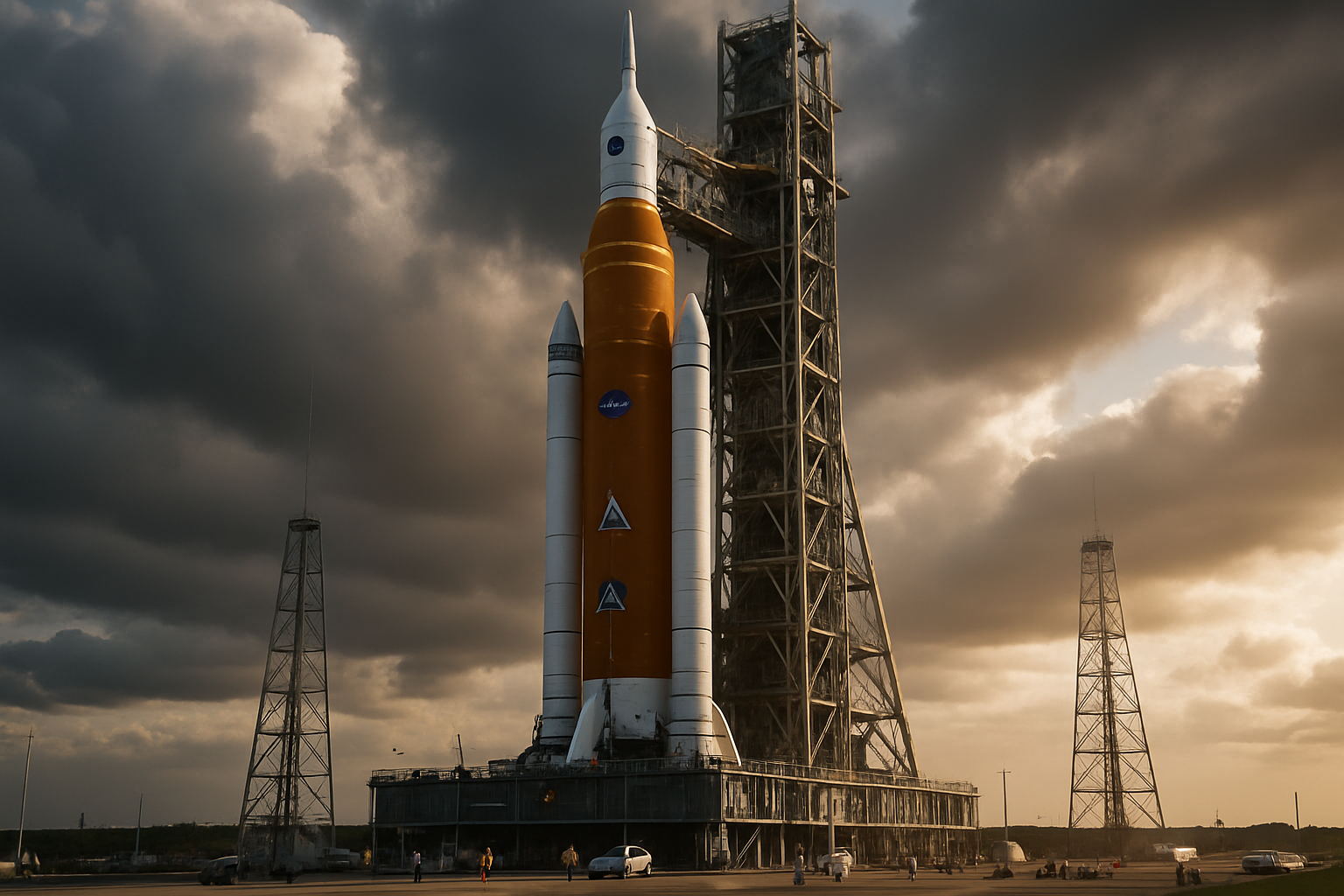
NASA's ambitious Artemis 2 mission, humanity's first crewed journey to the Moon in more than half a century, has suffered another significant setback as technical problems force the space agency to delay the launch yet again, this time pushing the mission from March into April 2026.
The latest delay comes just one day after NASA had officially targeted March 6, 2026, as the launch date following successful completion of a wet dress rehearsal. However, overnight technical issues involving helium flow to the rocket's upper stage have emerged as a critical concern that cannot be resolved within the current launch window.
According to multiple sources, the flow of helium to the Space Launch System (SLS) rocket's upper stage was interrupted during final preparations. This helium system is essential for purging the engines and pressurizing the fuel tanks - critical functions that cannot be compromised for crew safety.
A Pattern of Technical Challenges
The Artemis 2 mission has faced a series of delays dating back to early 2026. Originally scheduled for February, the mission was first pushed to March after hydrogen leak issues emerged during wet dress rehearsal testing. NASA teams initially managed minor hydrogen leaks, but the situation deteriorated at T-minus 5 minutes during a simulated countdown, prompting the first delay.
NASA Administrator Jared Isaacman had previously expressed optimism following the successful completion of the second countdown test, which appeared to resolve the hydrogen leak problems that had disrupted earlier rehearsals. The test involved loading more than 700,000 gallons of liquid hydrogen and oxygen into the massive SLS rocket.
"We will only launch when we believe we are ready. Safety comes first, always."
— Jared Isaacman, NASA Administrator
This commitment to safety over schedule reflects NASA's institutional learning from historical tragedies and demonstrates the agency's safety-first culture that prioritizes astronaut protection above meeting deadlines.
Mission Details and Crew
The Artemis 2 mission will send four astronauts on a 10-day lunar flyby - the first crewed mission beyond Earth orbit since Apollo 17 in December 1972. The international crew includes:
- Jeremy Hansen (Canadian Space Agency) - Mission Specialist
- Reid Wiseman (NASA) - Commander
- Christina Koch (NASA) - Mission Specialist
- Victor Glover (NASA) - Pilot
The crew will travel approximately 600,000 miles from Earth aboard the Orion spacecraft, powered by NASA's most powerful rocket ever built - the Space Launch System. The mission will take the astronauts around the Moon and back, serving as a crucial stepping stone toward the Artemis 3 lunar landing mission planned for 2027.
Technical Complexity and Challenges
The SLS rocket represents a marvel of modern aerospace engineering, standing 322 feet tall and weighing 5.75 million pounds when fully fueled. The complexity of the system means that multiple critical components must function flawlessly for a safe launch.
The helium system now causing delays is integral to the rocket's propulsion system. Helium serves as a pressurant gas that maintains proper pressure in the fuel tanks and helps purge propellant lines. Any interruption in helium flow could lead to catastrophic failure during launch or flight.
Previous testing revealed the challenges of working with the SLS's advanced systems. The wet dress rehearsal process involves loading the rocket with propellants and conducting a full countdown simulation, minus the actual ignition. This process has revealed multiple issues that engineers have worked methodically to resolve.
International Implications
The delay has significant implications for international partners in the Artemis program. Jeremy Hansen's participation makes this mission particularly important for the Canadian Space Agency, representing Canada's most significant human spaceflight contribution since the Space Shuttle era.
The mission is part of NASA's broader Artemis program, which aims to establish a sustainable human presence on the Moon and eventually serve as a stepping stone for Mars exploration. International cooperation through the Artemis Accords has been a key component of the program's success.
Looking Ahead
Despite the setbacks, NASA officials remain committed to the mission's success. The space agency has emphasized that these delays, while frustrating, are necessary to ensure crew safety and mission success. The technical challenges being resolved now will benefit future Artemis missions and contribute to the long-term success of lunar exploration.
The delay also occurs during what analysts call the "space economy golden age," with unprecedented commercial space activity and international cooperation. SpaceX continues its regular missions to the International Space Station, while other nations advance their own space capabilities.
NASA's methodical approach to resolving technical issues reflects lessons learned from previous space programs. The agency's willingness to delay rather than rush to launch demonstrates institutional maturity and commitment to astronaut safety that has developed over decades of human spaceflight experience.
Next Steps
NASA engineers are now working around the clock to resolve the helium system issues. The next available launch window will depend on the complexity of the required repairs and the time needed for additional testing and verification.
Once launched, Artemis 2 will mark a historic moment in space exploration - the first time humans have traveled beyond Earth orbit since the end of the Apollo era. The mission will validate deep space life support systems, radiation protection capabilities, and navigation systems that operate beyond Earth's magnetic field.
The success of Artemis 2 is crucial for maintaining momentum toward Artemis 3, which will attempt the first human lunar landing since Apollo 17. These missions represent not just technological achievements, but generational milestones that will establish the foundation for humanity's expansion into the solar system.