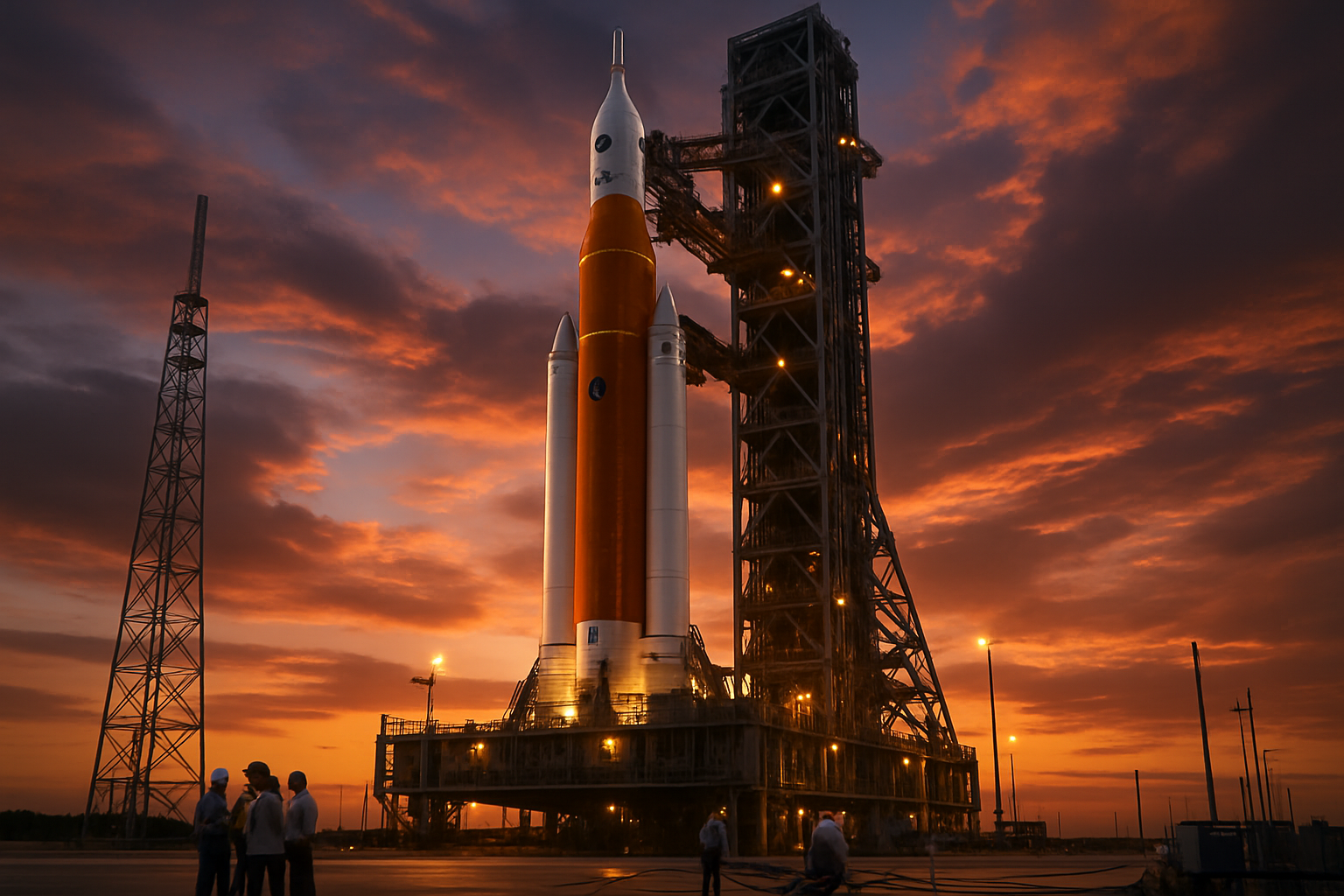
NASA announced another significant delay to its Artemis II lunar flyby mission, pushing the launch from its planned February 2026 window due to continuing technical challenges with the Space Launch System (SLS) rocket, marking the third major setback for humanity's return to deep space exploration.
The latest postponement, confirmed by both Bosnian and German space agencies on February 22, 2026, stems from persistent hydrogen leak issues and helium system failures that have plagued the massive SLS rocket during critical testing phases. This represents the most ambitious crewed space mission since Apollo 17 in 1972, designed to send four astronauts on a 10-day journey around the Moon.
Technical Challenges Mount
The primary culprit behind the delay involves critical failures in the rocket's helium flow systems affecting the upper stage, discovered during final launch preparations. Helium systems are essential for engine purging and fuel tank pressurization – safety functions that cannot be compromised when human lives are at stake.
These latest issues compound ongoing hydrogen leak problems that emerged during wet dress rehearsal testing, where the massive rocket is loaded with over 700,000 gallons of liquid hydrogen and oxygen propellants. The SLS, standing 322 feet tall and weighing 5.75 million pounds when fully fueled, represents NASA's most powerful rocket ever constructed.
According to German reports, technical problems worsened at the critical T-minus 5 minutes mark during simulated countdowns, forcing mission planners to extend the timeline further. The rocket, which had been positioned at the launch pad, must now return to the hangar for extensive repairs and modifications.
International Crew Awaits Historic Mission
The Artemis II crew consists of four astronauts representing international cooperation in space exploration: Canadian Jeremy Hansen, NASA Commander Reid Wiseman, Christina Koch, and Victor Glover. This diverse team was selected for the 10-day lunar flyby covering approximately 600,000 miles – a journey that will take them farther from Earth than any humans have traveled since the Apollo era.
"We will only launch when we believe we are ready," emphasized NASA Administrator Jared Isaacman, reflecting the agency's commitment to crew safety over schedule adherence.
— Jared Isaacman, NASA Administrator
The mission holds particular significance for the Canadian Space Agency, as Jeremy Hansen's participation represents Canada's major contribution to human spaceflight since the Space Shuttle era. The international nature of the crew underscores the global partnership driving modern space exploration efforts.
Pattern of Safety-First Approach
This latest delay continues NASA's methodical approach to space exploration, prioritizing comprehensive safety protocols over schedule pressures. The agency has classified previous technical issues, including the Boeing Starliner mission complications, as "Type A" mishaps – the same severity level as the Challenger and Columbia disasters.
The safety-first culture represents institutional learning from historical space program tragedies. NASA's frank assessment of technical challenges demonstrates transparency in acknowledging engineering vulnerabilities and internal agency mistakes that contribute to mission delays.
Recent memory includes the unprecedented medical evacuation from the International Space Station earlier in 2026, which left a skeleton crew of three astronauts and necessitated the successful Crew-12 mission to restore full operational capacity. These experiences reinforce the critical importance of thorough preparation and system reliability.
Broader Space Exploration Context
The Artemis II delays occur during what industry analysts describe as a transition from the "AI revolution to space economy golden age." Commercial space activities are accelerating rapidly, with SpaceX preparing for a potential June 2026 IPO that could value the company at over $1 trillion.
International competition in space capabilities intensifies as China advances its Shenlong reusable spacecraft program, European nations expand rocket manufacturing capacity, and emerging countries like Pakistan prepare for their first astronaut mission to China's Tiangong station in October 2026.

Strategic Implications for Lunar Exploration
Despite the delays, Artemis II remains crucial as a stepping stone toward Artemis III, planned for 2027, which aims to land the first humans on the lunar surface since Apollo 17. The mission will validate deep space systems including life support, radiation protection, and navigation capabilities beyond Earth's magnetic field.
The program's success is essential for establishing a sustainable lunar presence and eventual Mars exploration. Technical achievements from Artemis II will directly inform the development of lunar bases and long-duration space missions, addressing challenges such as Space-Associated Neuro-Ocular Syndrome (SANS) that affects astronaut vision during extended missions.
SpaceX has strategically pivoted from Mars colonization to lunar settlement development, targeting self-sustaining Moon cities within 10 years. This shift leverages the Moon's advantages: three-day travel times, monthly launch windows, and real-time communications compared to Mars' 26-month alignment cycles.
Looking Forward
While the latest delays are disappointing for space exploration enthusiasts, they reflect NASA's matured institutional approach to complex space operations. The hydrogen leak and helium system issues, while challenging, demonstrate the sophisticated nature of deep space transportation systems that require flawless operation.
The methodical problem-solving approach builds long-term confidence in the Artemis program and contributes to NASA's reputation for prioritizing astronaut safety. Success in resolving these technical challenges will establish foundations for routine human space operations beyond Earth orbit.
As international space agencies continue various orbital projects and commercial ventures expand capabilities, NASA's deliberate approach to Artemis II positions the United States for leadership in the emerging space economy while maintaining the highest safety standards for human space exploration.
The Road Ahead
The next launch window for Artemis II remains to be determined as NASA engineers work systematically through the technical challenges. The success of this mission will mark humanity's return to deep space after more than five decades and establish the foundation for a new era of lunar exploration.
With continued international cooperation through ISS operations, commercial space sector growth, and advancing AI integration in space operations, the delays to Artemis II occur within a broader context of unprecedented space industry expansion. The mission's eventual success will represent a generational achievement for space exploration and human technological development.