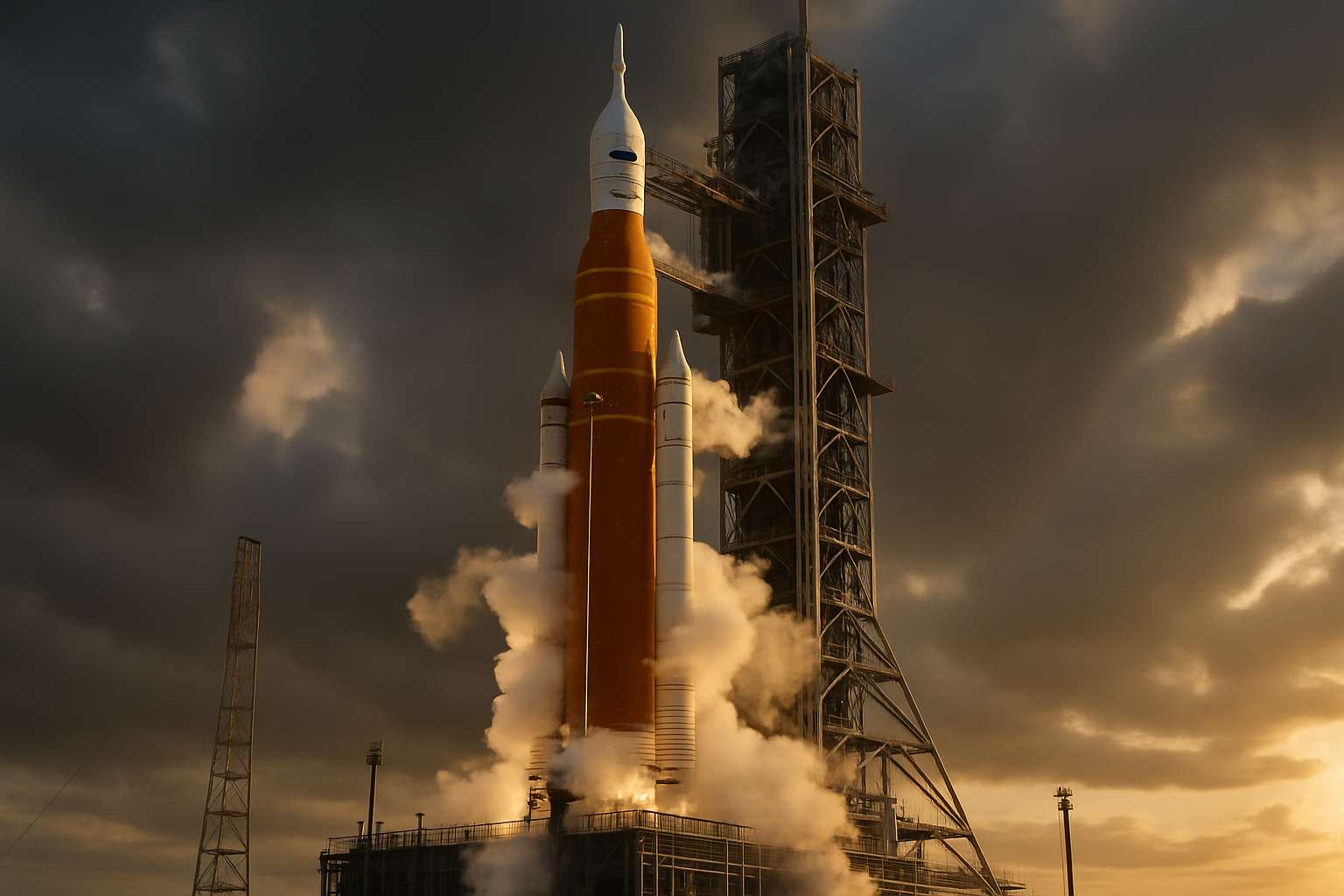
NASA has postponed its highly anticipated Artemis II mission to March 2026 following the discovery of hydrogen leaks during a critical fueling test, marking another delay for the program that aims to return humans to lunar orbit for the first time since the Apollo era.
The space agency announced the delay on February 3, 2026, just days before the originally scheduled February 8 launch date. The decision came after engineers detected hydrogen leaks during what NASA calls a "wet dress rehearsal" - a comprehensive test that simulates actual launch conditions by fully fueling the massive Space Launch System (SLS) rocket.
The Artemis II mission represents a historic milestone in space exploration, planning to send four astronauts on a 10-day journey around the moon without landing. Among the crew is Canadian astronaut Jeremy Hansen, making this an international collaboration in humanity's return to deep space exploration.
Technical Challenges Force Delay
According to sources familiar with the testing, the hydrogen leak was discovered during routine pre-launch procedures at Kennedy Space Center in Florida. The leak occurred in the rocket's fuel system, which uses liquid hydrogen as one of the primary propellants for the SLS rocket's powerful engines.
"NASA is pushing the proposed launch date for its Artemis II lunar mission back to at least March after finding a hydrogen leak during a major fueling test," NASA officials confirmed in statements to multiple news outlets. The agency emphasized that the delay will "allow teams to review data and conduct a second test" before proceeding with the historic mission.
This latest setback adds to a series of technical and scheduling challenges that have affected the Artemis program since its inception. The SLS rocket system, which stands taller than the Statue of Liberty, represents one of the most complex aerospace engineering projects ever undertaken by NASA.
Mission Significance and International Collaboration
The Artemis II mission holds extraordinary significance as it will be the first time humans venture beyond Earth orbit since the Apollo 17 mission in December 1972 - more than 50 years ago. The mission will test critical systems and procedures necessary for future lunar landings planned under the Artemis III mission, currently scheduled for 2027.
The international nature of the mission, featuring Canadian astronaut Jeremy Hansen alongside American crew members, reflects NASA's commitment to collaborative space exploration. Canada's participation stems from its contribution to the Lunar Gateway project and other Artemis program components.
The 10-day mission profile includes a lunar flyby trajectory that will take the crew around the moon and back to Earth, testing the Orion spacecraft's life support systems, navigation capabilities, and crew interfaces in the deep space environment.
Previous Timeline and Expectations
The February delay represents the latest in a series of schedule adjustments for the Artemis program. Originally conceived during the Trump administration with ambitious timelines, the program has faced numerous technical and budgetary challenges that have necessitated realistic schedule revisions.
NASA had been targeting the February 8, 2026 launch window based on optimal orbital mechanics and weather conditions. The shift to March maintains viable launch opportunities while providing engineering teams sufficient time to address the hydrogen leak issues and complete additional testing protocols.
Engineering Analysis and Safety Protocols
Hydrogen leaks represent a serious safety concern in rocket operations due to the highly volatile nature of the fuel. NASA's decision to delay rather than attempt repairs under schedule pressure demonstrates the agency's commitment to crew safety and mission success.
The wet dress rehearsal process involves fully loading the rocket with propellants and conducting a complete launch countdown, stopping just short of engine ignition. This testing protocol allows engineers to identify and resolve issues in a controlled environment rather than during an actual launch attempt.
Industry experts note that hydrogen handling has been a persistent challenge in rocket operations, with NASA's Space Shuttle program experiencing similar issues throughout its operational history. The SLS rocket's scale and complexity amplify these technical challenges.
Economic and Political Implications
The delay carries significant economic implications for NASA's budget and the broader aerospace industry. The Artemis program represents a multi-billion dollar investment in American space capabilities, with extensive contractor networks dependent on program milestones and schedules.
Political support for the Artemis program has remained generally bipartisan, though schedule delays potentially affect funding discussions and international partner commitments. The program's success is viewed as critical to maintaining American leadership in space exploration amid increasing competition from other spacefaring nations.
Future Timeline and Preparation
NASA officials indicate that March 2026 represents the earliest possible launch window, contingent on successful resolution of the hydrogen leak issues and completion of a second wet dress rehearsal. The agency has not specified exact dates within the March timeframe, preferring to maintain schedule flexibility based on technical readiness.
The delay also provides additional time for crew training and mission preparation activities. The four-person crew continues intensive training programs covering emergency procedures, spacecraft systems, and mission-specific protocols.
Beyond Artemis II, NASA continues planning for the Artemis III lunar landing mission, which aims to place the first woman and the first person of color on the moon's surface. The success of Artemis II remains crucial for validating systems and procedures necessary for this historic achievement.
International Reactions and Support
International space agencies and partner nations have expressed continued support for the Artemis program despite the latest delay. The European Space Agency, Japan Aerospace Exploration Agency, and other partners remain committed to their respective contributions to the broader Artemis architecture.
Canadian space officials have reaffirmed their commitment to the mission and astronaut Jeremy Hansen's participation. The delay provides additional preparation time for international coordination and joint mission planning activities.
The postponement to March 2026 reflects NASA's methodical approach to human spaceflight safety while maintaining momentum toward the ultimate goal of sustainable lunar exploration and eventual missions to Mars. As teams work to resolve the technical challenges, the space agency remains focused on delivering a successful mission that will mark humanity's triumphant return to deep space exploration.