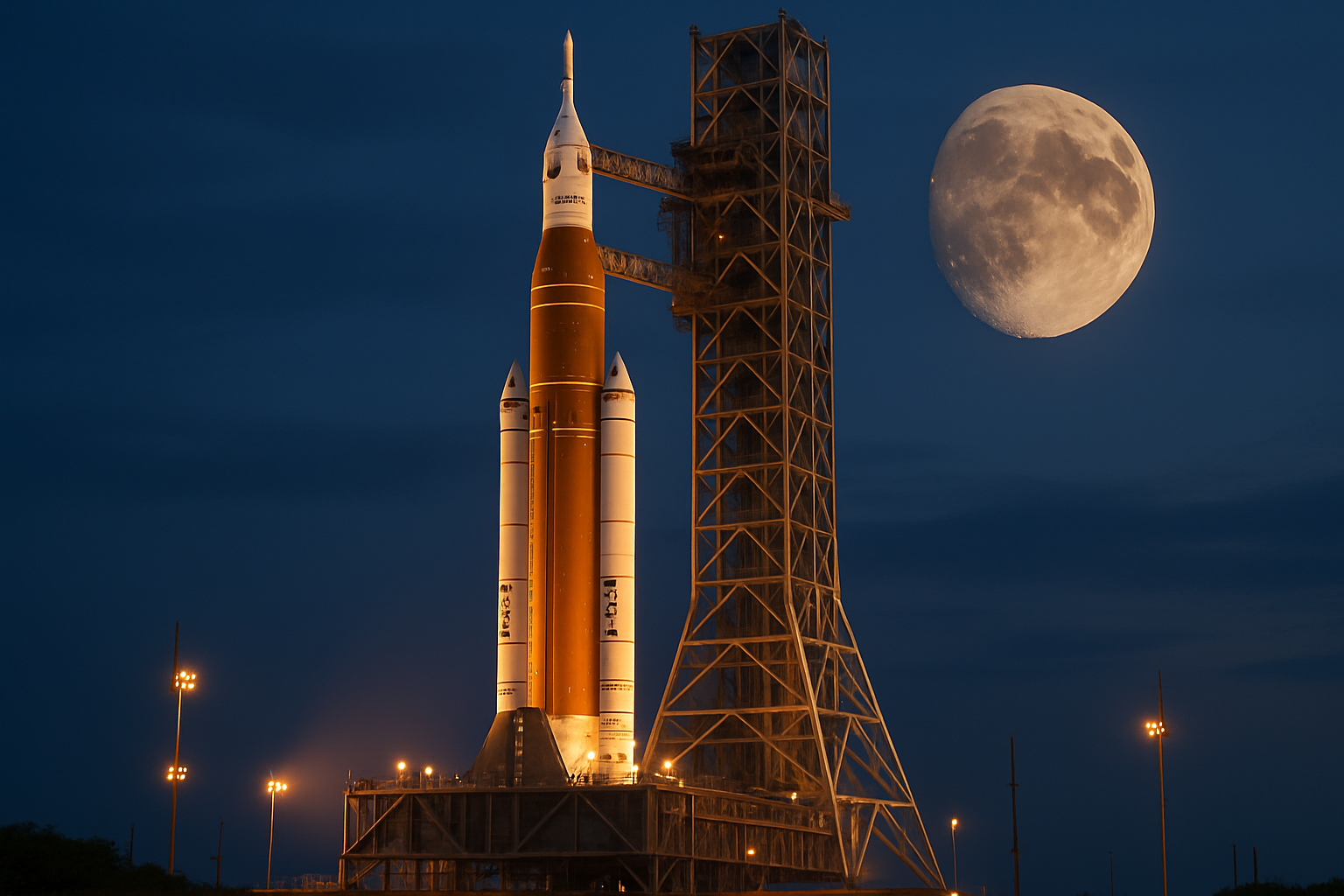
NASA has announced that the highly anticipated Artemis II mission could launch as early as February 8, 2026, marking a pivotal moment in humanity's return to lunar exploration and setting the stage for the first crewed Moon landing in over 50 years.
The 10-day mission represents a critical milestone in NASA's Artemis program, designed to establish a sustainable human presence on the Moon and eventually pave the way for Mars exploration. Unlike the upcoming Artemis III mission, Artemis II will not include a lunar landing but will instead conduct a comprehensive flyby of the Moon with a four-person crew aboard the Orion spacecraft.
Mission Overview and Objectives
The Artemis II mission will serve as the first crewed test of NASA's Space Launch System (SLS) rocket and Orion spacecraft in deep space conditions. The crew will travel approximately 240,000 miles from Earth, following a trajectory that takes them around the Moon before returning safely to Earth.
This mission builds upon the success of Artemis I, the uncrewed test flight that successfully completed a lunar orbit in late 2022, demonstrating the capabilities of the SLS rocket and Orion capsule systems. The data collected from Artemis I has been instrumental in finalizing preparations for the crewed mission.
Technical Preparations and Safety Measures
NASA engineers have spent months conducting final system checks and refinements to ensure crew safety throughout the mission. The Orion spacecraft features advanced life support systems, radiation shielding, and emergency abort capabilities designed to protect astronauts during the journey through the Van Allen radiation belts and deep space environment.
The Space Launch System, standing at 322 feet tall, represents the most powerful rocket NASA has ever built for deep space exploration. Its successful performance will be crucial for future Artemis missions, including the planned lunar landing missions that will follow.
International Collaboration and Crew Selection
While specific crew assignments for Artemis II have not been detailed in the latest update, the mission is expected to include astronauts from NASA's diverse corps of space explorers. The Artemis program emphasizes international cooperation, with partnerships established with space agencies from Canada, Europe, Japan, and other nations.
The mission's success will demonstrate not only American space capabilities but also the effectiveness of international collaboration in advancing human space exploration beyond Earth's orbit.
Historical Significance
Artemis II will mark the first time humans have traveled beyond Earth's orbit since the Apollo 17 mission in December 1972. This 54-year gap in deep space human exploration makes the upcoming mission particularly significant for the global space community.
The mission name "Artemis" pays homage to the twin sister of Apollo in Greek mythology, while also representing NASA's commitment to landing the first woman and next man on the Moon through the broader Artemis program.
Future Implications
Success of Artemis II will directly enable Artemis III, currently planned for 2027, which aims to return humans to the lunar surface for the first time since the Apollo era. These missions are designed to establish a foundation for long-term lunar exploration, including the construction of the lunar Gateway space station and eventual permanent lunar bases.
The technological advances and operational experience gained from Artemis II will also contribute to NASA's long-term goals of sending humans to Mars, potentially in the 2030s. The Moon serves as a crucial testing ground for technologies and procedures that will be essential for the longer journey to the Red Planet.
Launch Preparations at Kennedy Space Center
Teams at NASA's Kennedy Space Center in Florida are conducting final preparations for the February launch window. Weather conditions, technical readiness, and crew training schedules will all factor into the final launch date determination within the target timeframe beginning February 8.
The mission's 10-day duration allows for comprehensive testing of all spacecraft systems while providing the crew with an unprecedented view of Earth from deep space and close-up observations of the lunar surface during the flyby phase.
As NASA continues to refine its preparations, the space agency remains committed to ensuring the highest safety standards for this historic return to deep space exploration, marking a new chapter in human space exploration that could inspire generations of future explorers and scientists.