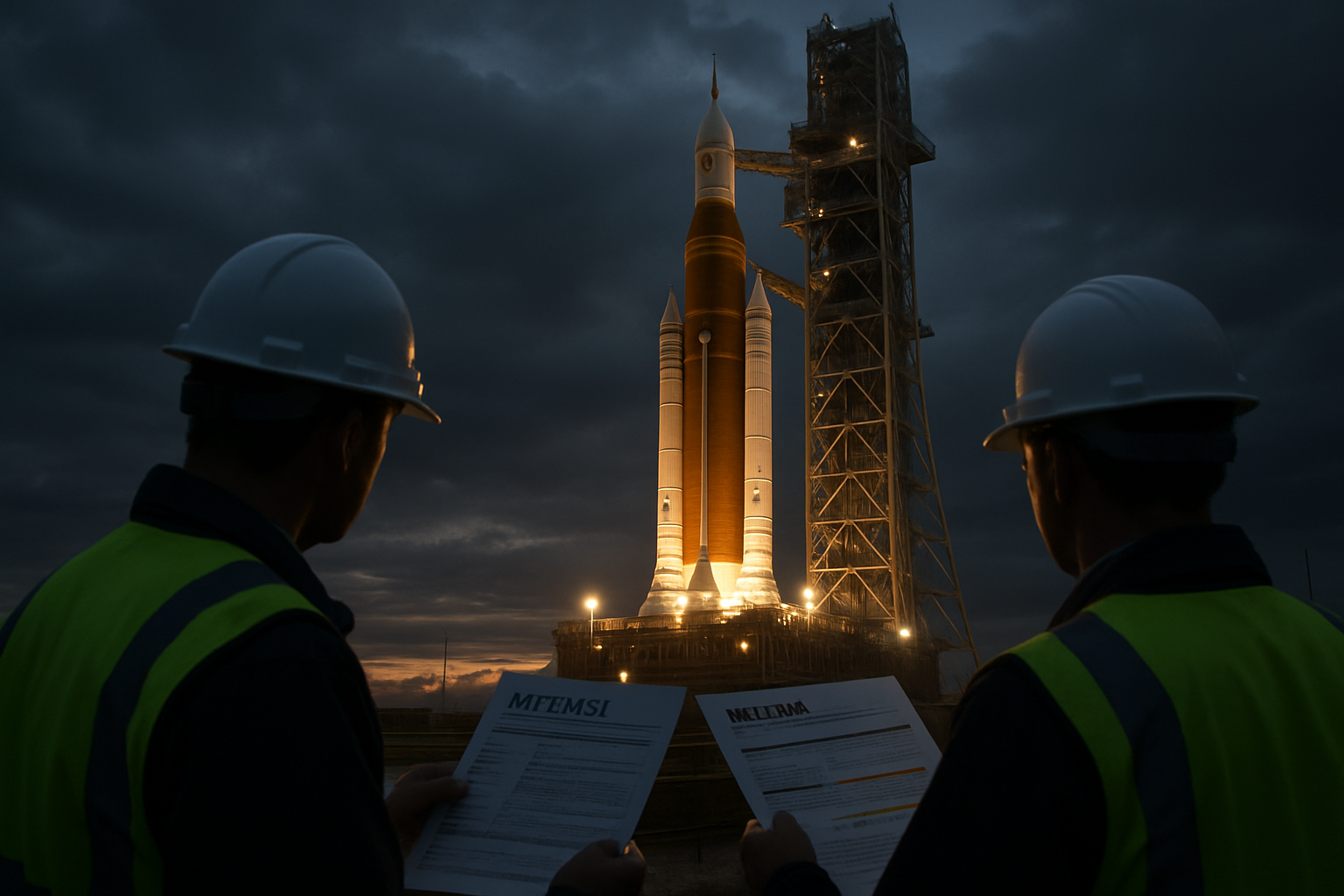
NASA on Friday announced significant adjustments to its Artemis lunar exploration program, adding a mission ahead of its planned crewed moon landing and postponing the landing to 2028 from 2027, marking the latest in a series of delays that have plagued America's return to the Moon.
The announcement represents a fundamental restructuring of the agency's ambitious lunar program, which aims to land the first humans on the Moon since Apollo 17 in 1972. The decision comes amid persistent technical challenges with the Space Launch System (SLS) rocket and reflects NASA's commitment to prioritizing astronaut safety over schedule adherence.
Major Program Restructuring
According to sources familiar with the program, NASA Administrator Jared Isaacman announced the comprehensive overhaul during a press conference, outlining key changes including the addition of a new test mission between Artemis II and the eventual lunar landing. This additional mission is designed to build "launch muscle memory" and validate critical systems before attempting the historic Moon landing.
The restructuring moves the actual lunar surface mission from Artemis III to Artemis IV, while maintaining the agency's commitment to returning humans to the Moon by 2028. The decision also involves canceling a multibillion-dollar Boeing upgrade to the SLS rocket core stage, representing a significant cost-control measure.
"We will only launch when we believe we are ready. This approach reflects our institutional learning from historical tragedies and demonstrates our commitment to comprehensive safety over schedule pressure."
— Jared Isaacman, NASA Administrator
Technical Challenges Drive Timeline Changes
The delays stem from persistent technical issues that have emerged during testing phases of the SLS rocket system. Critical problems include hydrogen leak issues during wet dress rehearsal testing and helium system failures affecting the rocket's upper stage, which is essential for engine purging and fuel tank pressurization.
These problems have proven particularly challenging, with issues emerging at T-minus 5 minutes during countdown simulations. The SLS rocket, standing 322 feet tall and weighing 5.75 million pounds when fully fueled, requires flawless operation of multiple critical systems and over 700,000 gallons of liquid hydrogen and oxygen.
The current Artemis II mission, which would send four astronauts on a 10-day lunar flyby, continues to face delays despite extensive testing and preparation. The international crew includes Canadian astronaut Jeremy Hansen, NASA's Reid Wiseman (commander), Christina Koch, and Victor Glover.
Safety-First Approach
The program adjustments reflect NASA's evolved safety culture, which prioritizes thorough problem-solving over schedule adherence. This approach stems from institutional learning following the Challenger and Columbia tragedies, with recent Boeing Starliner issues classified as a Type A mishap—the same severity level as those historical disasters.
NASA's methodical approach to addressing technical challenges demonstrates the agency's commitment to building sustainable, long-term capabilities rather than rushing to meet arbitrary deadlines. The additional test mission will provide crucial operational experience and validate deep space systems including life support, radiation protection, and navigation beyond Earth's magnetic field.
International Implications and Competition
The delays occur during what experts describe as a "space economy golden age," with intensifying international competition and unprecedented commercial space activity. China continues advancing its Shenlong reusable spacecraft program, while Pakistan has selected astronaut candidates for a mission to China's Tiangong space station scheduled for October-November 2026.
Meanwhile, SpaceX is preparing for a potentially trillion-dollar IPO in June 2026 and has strategically pivoted from Mars colonization to lunar city development within 10 years. The commercial space sector's rapid advancement contrasts with NASA's more methodical approach to human spaceflight safety.
European nations are also expanding their space capabilities, with Germany's Isar Aerospace building rocket testing facilities in Sweden and processing 30 engines monthly. These developments underscore the increasingly competitive landscape in which NASA's Artemis program operates.
Current Mission Status
The International Space Station continues operating at full capacity following the successful Crew-12 mission in February 2026, which restored the station's seven-person complement after an unprecedented medical evacuation. French astronaut Sophie Adenot made history as the first French woman to reach the ISS in 25 years, conducting critical research including lung tissue cultivation and Space-Associated Neuro-Ocular Syndrome (SANS) studies essential for future lunar missions.
These ongoing research efforts provide crucial data for understanding how human physiology adapts to long-duration spaceflight—knowledge that will be essential for eventual lunar settlements and Mars exploration missions.
Economic and Strategic Context
The Artemis restructuring occurs amid a global memory crisis, with semiconductor prices increasing sixfold, driving interest in space-based data centers and off-world computing infrastructure. This economic pressure adds urgency to establishing sustainable lunar presence and resource utilization capabilities.
The program represents billions of dollars in space infrastructure investment and maintains American space leadership during a period of expanding international cooperation through the Artemis Accords partnerships while managing competitive dynamics with other spacefaring nations.
Looking Ahead to 2028
Despite the delays and additional testing requirements, NASA maintains its commitment to the 2028 timeline for human return to the lunar surface. The restructured program emphasizes building confidence in deep space transportation systems through incremental capability development, following the methodical approach that characterized the successful Apollo program.
The additional test mission will validate critical technologies and procedures before attempting the lunar landing, potentially reducing risks and increasing mission success probability. This approach aligns with NASA's broader strategy of establishing sustainable lunar presence as a stepping stone for eventual Mars exploration.
The restructuring reflects the agency's maturation in handling complex space operations while balancing ambitious exploration goals with rigorous safety standards. As NASA prepares for humanity's return to the Moon after more than half a century, the emphasis remains on thorough preparation and systematic problem-solving to ensure mission success and crew safety.