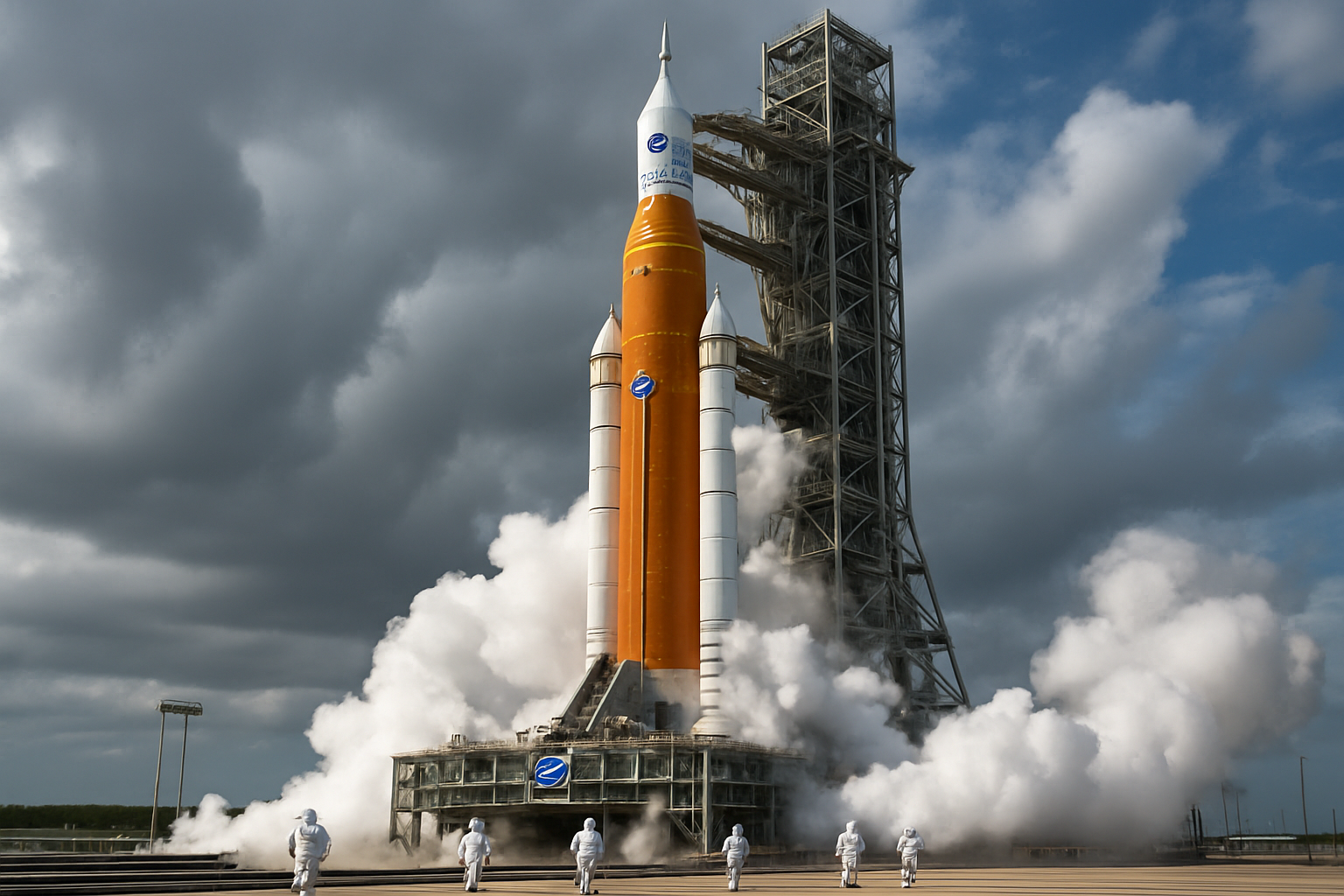
NASA has postponed the historic Artemis II mission to March 2026 after discovering critical hydrogen fuel leaks during comprehensive pre-launch testing, marking another significant delay for humanity's return to lunar exploration after more than five decades.
The space agency announced the delay following a two-day wet dress rehearsal test that revealed persistent hydrogen leakage issues with the Space Launch System (SLS) rocket's fuel system. The mission, originally scheduled for launch on Sunday, February 8, 2026, will now target the next available launch window opening March 6, 2026.
NASA Administrator Jared Isaacman confirmed the decision in an official statement, emphasizing the agency's commitment to safety over schedule pressures. "We will only launch when we believe we are ready to carry out this historic mission," Isaacman said, referencing the mission's significance as the first crewed journey beyond Earth orbit since Apollo 17 in December 1972.
Technical Challenges Emerge During Critical Testing
The problems surfaced during the comprehensive wet dress rehearsal, a crucial pre-launch procedure that involves fully fueling the massive SLS rocket with liquid hydrogen and liquid oxygen propellants. Teams initially managed to address minor hydrogen leaks that occurred early in the test sequence, but the situation deteriorated as the simulated countdown approached the critical T-minus five-minute mark.
According to NASA's technical assessment, the hydrogen leak became progressively worse during the final phases of the countdown simulation, forcing engineers to halt the procedure. The agency stated that teams need to "fully review data from the test, mitigate each issue, and return to testing" before proceeding with the actual launch.
This latest delay represents the second postponement for Artemis II in recent months. Previous internal reports had already indicated potential scheduling challenges, with NASA having initially targeted the February launch window following earlier technical reviews conducted throughout 2025.
Mission Significance and International Implications
Artemis II represents a watershed moment in space exploration, carrying four astronauts on a 10-day lunar flyby mission that will test critical systems needed for the subsequent Artemis III lunar landing mission planned for 2027. The crew includes Canadian astronaut Jeremy Hansen, highlighting the international cooperative nature of the Artemis program.
The mission will launch from Kennedy Space Center using the SLS rocket and Orion spacecraft, systems that have undergone years of development and testing. The success of Artemis II is considered essential for validating the technologies and procedures needed to establish a sustainable human presence on the Moon.
"This delay, while disappointing, demonstrates NASA's unwavering commitment to crew safety and mission success over artificial deadlines."
— Space industry analyst
Historical Context of Artemis Program Delays
The Artemis program has faced multiple delays since its inception, with various technical, budgetary, and logistical challenges affecting the timeline. The SLS rocket system, in particular, has experienced numerous development hurdles, including cost overruns and technical complications that have pushed back the overall program schedule.
These delays occur against the backdrop of increased international competition in lunar exploration, with China and other nations advancing their own lunar programs. The extended timeline has raised questions about NASA's ability to meet its goal of returning Americans to the Moon before the end of the decade.
Technical Analysis and Safety Protocols
The hydrogen leak issue specifically affects the rocket's propulsion system, which relies on the precise mixing of liquid hydrogen and liquid oxygen to generate the enormous thrust needed to escape Earth's gravity. Hydrogen, being the smallest molecule, is particularly prone to leakage issues, requiring extremely tight seals and careful handling procedures.
NASA's decision to conduct a comprehensive review reflects lessons learned from previous space program tragedies, where schedule pressure contributed to safety compromises. The agency's current safety-first approach represents a significant cultural shift from earlier eras of space exploration.
Impact on Future Artemis Missions
The delay of Artemis II will likely have cascading effects on subsequent missions in the Artemis program. The Artemis III mission, which aims to land astronauts on the lunar surface for the first time since 1972, may face additional delays as NASA works to resolve the technical issues affecting the SLS system.
Industry experts note that while delays are frustrating, they are preferable to rushing into a mission with unresolved technical problems. The complexity of returning to the Moon after a 50-year hiatus cannot be understated, requiring the integration of new technologies with proven spaceflight principles.
International Partnerships and Expectations
The delay affects not only NASA but also international partners who have invested significantly in the Artemis program. The Canadian Space Agency, which provided Jeremy Hansen for the crew, and other partner nations are closely monitoring the situation as they prepare their own contributions to future lunar missions.
The March launch window will provide additional time for teams to conduct thorough testing and potentially implement design modifications to prevent similar issues. NASA has indicated that they will conduct another full wet dress rehearsal before committing to the new launch date.
As NASA continues to work toward resolving these technical challenges, the Artemis II mission remains a critical stepping stone toward establishing a permanent human presence on the Moon and eventually sending astronauts to Mars. The delay, while setback, underscores the agency's commitment to ensuring mission success and crew safety above all other considerations.