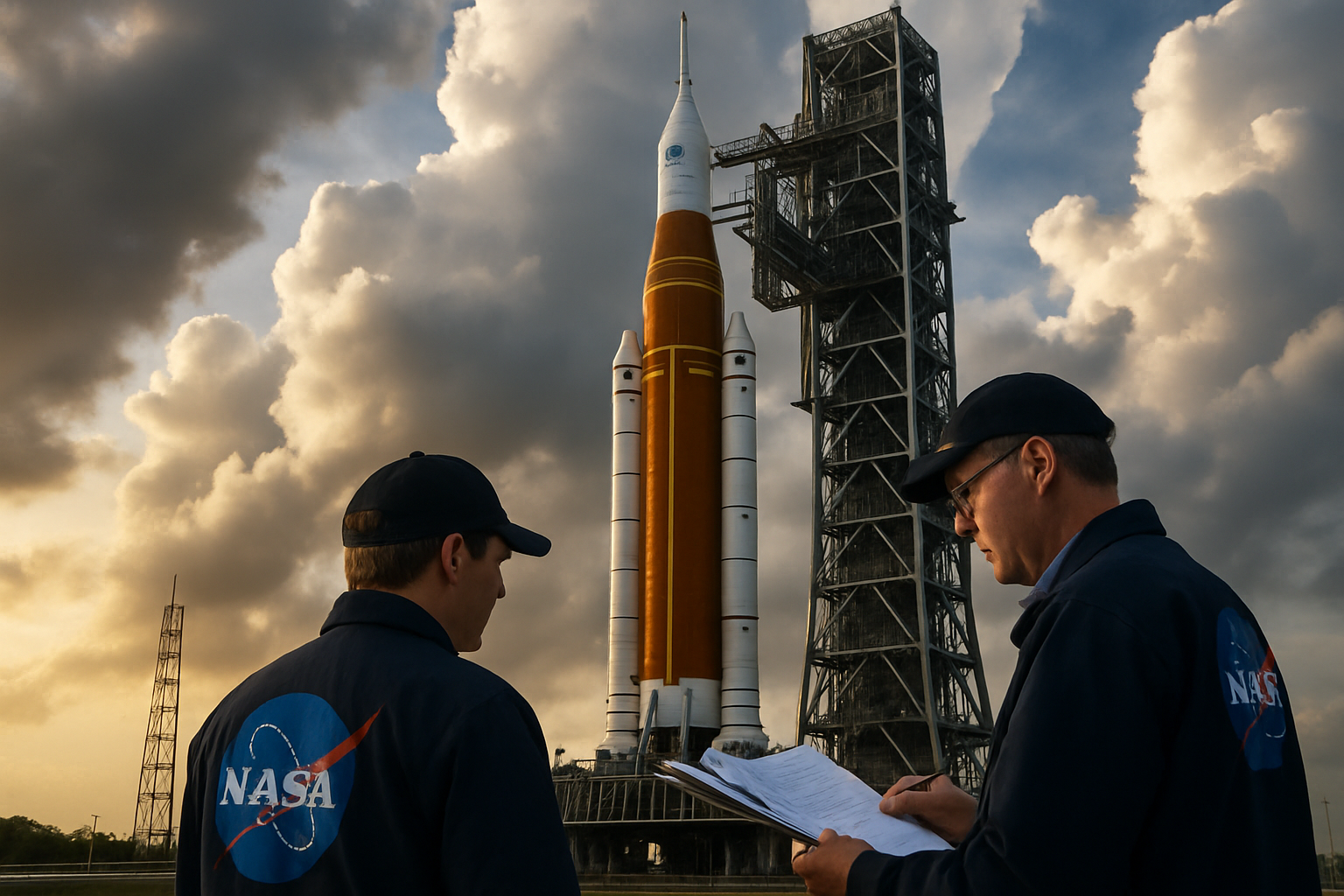
NASA announced a sweeping overhaul of its troubled Artemis lunar program on Friday, adding an additional test mission while canceling a multibillion-dollar Boeing upgrade to the Space Launch System rocket, all while maintaining its ambitious goal of returning humans to the Moon by 2028.
The significant changes represent NASA's response to persistent technical challenges that have plagued the program for months, including hydrogen leak issues and helium system failures that have repeatedly delayed the Artemis II mission. NASA Administrator Jared Isaacman emphasized that the agency is "essentially swapping the actual moon landing for an additional test mission staged closer to Earth."
Strategic Mission Restructuring
The restructuring moves the planned lunar surface landing from Artemis III to Artemis IV, while inserting a new orbital test mission to build what Isaacman calls "launch muscle memory." This approach mirrors the methodical progression of the Apollo program from the 1960s, emphasizing incremental capability building over rapid advancement.
According to multiple international sources, the changes were announced during a press conference at Kennedy Space Center featuring Isaacman and NASA Associate Administrator Amit Kshatriya. The decision comes after extensive analysis of the program's technical challenges and cost overruns that have beset the initiative.
"We will only launch when we believe we are ready. This strategic revision allows for improved launch muscle memory while ensuring Americans can return to the Moon's surface by 2028."
— Jared Isaacman, NASA Administrator
Technical Challenges Drive Changes
The Artemis program has faced a series of technical setbacks throughout 2026. The Artemis II mission, originally scheduled for February 2026, has been delayed multiple times due to persistent hydrogen leak problems during wet dress rehearsal testing. These issues were compounded by critical helium system failures affecting the Space Launch System rocket's upper stage - essential components for engine purging and fuel tank pressurization.
The 322-foot SLS rocket, weighing 5.75 million pounds when fully fueled with over 700,000 gallons of liquid hydrogen and oxygen, represents the most powerful rocket NASA has ever built. However, the persistent technical problems have highlighted the complexity of returning humans to deep space after a 50-year gap since Apollo 17.
NASA teams have conducted extensive testing, including multiple countdown rehearsals, but issues continue to emerge at critical moments. During simulated countdowns, problems have materialized as late as T-minus 5 minutes, forcing mission delays and comprehensive system reviews.
Boeing Upgrade Cancellation
One of the most significant changes involves canceling a costly Boeing upgrade to the SLS rocket's core stage. This multibillion-dollar enhancement was originally planned to increase the rocket's payload capacity for future missions. However, NASA has determined that the cost and schedule implications outweigh the benefits, particularly given the program's existing challenges.
The decision reflects NASA's broader effort to control costs while maintaining mission safety and timeline commitments. Sources indicate the Boeing upgrade would have added substantial complexity to an already challenging program, potentially causing further delays.
International and Commercial Context
The Artemis program restructuring occurs amid intensifying international competition in lunar exploration. China has been advancing its own lunar capabilities through the Shenlong spacecraft program, while SpaceX continues its rapid commercial space development. The company is preparing for a potential trillion-dollar IPO in June 2026, representing the maturation of the "space economy golden age."
International cooperation remains a cornerstone of Artemis, with Canadian astronaut Jeremy Hansen among the four-person crew selected for the eventual lunar flyby mission. The crew also includes NASA astronauts Reid Wiseman (commander), Christina Koch, and Victor Glover, representing NASA's commitment to diversity and international partnership in deep space exploration.
Safety-First Approach
NASA's methodical approach to the program challenges reflects institutional learning from previous space tragedies. The recent classification of Boeing's Starliner mission as a "Type A" mishap - the same severity level as the Challenger and Columbia disasters - has reinforced the agency's commitment to thorough safety protocols over schedule adherence.
This safety-first culture extends to all Artemis operations, with comprehensive testing requirements and multiple validation phases before any crewed missions proceed. The decision to add an additional test mission rather than proceed directly to lunar landing demonstrates this conservative approach.
Looking Toward 2028
Despite the delays and restructuring, NASA maintains its commitment to landing astronauts on the Moon by 2028. The additional test mission is designed to validate critical systems and procedures needed for the eventual lunar surface operations, including life support systems, radiation protection, and navigation capabilities operating beyond Earth's magnetic field.
The restructured program will provide essential data for establishing a sustainable lunar presence, which serves as a stepping stone for future Mars exploration. Research conducted on the International Space Station, including studies on Space-Associated Neuro-Ocular Syndrome (SANS) and lung tissue cultivation in microgravity, continues to inform preparations for extended deep space missions.
Economic and Strategic Implications
The Artemis program represents a significant investment in America's space capabilities, with billions of dollars committed to lunar infrastructure development. The program's success is viewed as crucial for maintaining American leadership in space exploration and supporting the growing commercial space economy.
Current space industry developments include unprecedented private sector investment, with companies like SpaceX pioneering reusable rocket technology and planning space-based data centers. This commercial expansion creates opportunities for public-private partnerships that could enhance Artemis mission capabilities while controlling costs.
Technical Milestones Ahead
The immediate focus remains on resolving the technical issues affecting Artemis II, which will serve as the first crewed mission beyond Earth orbit since Apollo 17 in December 1972. This 10-day lunar flyby mission will cover approximately 600,000 miles and validate critical systems for future lunar operations.
Success of the restructured program depends on systematic resolution of current technical challenges, continued international cooperation, and sustained political and financial support. The methodical approach, while extending timelines, aims to establish a reliable foundation for routine lunar operations and eventual Mars exploration.
As NASA continues to work through the technical challenges, the agency's transparency in acknowledging setbacks and adjusting plans demonstrates institutional maturity. The Artemis program's evolution reflects the complex realities of pioneering space exploration while maintaining the ultimate goal of returning humanity to the Moon and preparing for the next giant leap to Mars.