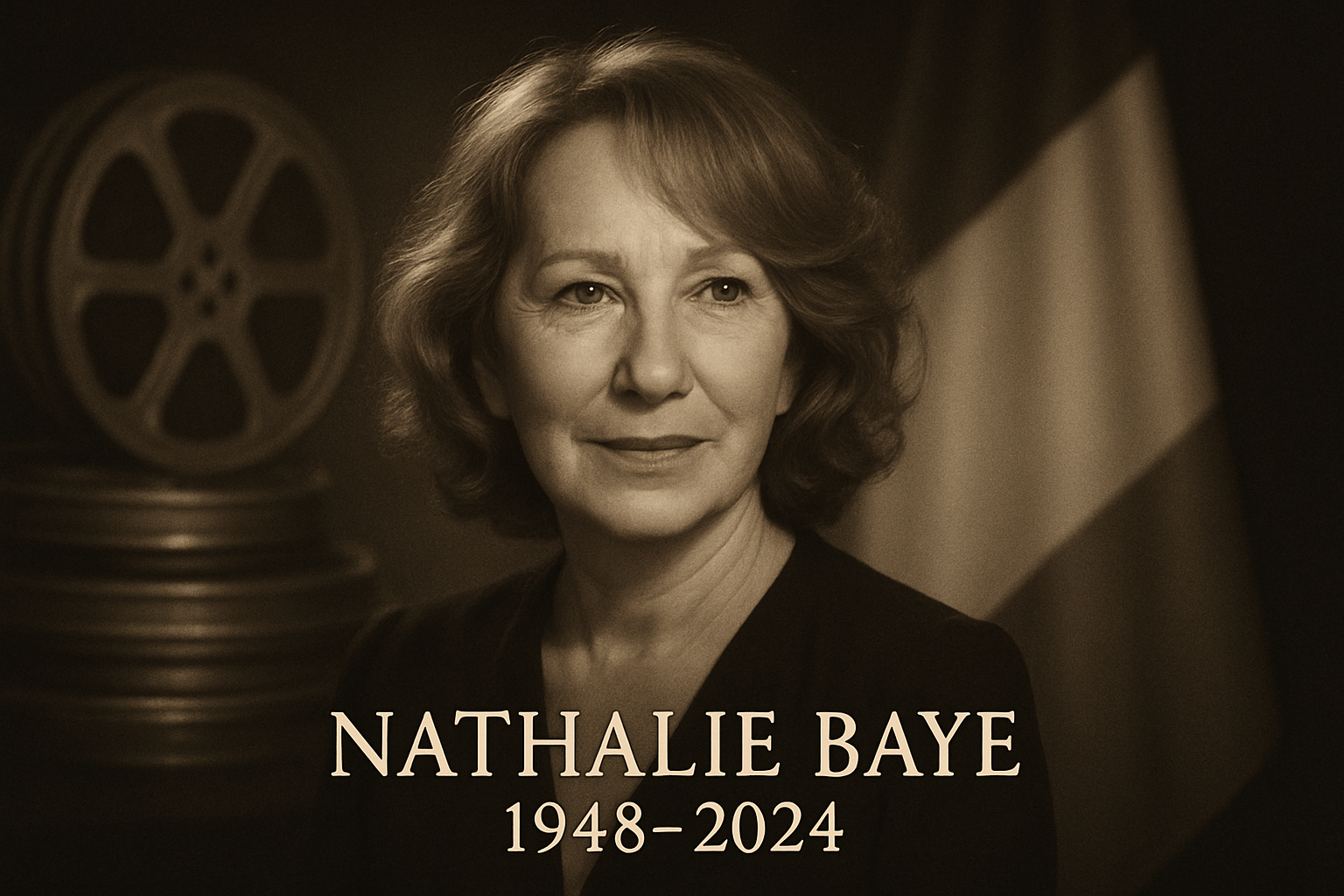
French cinema lost one of its most versatile and accomplished actresses on Friday evening when Nathalie Baye died at her Paris home at age 77, following a battle with Lewy body disease.
The four-time César Award winner, who starred in over 100 films spanning six decades, passed away peacefully on Friday night, April 17, 2026, according to her family, who confirmed the news to AFP on Saturday morning. Her death marks the end of an extraordinary career that bridged French auteur cinema and international blockbusters, establishing her as one of the most respected performers of her generation.
A Career of Remarkable Versatility
Throughout her distinguished career, Baye demonstrated an exceptional ability to inhabit diverse roles, seamlessly transitioning between leading parts and supporting characters, from bourgeois sophisticates to working-class women, and from intimate dramas to broad comedies. This chameleon-like quality made her one of French cinema's most sought-after actresses and earned her recognition from the industry's most prestigious directors.
Born on July 6, 1948, Baye initially pursued dance before discovering her passion for acting. Her breakthrough came in the 1970s, and she quickly established herself as a fixture of the New Wave movement and beyond. Her filmography reads like a who's who of French cinema, having worked with legendary directors including François Truffaut, Claude Chabrol, Bertrand Blier, and in more recent years, Xavier Dolan.
International Recognition and Hollywood Success
While Baye remained deeply rooted in French cinema, she also achieved international recognition, most notably through her role in Steven Spielberg's 2002 film "Catch Me if You Can," where she starred alongside Leonardo DiCaprio and Tom Hanks. This Hollywood appearance introduced her talents to a global audience and demonstrated her ability to transcend cultural and linguistic boundaries.
"She applied herself, throughout her career, to varying her roles, moving from leading lady to supporting parts, from bourgeois to prostitute, from comedy to sentimental drama..."
— Le Monde tribute
Her international appeal was not limited to Hollywood. Baye's work resonated across Europe and beyond, with her films reaching audiences from Portugal to Greece, where she was celebrated as an icon of sophisticated European cinema.
A Battle with Lewy Body Disease
In her final years, Baye courageously battled Lewy body disease, a progressive neurological condition that affects thinking, memory, and movement. Despite her illness, she maintained her dignity and grace, characteristics that had defined both her personal demeanor and her approach to her craft throughout her career.
The disease, which shares similarities with both Alzheimer's and Parkinson's conditions, ultimately claimed her life on Friday evening at her Parisian residence, surrounded by family members who had supported her through her final months.
Critical Acclaim and Awards
Baye's exceptional talent was recognized throughout her career with numerous prestigious awards. Her four César Awards represent the highest honor in French cinema, placing her among an elite group of performers who have achieved such recognition. These accolades spanned different decades, demonstrating the consistency and evolution of her craft over time.
Beyond the Césars, she received recognition at international film festivals and was honored by critics and peers alike for her contribution to cinema. Her ability to bring depth and authenticity to every role, regardless of its size or scope, made her a favorite among directors and a beloved figure among audiences.
Personal Life and Relationships
Throughout her career, Baye maintained a reputation for professionalism and discretion. She balanced her public success with a private life that she carefully protected from media scrutiny. Her approach to celebrity was characteristically French – sophisticated, measured, and focused on the craft rather than the fame that accompanied it.
Her relationships within the film industry were marked by mutual respect and long-standing collaborations with many of France's most important directors and fellow actors. These professional bonds often translated into personal friendships that endured throughout her life.
Legacy in French Cinema
Baye's death represents the end of a golden era in French cinema. She was part of a generation that helped define what French film could be in the post-New Wave period, bridging the experimental nature of the 1960s and 1970s with the more commercial yet artistically ambitious cinema that followed.
Her influence extended beyond her performances to her very approach to the profession. She demonstrated how an actress could maintain artistic integrity while working across different types of productions, from intimate character studies to large-scale international films. This versatility became a template for future generations of French actors seeking to balance artistic fulfillment with career sustainability.
International Tributes and Mourning
News of Baye's death prompted an outpouring of tributes from across the international film community. From Czech Republic to Italy, from Greece to Luxembourg, media outlets honored her memory and celebrated her contributions to cinema. This global response testifies to the universal appeal of her work and the respect she commanded among film professionals and enthusiasts worldwide.
The timing of her death, during what has been termed the "2026 Cultural Renaissance" – a period of unprecedented international cultural collaboration and recognition – seems particularly poignant. Baye herself was emblematic of the kind of artistic excellence and cross-cultural appeal that characterizes this current cultural moment.
A Lasting Influence
As the French film industry and international cinema community mourn the loss of Nathalie Baye, her influence will undoubtedly continue to be felt for generations to come. Her extensive filmography provides a masterclass in screen acting, showcasing the evolution of French cinema over six decades and the possibilities available to performers who approach their craft with intelligence, dedication, and artistic courage.
Her death also comes at a time when the entertainment industry is grappling with questions of authenticity, diversity, and artistic integrity – values that Baye embodied throughout her career. In an era of rapid technological change and global cultural transformation, her example serves as a reminder of the enduring power of genuine artistic expression and professional excellence.
Funeral arrangements are expected to be announced in the coming days, with the French cinema community and her many international admirers preparing to bid farewell to one of the screen's most accomplished and beloved performers. Nathalie Baye's legacy will live on through her remarkable body of work and the countless artists she inspired throughout her extraordinary career.