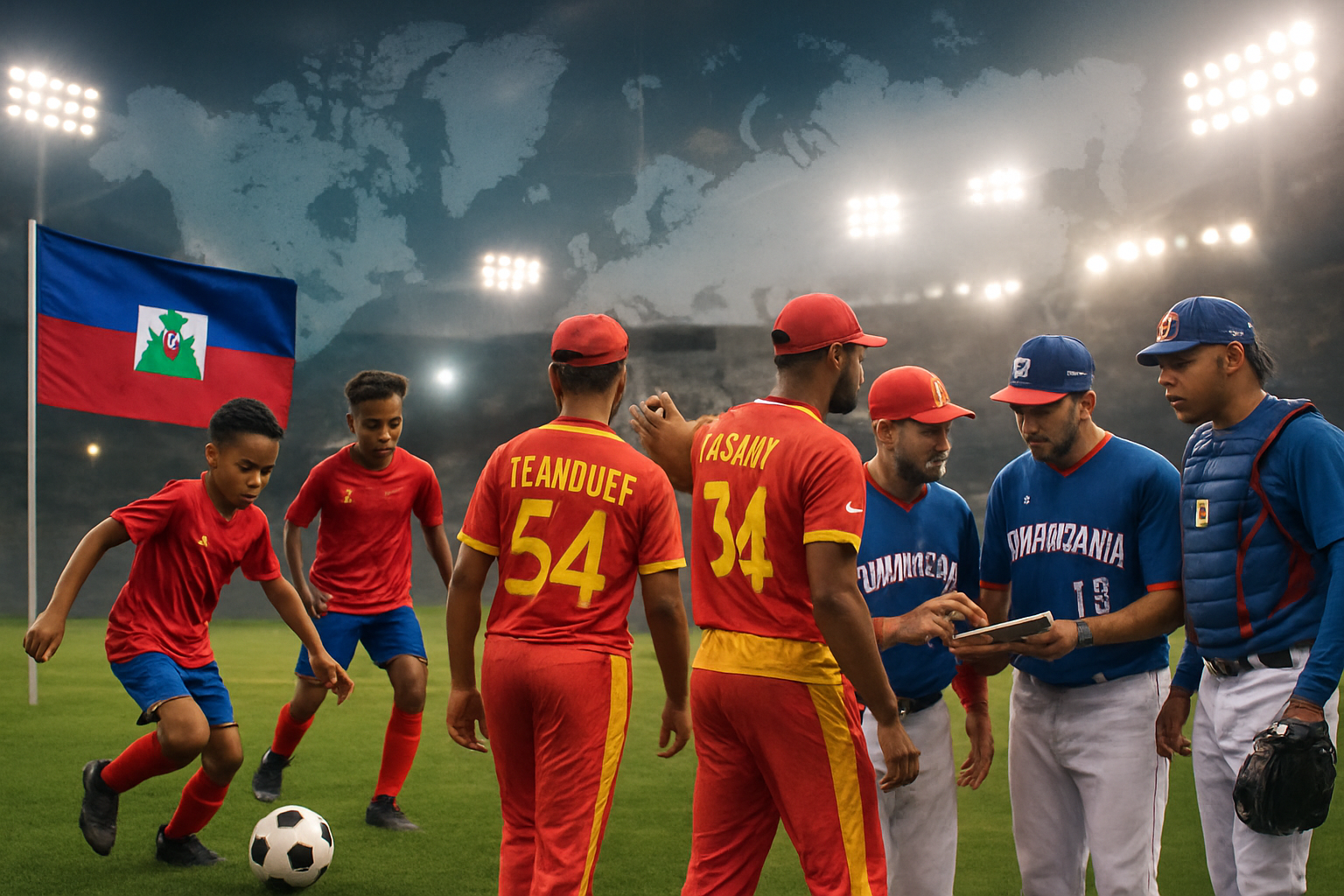
Nations across the globe are intensifying preparations for major international sporting events as qualification rounds and championship tournaments approach, with countries mobilizing elite talent and strategic resources to compete on the world stage.
From the football pitches of Central America to the cricket stadiums of Southern Africa and the baseball diamonds of the Caribbean, February 2026 has emerged as a pivotal month for international sports competition preparations. Teams are finalizing rosters, completing training camps, and making crucial tactical decisions that will determine their fate in upcoming tournaments.
Haiti's Young Football Stars Chase World Cup Dreams
Haiti's U-17 men's national team, known as "Les Grenadiers," has traveled to Guatemala for the FIFA U-17 World Cup Qatar 2026 qualifying round after completing an intensive training camp in Ouanaminthe. The young squad, having departed Haiti on February 3rd, faces a critical match against Grenada in their quest to reach the global stage.
The qualification tournament represents a golden opportunity for Haiti to showcase its emerging football talent on the international stage. The team's preparation included comprehensive tactical training and physical conditioning designed to meet the demands of high-level international competition. Success in these qualifiers would mark a significant milestone for Haitian football development and youth sports programs.
"This is our moment to prove that Haitian football has a bright future,"
— Training camp official, as reported by Haitilibre.com
Zimbabwe Cricket Captain Emphasizes Strategic Approach
Zimbabwe's cricket team, the Chevrons, is preparing for the demanding ICC Men's T20 World Cup with captain Sikandar Raza stressing the importance of tactical discipline and game-by-game focus. The team faces what analysts describe as a particularly challenging group composition that will test their competitive mettle against established cricket powerhouses.
Raza's leadership philosophy centers on methodical preparation and avoiding the pressure of looking beyond immediate challenges. This approach reflects Zimbabwe's broader strategy of building consistent performance through disciplined execution rather than relying on individual brilliance alone.
"We shall take one game at a time. That's how we'll approach this tournament,"
— Sikandar Raza, Zimbabwe Cricket Captain
The Chevrons' preparation comes at a time when cricket's global landscape is increasingly competitive, with nations investing heavily in player development and tactical innovation. Zimbabwe's participation in the T20 World Cup represents both an opportunity to demonstrate their progress and a platform for inspiring the next generation of cricketers.
Dominican Republic Assembles Baseball Elite
The Dominican Republic has officially submitted its 30-player roster for the 2026 World Baseball Classic, culminating a consensus-driven selection process that brought together some of baseball's most legendary figures. National team general manager Nelson Cruz led the selection committee alongside an advisory group featuring Cooperstown Hall of Fame inductees Juan Marichal, Pedro Martínez, David Ortiz, and Edwin Encarnación.
The selection process demonstrates the Dominican Republic's commitment to fielding its strongest possible team for the premier international baseball competition. Team manager Albert Pujols, along with Vladimir Guerrero and Adrián Beltré, participated virtually due to international commitments, highlighting the global reach of Dominican baseball talent.
The roster submission to Major League Baseball ahead of the official deadline reflects meticulous planning and coordination among the 20 participating nations. MLB will formally announce all team rosters this Thursday, setting the stage for what promises to be an exceptional tournament featuring the world's best baseball talent.
Global Sports Calendar Intensifies
These preparation stories unfold against the backdrop of an increasingly crowded international sports calendar. With the Milano-Cortina 2026 Winter Olympics currently underway and various World Cup qualifiers approaching, nations are balancing multiple competitive priorities while managing limited resources and athlete availability.
The current wave of international competition reflects the growing globalization of sports and the increasing importance nations place on athletic achievement as a source of national pride and international recognition. Countries are investing more heavily in sports infrastructure, coaching education, and athlete development programs to remain competitive in the global arena.
Strategic Implications for Sporting Nations
The preparation strategies employed by Haiti, Zimbabwe, and the Dominican Republic reveal different approaches to international competition based on each nation's sporting culture and resources. Haiti's focus on youth development through its U-17 program demonstrates a long-term investment in football infrastructure. Zimbabwe's emphasis on tactical discipline reflects the analytical approach increasingly common in modern cricket. The Dominican Republic's consensus-based selection process leverages its deep pool of baseball expertise and legendary alumni network.
These diverse approaches highlight how nations adapt their sporting strategies to their unique circumstances while pursuing the common goal of international competitive success. The February 2026 period represents a crucial juncture where months of preparation will be tested against the reality of international competition.
Looking Ahead to Competition Phase
As teams finalize their preparations and rosters are announced, the focus will shift from planning to execution. The coming weeks will determine which nations successfully translate their preparation efforts into competitive results on the field, court, and diamond.
The success of these international campaigns will have lasting implications beyond immediate tournament results, influencing future funding decisions, coaching appointments, and development program priorities. For smaller nations like Haiti and Zimbabwe, strong performances could catalyze broader sporting development initiatives and inspire increased youth participation in their respective sports.
The 2026 international sports calendar promises to deliver compelling storylines as nations test their preparation strategies against the highest levels of global competition. From Guatemala's football fields to cricket stadiums worldwide and baseball diamonds across multiple continents, the stage is set for memorable sporting encounters that will define national sporting legacies for years to come.