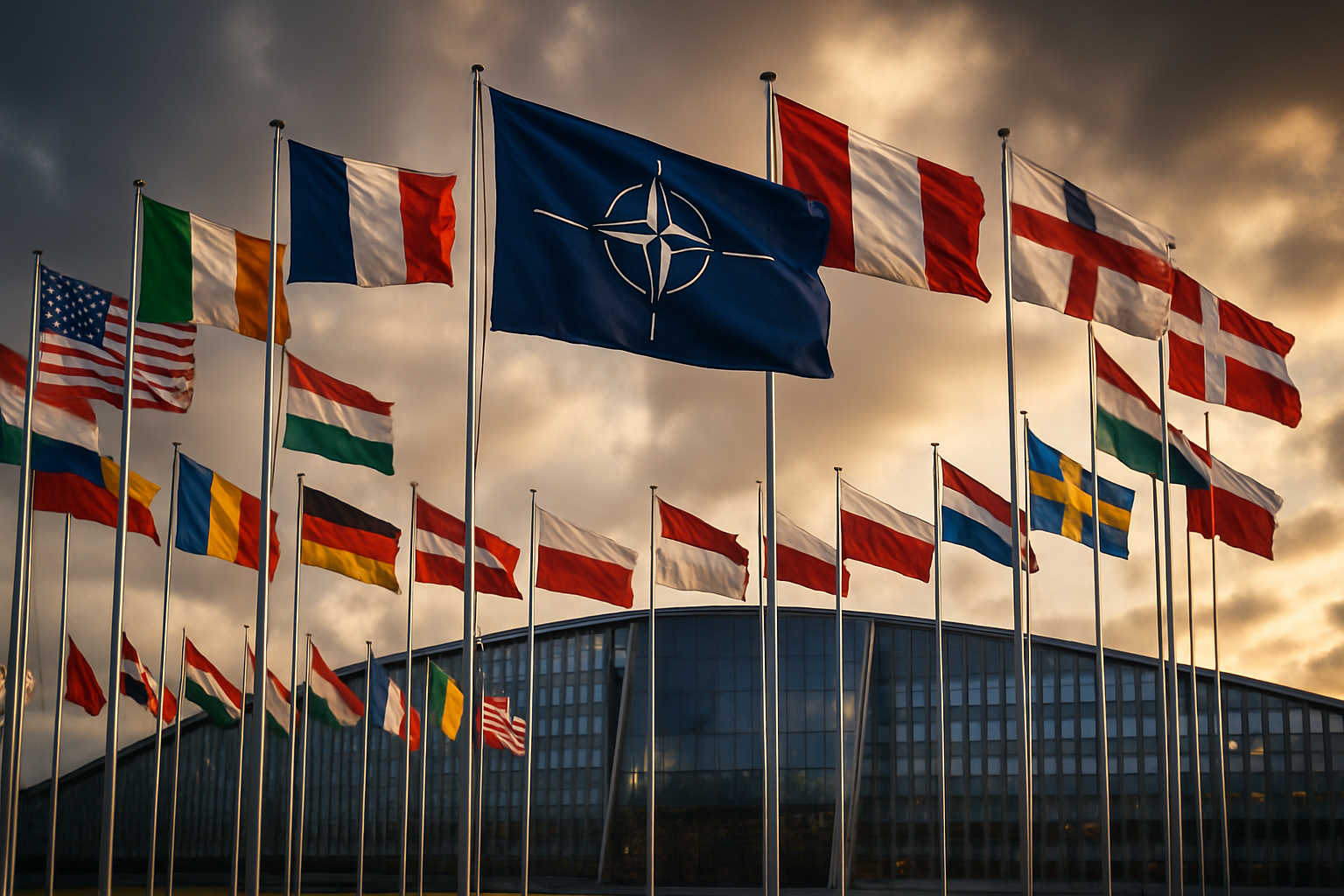
NATO commemorated its 77th anniversary on April 5, 2026, with solemn declarations of unity from alliance members, even as the organization faces its most severe existential crisis since formation, marked by unprecedented threats from the Trump administration and accelerating European strategic autonomy initiatives.
Romanian Prime Minister Ilie Bolojan delivered a pointed message emphasizing that "for Romania, NATO today means security, stability and trust," while stressing that "in the current context, marked by multiple security challenges, it is essential that NATO remains united and strong." His words carried particular weight amid what political science professor Corneliu Bjola characterized as Trump's "new tactic to put pressure on Europeans."
Alliance Under Unprecedented Strain
The anniversary comes at a critical juncture for the transatlantic alliance, with President Trump having recently escalated threats of U.S. withdrawal following European allies' comprehensive rejection of American military requests during the Iran crisis. In March 2026, Trump called NATO a "paper tiger" and declared through Truth Social that "we no longer 'need' or want assistance NATO countries—IN FACT, WE NEVER NEEDED IT!"
Romania's Foreign Ministry emphasized in its anniversary statement that "in a context marked by the worsening of the security situation in Europe, against the backdrop of the Russian Federation's war of aggression against Ukraine, Romania's membership in NATO remains the foundation of national security."
European Strategic Autonomy Accelerates
The alliance crisis has catalyzed unprecedented discussions about European strategic autonomy. For the first time since the Cold War's end, European capitals are seriously exploring nuclear deterrent capabilities beyond U.S. guarantees. German Chancellor Friedrich Merz has confirmed direct negotiations with French President Emmanuel Macron about expanding France's nuclear deterrent beyond national scope, with Germany, Poland, and Finland engaging in preliminary conversations about extended deterrence arrangements.
This shift reflects deep concerns about American security guarantee reliability, particularly following the February 2026 expiration of the New START treaty—marking the first time in over 50 years without U.S.-Russia nuclear constraints. UN Secretary-General António Guterres has warned this creates a "grave turning point" with nuclear risks at their "highest in decades."
Defense Spending Milestone Amid Political Turbulence
In a historic achievement, all 32 NATO members reached the 2% GDP defense spending target for the first time in the alliance's 75-year history, with combined spending reaching $1.4 trillion—a 6% increase. Poland leads at 4.3% of GDP, while the final five nations to meet the target included Spain, Portugal, Albania, Belgium, and Canada.
However, Trump has proposed raising the target to 5% of GDP, requiring massive European fiscal adjustments that many allies view as economically unfeasible. This demand has further strained relationships, with European leaders increasingly viewing American requests as attempts to maintain dominance rather than genuine burden-sharing.
Romania's Strategic Position
Romania's leadership has been particularly vocal about the alliance's importance during this turbulent period. Speaking on NATO Day, Bucharest Mayor Nicuşor Dan emphasized that "Romania's path toward NATO was built on a profound desire to be part of a space of democracy, freedom and rule of law."
Romania's strategic location on NATO's eastern flank has made it a critical partner in the alliance's response to Russian aggression, particularly following the February 2022 invasion of Ukraine. The country has consistently advocated for strengthened collective defense mechanisms and increased alliance presence in Eastern Europe.
Ukraine Context and Suspended Peace Talks
The anniversary commemorations occurred against the backdrop of indefinitely suspended Ukraine-Russia-U.S. trilateral peace negotiations, originally scheduled to culminate in Washington by June 2026. The talks were derailed by the Iran crisis, despite significant February 2026 breakthroughs including a historic 314-prisoner exchange and restored U.S.-Russia military communications after a four-year suspension.
The EU has maintained unprecedented support for Ukraine with a €90 billion loan package—the largest ever for a single nation—though divisions persist with Slovakia, Czech Republic, and Hungary refusing participation. This has exposed the deepest European divisions since the conflict began.
Nordic Security Transformation
The security environment has prompted dramatic policy shifts among Nordic nations. Finland announced plans to lift its comprehensive ban on nuclear weapons "as soon as possible," stating current legislation doesn't meet NATO membership needs. Sweden's Defense Minister Pål Jonson announced willingness to host nuclear weapons during wartime conditions, breaking an 80-year Nordic nuclear-free tradition.
These developments coincide with NATO's Arctic Sentry mission—a European-led initiative with the UK doubling its Norway troop presence to 2,000, Sweden deploying Gripen jets for Greenland exercises, and Finland contributing operational planning to address increased Russian Arctic activity.
Alliance Adaptation Challenges
Political science expert Corneliu Bjola noted that Trump's NATO threats represent "a tactic to put pressure on Europeans," similar to strategies used during his previous term to increase European defense spending. However, the current crisis appears more severe, with European allies demonstrating unprecedented coordination in rejecting American military requests while simultaneously defending European territory.
The paradox became evident when European nations refused to support U.S. operations in the Persian Gulf but immediately formed a naval coalition—featuring HMS Dragon, Spanish frigates, and Italian, French, Dutch, and Greek vessels—after Iranian drones struck Cyprus, marking the first attack on European territory since World War II.
Nuclear Governance Crisis
The collapse of the New START treaty has created what experts call the most dangerous nuclear governance crisis since the Cold War. With both Russia and the U.S. controlling 80% of global nuclear weapons and no longer bound by bilateral constraints, European leaders view alternative deterrence arrangements as increasingly necessary.
France's nuclear force of approximately 290 warheads has historically been insufficient for extended European deterrence, requiring doctrine modifications, legal frameworks, and massive financial investments—potentially hundreds of billions of euros—for expanded capabilities.
Congressional and Public Opinion Dynamics
In the United States, bipartisan congressional support for NATO membership persists despite Trump's threats, providing some reassurance about long-term American commitment. However, current military operations have faced unprecedented opposition, with only 25% public support for ongoing Iran operations—historically low for American military actions.
Senator Richard Blumenthal has expressed being "more concerned than ever" about potential ground troop deployments, while financial markets are increasingly viewed as the "ultimate constraint" on prolonged military escalation.
Energy Security and Global Implications
The current crisis intersects with energy security concerns, as Iran's closure of the Strait of Hormuz has blocked 40% of global oil transit, driving oil prices above $100 per barrel for the first time since 2022. The International Energy Agency authorized its largest strategic petroleum reserve release in 50 years—400 million barrels from 32 countries—demonstrating the global economic implications of regional conflicts.
This energy vulnerability has reinforced European arguments for strategic autonomy and reduced dependence on volatile regions for critical supplies.
Template for Future Alliance Relations
UN Secretary-General Guterres has characterized the current period as the "greatest test of multilateral cooperation in the modern era." The outcome will establish precedents for 21st-century alliance relations, determining whether NATO can adapt its institutional frameworks to accommodate fundamental restructuring while maintaining democratic principles.
European officials increasingly view this as a watershed moment requiring a choice between strategic autonomy and traditional American deference. The balance between alliance solidarity and national sovereignty will likely reshape international security architecture for decades.
Looking Ahead
As NATO navigates its most challenging period since formation, Romanian leaders' emphasis on unity and strength carries particular relevance. The alliance faces simultaneous challenges of adapting to great power competition, managing nuclear governance without bilateral constraints, addressing European strategic autonomy aspirations, and maintaining democratic solidarity amid authoritarian pressures.
The success or failure of NATO's current adaptation will determine whether the alliance emerges strengthened through institutional innovation or faces fundamental fragmentation that could reshape global security architecture. For Romania and other Eastern European allies, the stakes could not be higher as they seek to maintain security guarantees while navigating an increasingly complex strategic environment.
Professor Bjola's assessment that Trump's threats represent tactical pressure may prove optimistic if current trends continue toward genuine alliance restructuring. The coming months will be decisive in determining whether NATO's 77th anniversary marks a moment of renewed commitment or the beginning of its most profound transformation since the Cold War's end.