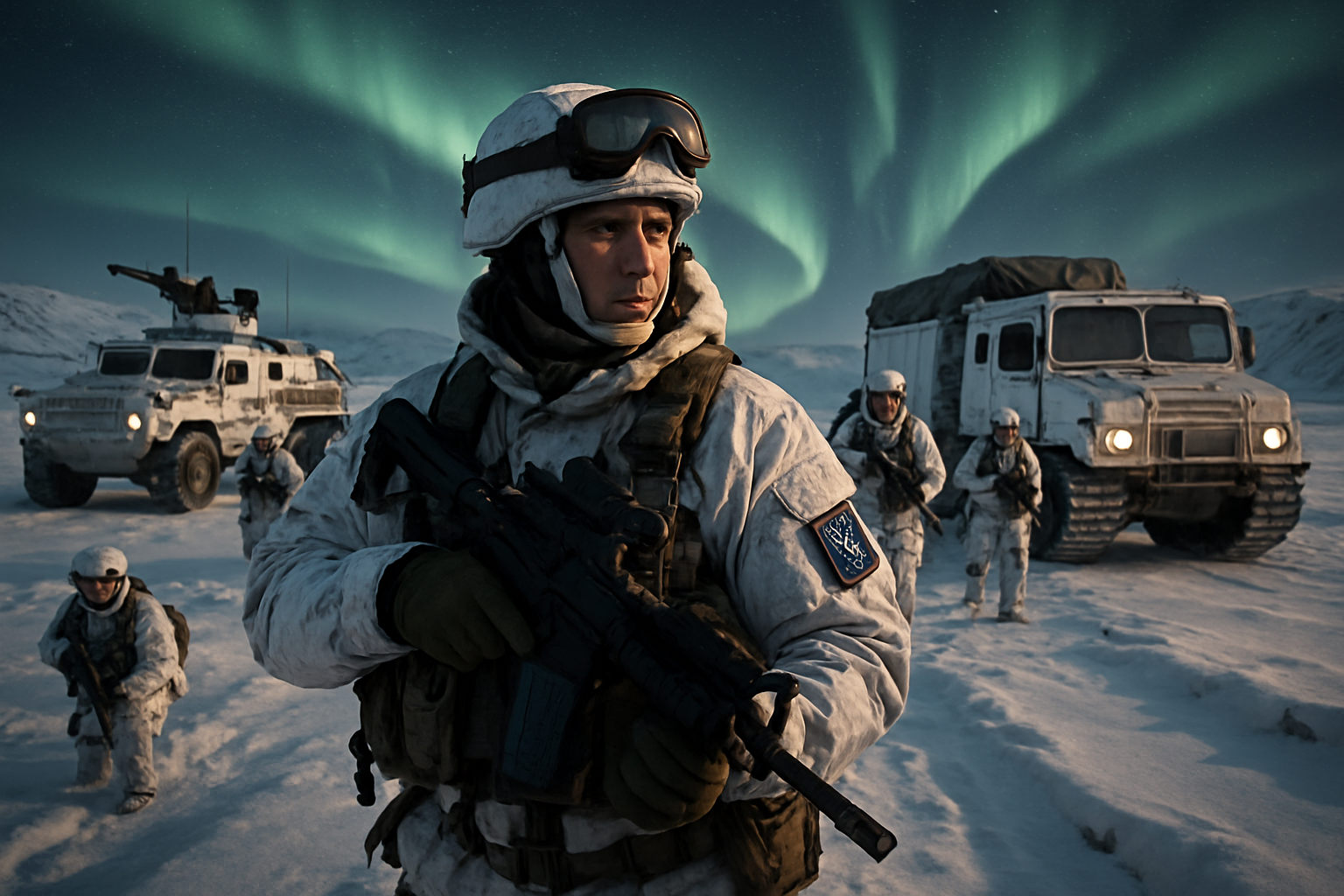
NATO has officially launched Arctic Sentry, its most comprehensive Arctic security response, as the alliance confronts unprecedented challenges from Russian territorial ambitions and mounting tensions over Greenland's strategic importance.
The operation, announced during a Brussels defense ministers meeting on February 12, 2026, represents a fundamental shift in NATO's approach to Arctic security, with European allies taking unprecedented leadership roles in response to growing geopolitical pressures in the polar region.
European Leadership in Arctic Operations
In a significant development, several European NATO members have volunteered to participate in Arctic defense and surveillance operations, marking the most substantial allied commitment to the region since the Cold War. The initiative comes as multiple sources confirm increasing Russian military activity and territorial assertions in Arctic territories.
The United Kingdom has announced plans to double its troop presence in Norway from 1,000 to 2,000 soldiers over the next three years, according to Defence Secretary John Healey. This expansion represents the largest British military commitment to Arctic operations in decades, with forces playing a central role in NATO's Arctic Sentry operations.
Finland, newly integrated into NATO following its 2023 accession, is contributing significantly to operational planning, bringing crucial Arctic expertise and geographic positioning to the alliance's northern strategy.
Strategic Response to Russian Activities
The Arctic Sentry mission directly addresses Russia's re-establishment of military presence in the region, including the reopening of Cold War-era bases that had been dormant for decades. Intelligence sources indicate that Moscow has systematically restored Arctic military infrastructure as part of a broader strategy to assert territorial claims and control newly accessible shipping routes.
According to Norwegian sources, several NATO countries are increasingly concerned about Russia's expanding influence in the Arctic, with one official noting that the region is "becoming more important for Russia" as climate change opens new economic and strategic opportunities.
The alliance's response comes amid broader concerns about territorial integrity, following recent statements from Russian officials warning of potential military measures if Western nations increase military presence in Greenland.
Greenland: A Strategic Flashpoint
The Arctic Sentry launch occurs against the backdrop of unprecedented tensions surrounding Greenland's sovereignty. Recent diplomatic initiatives have seen France and Canada opening consulates in Nuuk, demonstrating unprecedented international support for Danish sovereignty over the territory.
These developments have prompted strong reactions from Moscow, with Russian officials explicitly warning that any militarization of Greenland would trigger military countermeasures. The Kremlin has characterized Western support for Greenland's current status as a direct challenge to regional stability.
Poland has also signaled strong support for the alliance's Arctic strategy, with officials making clear statements about NATO's commitment to responding to any threats to Arctic security with overwhelming force.
Climate Change and Strategic Implications
The Arctic's growing strategic importance stems largely from climate change impacts that are opening previously inaccessible shipping routes and exposing vast natural resources. These changes have fundamentally altered the region's geopolitical landscape, creating new opportunities for both cooperation and conflict.
NATO strategists recognize that the Arctic is becoming a critical domain for great power competition, with implications extending far beyond regional boundaries. The alliance's enhanced presence aims to ensure stability in shipping lanes that could become vital alternatives to traditional maritime routes.
Norway's position has become particularly critical for monitoring Russian naval activities and maintaining NATO's ability to project power across vital Arctic waterways. The enhanced British-Norwegian cooperation serves as a model for broader alliance coordination in extreme conditions.
Operational Challenges and Requirements
Arctic Sentry operations face unique logistical and technical challenges that distinguish them from NATO's traditional areas of operation. Forces must operate in extreme weather conditions, requiring specialized equipment, extensive cold-weather training, and robust logistical support networks.
The alliance is investing significantly in Arctic-capable equipment and developing new protocols for operations in temperatures that can reach minus-40 degrees Celsius. This includes specialized vehicles, communication systems, and survival equipment designed for prolonged deployment in polar conditions.
Intelligence sharing frameworks have been enhanced to provide real-time awareness of activities across the vast Arctic region, incorporating satellite surveillance, maritime patrols, and ground-based monitoring systems.
Broader Alliance Implications
The Arctic Sentry mission represents more than a regional security initiative—it demonstrates NATO's ability to adapt to 21st-century security challenges while maintaining alliance cohesion despite internal pressures.
The operation serves dual purposes: providing credible military deterrence against potential adversaries while offering diplomatic reassurance to partners concerned about territorial sovereignty. This balance reflects the alliance's evolution from Cold War structures to address contemporary geopolitical complexities.
European assumption of leadership roles in Arctic Sentry also addresses longstanding concerns about burden-sharing within the alliance, demonstrating that European members can take primary responsibility for regional security challenges.
International Law and Sovereignty Principles
The coordinated European response to Arctic tensions establishes important precedents for defending territorial sovereignty through collective diplomatic and military action. The framework developed for Arctic Sentry could serve as a template for addressing similar challenges in other strategically contested regions.
NATO officials emphasize that Arctic Sentry operates fully within international law frameworks while sending clear signals about the alliance's commitment to defending member territory and supporting partner sovereignty.
The mission's success will significantly influence NATO's broader adaptation to contemporary security challenges, particularly in regions where climate change, resource competition, and territorial disputes intersect.
Future Trajectory and Sustainability
The long-term success of Arctic Sentry requires sustained political commitment across multiple electoral cycles and continued coordination among diverse Arctic stakeholders. The mission's effectiveness will determine NATO's credibility in addressing non-traditional security challenges.
As Arctic competition intensifies alongside climate transformation, the operation becomes critical for maintaining regional stability and preventing conflicts that could have global implications. The alliance's ability to maintain unity while addressing both external threats and internal tensions will be tested by Arctic Sentry's implementation.
The mission represents a defining moment for NATO's 21st-century evolution, demonstrating whether the alliance can successfully adapt Cold War structures to address contemporary challenges involving climate change, resource competition, and great power rivalry in one of the world's most strategically vital regions.