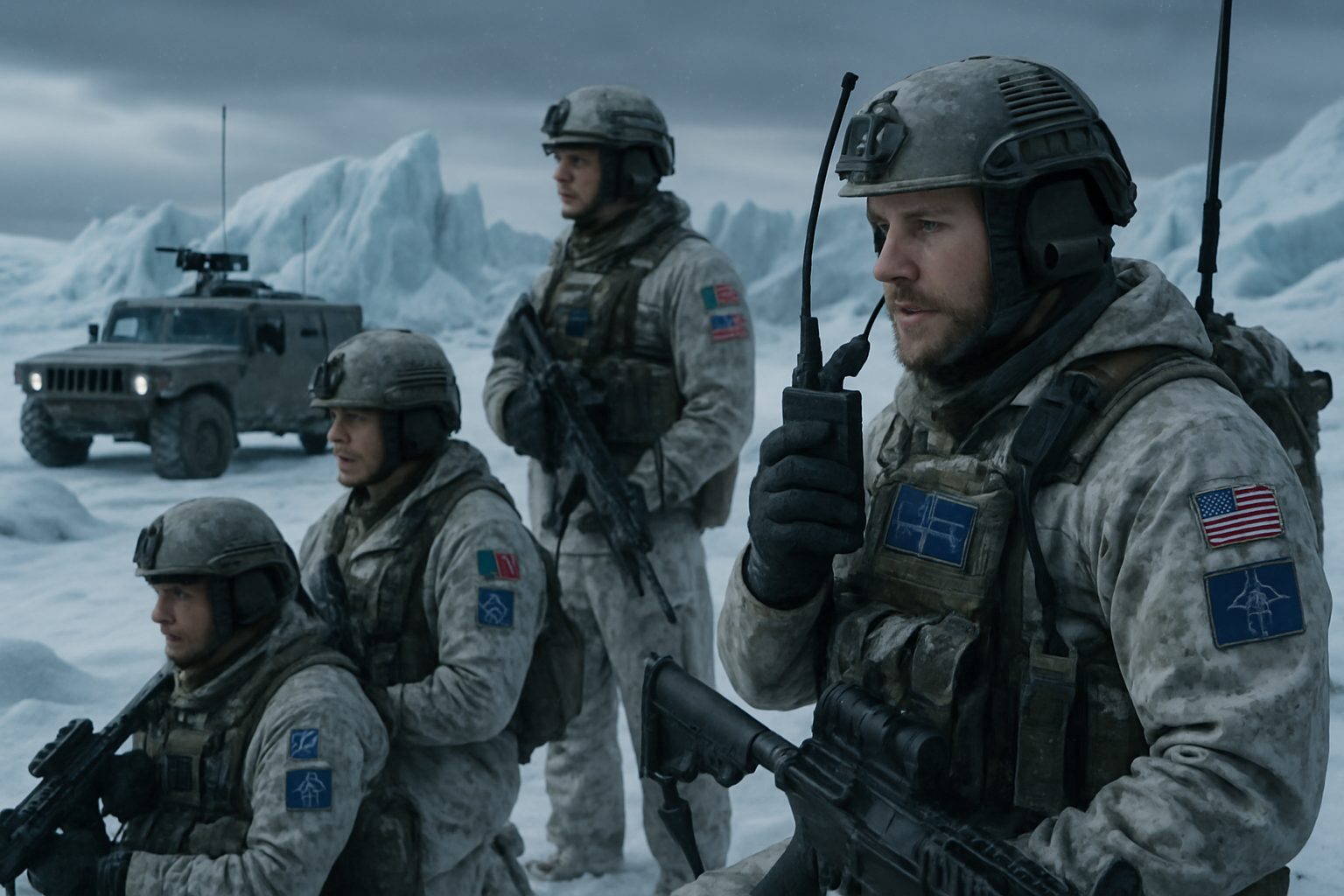
NATO officially launched its Arctic Sentry mission on February 12, 2026, marking the alliance's most comprehensive response to mounting tensions over Greenland and increased Russian and Chinese activity in the Arctic region, with European allies taking unprecedented leadership as US engagement remains uncertain.
The mission, announced during a crucial NATO defense ministers meeting in Brussels, represents a significant shift in alliance dynamics as European members assume greater responsibility for Arctic security while managing diplomatic tensions stemming from Trump administration territorial ambitions toward Greenland.
European Leadership in Arctic Strategy
At Thursday's NATO meeting, US Defense Secretary Pete Hegseth was notably absent, highlighting growing concerns about America's commitment to traditional alliance structures. European allies seized the initiative, with Nordic and Baltic states coordinating the comprehensive Arctic Sentry operation through Allied Command Operations (ACO).
The mission builds upon existing frameworks, particularly Denmark's Arctic Endurance exercises on Greenland, while incorporating enhanced intelligence sharing, joint training protocols, and coordinated response capabilities designed to address both external threats and internal alliance tensions.
"This mission represents Europe's commitment to defending our shared interests in the Arctic while maintaining alliance unity during challenging times."
— Senior NATO Official, Brussels
Addressing Greenland Sovereignty Crisis
The Arctic Sentry mission comes as tensions over Greenland's status have strained NATO solidarity. Trump administration working group meetings with Greenlandic representatives, ongoing since January 28, 2026, have raised concerns among European allies about unilateral territorial claims within the alliance.
Danish Foreign Minister Lars Løkke Rasmussen recently acknowledged Denmark is in a "better position" regarding US territorial claims but emphasized "we are not out of the crisis, and we do not have a solution yet." This diplomatic uncertainty has prompted coordinated European action to support sovereignty principles.
The February 6 opening of French and Canadian consulates in Nuuk represented unprecedented diplomatic solidarity, with Canadian Indigenous Governor General Mary Simon and Foreign Minister Anita Anand personally attending the ceremony alongside French General Consul Jean-Noël Poirier. A Canadian Inuit delegation reportedly delivered a direct message to Trump to "back off."
Strategic Arctic Importance
Greenland controls crucial Arctic shipping routes and possesses substantial rare earth mineral deposits, making it strategically valuable as climate change opens new transit corridors and resource extraction opportunities. The territory's position provides critical military positioning in a region of growing international competition between Russia, China, and Western allies.
Local Greenlandic officials maintain their position firmly. Prime Minister Jens-Frederik Nielsen has consistently stated "Greenland is neither for sale nor for purchase," while engaging cautiously with US representatives through established diplomatic channels.
Military and Security Components
Arctic Sentry incorporates multiple defense initiatives, including the UK's commitment to double troop presence in Norway from 1,000 to 2,000 soldiers over three years under Defence Secretary John Healey's Arctic strategy. Sweden has confirmed participation with Air Force Rangers and Army Rangers conducting exercises in Greenland, alongside Gripen fighter jet deployments.
The mission addresses Russian re-establishment of Arctic military presence, including the reopening of Cold War-era bases and increased naval activities. Finland contributes to operational planning, while enhanced British-Norwegian cooperation serves as a model for broader alliance coordination in extreme Arctic conditions.
Norway's strategic position proves critical for monitoring Russian naval activities in the Arctic Ocean, with the country serving as a key intelligence hub for tracking submarine movements and surface vessel deployments in contested waters.
Russian and Chinese Arctic Activities
Intelligence assessments highlight significant Russian military investment in Arctic infrastructure, including modernized airfields, radar installations, and port facilities capable of supporting nuclear-powered icebreakers and advanced weaponry systems. China's growing Arctic presence through research stations and shipping route development adds complexity to regional security calculations.
The mission's intelligence sharing framework enables real-time monitoring of foreign military activities while coordinating defensive measures among Arctic nations. Enhanced surveillance capabilities include satellite monitoring, underwater detection systems, and coordinated air patrols across vast Arctic territories.
"The Arctic is becoming a domain of great power competition, requiring unprecedented alliance coordination to maintain stability and protect sovereignty rights."
— NATO Arctic Strategy Official
Alliance Dynamics and Trump Factor
Arctic Sentry serves multiple diplomatic purposes beyond military deterrence. NATO hopes the European-led initiative will reassure President Trump while demonstrating alliance value through burden-sharing arrangements that reduce American military commitments in the region.
The mission timing coincides with broader diplomatic initiatives, including ongoing Ukraine-Russia peace negotiations with June 2026 deadlines and Iran nuclear talks in Oman. European officials view Arctic security as interconnected with global strategic stability requiring sustained multilateral cooperation.
Some analysts characterize Arctic Sentry as primarily a rebranding of existing military exercises designed to provide political cover for alliance tensions. However, the mission's scope extends beyond traditional training to include permanent enhanced deployment reflecting post-Ukraine invasion security environments.
Equipment and Logistical Challenges
Arctic operations require specialized equipment, extensive training, and complex logistical support for extreme weather conditions. Personnel must operate effectively in temperatures reaching minus-40°C while maintaining communication systems and sophisticated weaponry in harsh environments.
The mission includes procurement of Arctic-specific vehicles, cold-weather gear, and communication equipment designed for polar conditions. Training programs focus on survival techniques, equipment maintenance, and tactical operations unique to Arctic warfare scenarios.
International Law and Sovereignty Implications
The Greenland crisis tests international law principles regarding territorial sovereignty and great power pressure on smaller territories. The coordinated European-Canadian consulate response establishes important precedents for collective diplomatic responses to unilateral territorial claims within established alliance frameworks.
Legal experts note the situation's implications for Arctic governance frameworks and climate change-related territorial disputes as ice melts reveal new resource deposits and shipping routes. Success in preserving Greenland's autonomous status could influence similar disputes in strategically valuable regions.
The EU privately supports the consulate initiative as appropriate sovereignty defense, while maintaining careful diplomatic balance to avoid direct confrontation with NATO's largest member. This approach demonstrates sophisticated alliance management during periods of internal tension.
Climate Change and Resource Competition
Climate change fundamentally alters Arctic strategic calculations as receding ice opens previously inaccessible shipping routes and resource extraction opportunities. New passages reduce Asia-Europe transit times significantly while revealing substantial mineral deposits including rare earth elements crucial for modern technology.
These developments intensify international competition for Arctic influence, with Russia, China, and Western nations positioning for long-term strategic advantages. Arctic Sentry addresses both immediate security concerns and long-term governance challenges in a rapidly changing environment.
Future Trajectory and Sustainability
Arctic Sentry's success depends on sustained political commitment across multiple electoral cycles and continued coordination among diverse alliance members with varying Arctic interests. The mission establishes frameworks for intelligence sharing, joint training, and coordinated response capabilities essential for long-term regional stability.
The operation creates templates for alliance coordination addressing other contested regions while managing internal tensions between members. Its effectiveness will influence NATO's ability to maintain unity while addressing external threats and adapting to changing strategic environments.
Coming months will determine whether Arctic Sentry provides genuine security enhancement or represents primarily symbolic gesture during alliance tensions. The mission's evolution alongside Greenland diplomatic negotiations will test innovative approaches to preserving sovereignty rights and democratic values within established international frameworks.
As Arctic competition intensifies and climate change accelerates regional transformation, Arctic Sentry represents NATO's most significant adaptation to 21st-century strategic challenges in one of the world's most rapidly changing geopolitical theaters.