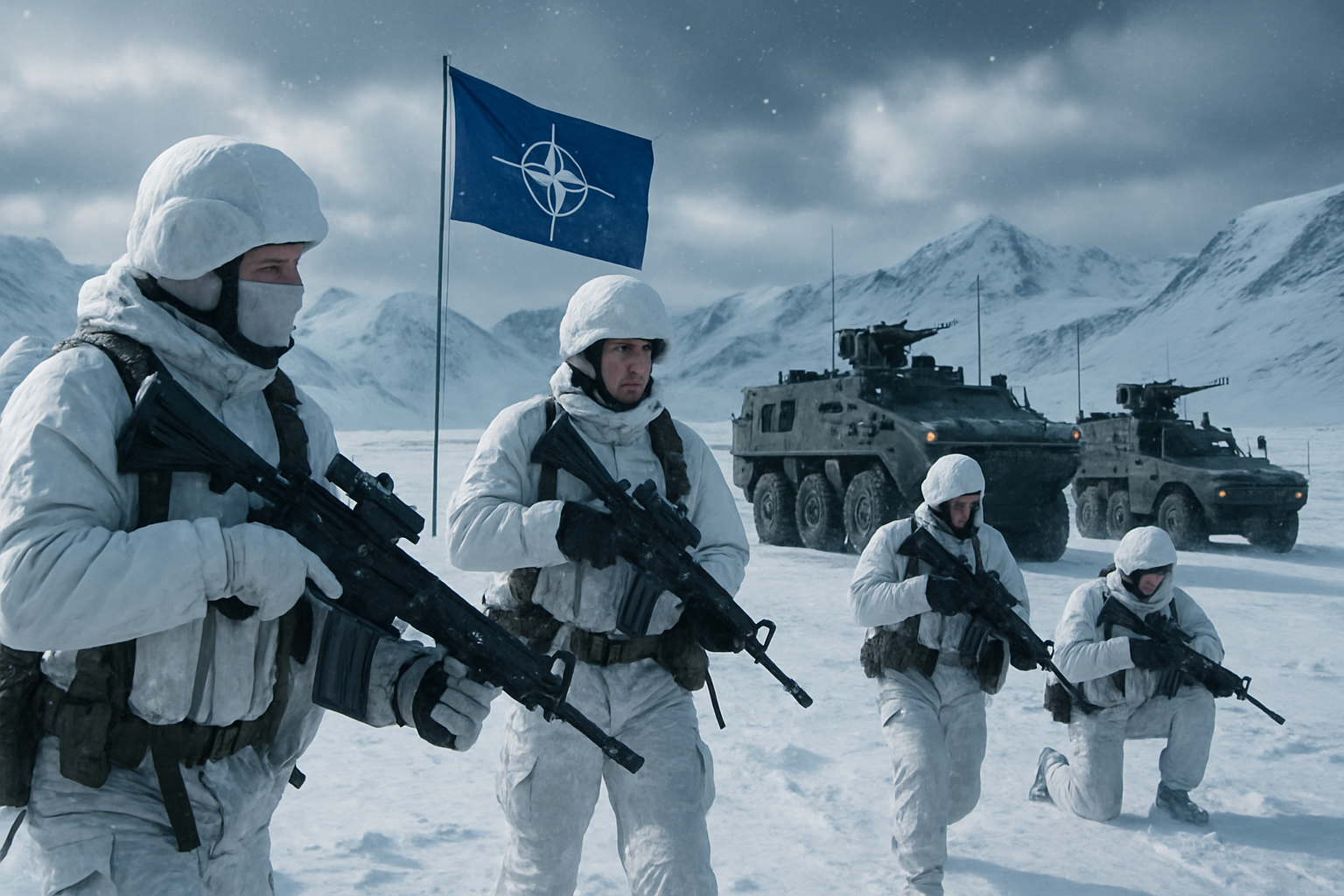
NATO officially launched its Arctic Sentry military mission on Wednesday, marking the alliance's most comprehensive response to escalating tensions over Greenland and mounting Russian threats in the strategically crucial Arctic region.
The Supreme Headquarters Allied Powers Europe (SHAPE) announced that NATO's Allied Command Operations (ACO) initiated the multi-dimensional operation designed to strengthen the alliance's position in the Arctic and Far North, reinforcing NATO's commitment to defending member states and maintaining regional stability.
Responding to Greenland Crisis
The mission launch comes as a direct response to severe tensions within the alliance following President Trump's renewed push for U.S. acquisition of Greenland. According to the South China Morning Post, Arctic Sentry represents "an effort to defuse severe tensions within the alliance prompted by US President Donald Trump's push for the US to acquire Greenland."
The new mission will coordinate an increasing military presence of NATO allies in the region, including exercises such as Denmark's Arctic Endurance on Greenland. This coordinated approach aims to demonstrate alliance unity while addressing security concerns that have emerged from the territorial dispute.
"NATO is increasing its military presence in the Arctic. It's about deterrence and defense of the North. At the same time, it aims to defuse the dispute over Greenland between the USA and Denmark."
— German Media Analysis, Tagesschau
Enhanced Military Cooperation
The timing of Arctic Sentry's launch follows crucial discussions between NATO Secretary-General Mark Rutte and President Trump, as confirmed by Slovak sources. The alliance began planning the mission after these high-level talks, indicating the operation's significance in NATO's strategic priorities.
Denmark is expected to play a central role in the mission, with the country significantly contributing to Arctic Sentry operations. This Danish involvement comes after key negotiations between alliance leadership and demonstrates Copenhagen's commitment to both NATO solidarity and Greenland's security.
The United Kingdom has already announced concrete support for Arctic defense, with Defence Secretary John Healey revealing plans to double British troop presence in Norway from 1,000 to 2,000 soldiers over the next three years. British forces will play a central role in NATO's Arctic Sentry operations, reflecting what officials describe as "the greatest Arctic threats since the Cold War."
Russian Military Resurgence
The mission addresses the re-establishment of Russian Arctic military presence, including the reopening of Cold War-era bases. Intelligence assessments indicate that Russia has systematically rebuilt its military infrastructure across the Arctic, creating new security challenges for NATO allies.
Military planning is already underway for Arctic Sentry operations, with enhanced British-Norwegian defense cooperation serving as a model for broader alliance coordination. Finland is also contributing to Arctic Sentry planning, reflecting the expanded NATO membership following Russia's invasion of Ukraine.
The strategic importance of the Arctic has grown dramatically due to climate change opening new shipping routes and exposing previously inaccessible natural resources. Norway's position has become critical for North Atlantic and Arctic Ocean access, particularly for monitoring Russian naval activities in these vital waterways.
Strategic Implications
Arctic Sentry represents a fundamental shift from training-focused presence to permanent enhanced deployment, reflecting the changed security environment following Russia's February 2022 invasion of Ukraine. The mission requires significant investment in Arctic-specific equipment, specialized training, and logistical support for operations in extreme conditions.
The operation aims to balance deterrent effects against Russian aggression while maintaining diplomatic stability amid growing international Arctic competition. Success will likely serve as a model for other NATO allies considering increased Arctic commitments in response to evolving security challenges.
International Context
The mission's launch occurs against the backdrop of multiple international crises, including ongoing Ukraine-Russia peace negotiations and the recent expiration of the New START nuclear treaty. These broader tensions underscore the importance of maintaining alliance cohesion in strategically vital regions like the Arctic.
France and Canada have demonstrated international solidarity with Denmark by simultaneously opening consulates in Nuuk, Greenland's capital, in a coordinated diplomatic move supporting Danish sovereignty amid Trump's territorial ambitions. This international backing provides additional context for NATO's coordinated Arctic response.
Long-term Strategic Framework
Arctic Sentry is part of an evolving Arctic security framework that includes intelligence sharing, joint training exercises, and coordinated response capabilities. The mission represents NATO's recognition that the Arctic has become a domain of great power competition requiring sustained alliance attention and resources.
The operation will enhance NATO's ability to project power across vital Arctic waterways while ensuring the alliance can respond effectively to Russian military activities in the region. This enhanced presence strengthens the alliance's northern flank during a period of unprecedented security challenges.
Investment in Arctic capabilities demonstrates NATO's long-term commitment to defending member states' sovereignty and maintaining regional stability. The mission establishes a framework for continued alliance cooperation in addressing 21st-century Arctic security challenges through coordinated military presence and diplomatic engagement.
As Arctic Sentry becomes operational, the mission will test NATO's ability to maintain unity while addressing both external threats and internal tensions. The operation's success could provide a template for alliance coordination in other strategically contested regions facing similar security challenges in an era of renewed great power competition.