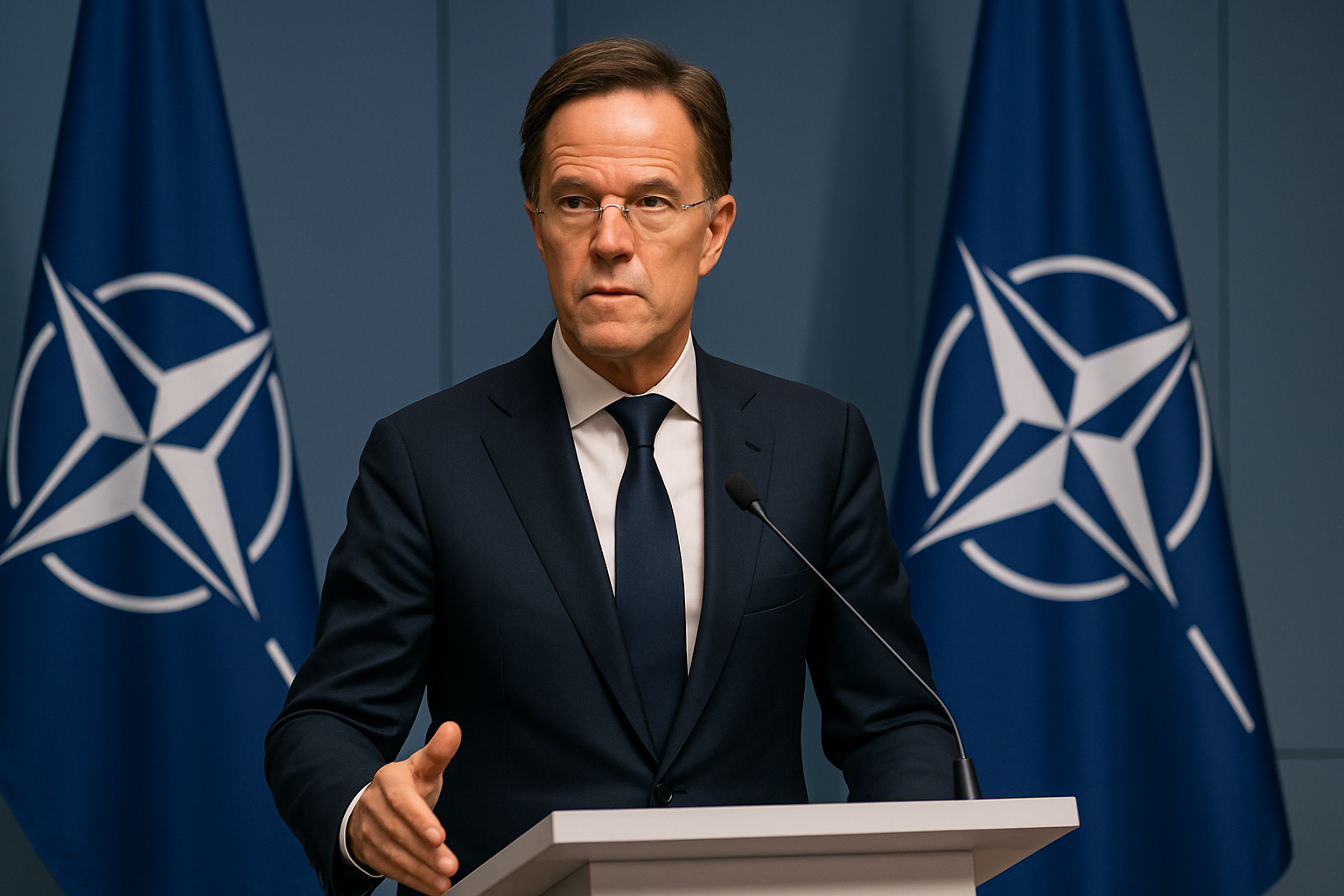
NATO Secretary-General Mark Rutte has dismissed fears of a potential U.S. withdrawal from the alliance while emphasizing the critical need for Europe to assume greater responsibility for its own defense, marking a pivotal moment in transatlantic relations amid unprecedented strain on the 75-year-old security partnership.
Speaking to German newspaper "Welt am Sonntag," Rutte expressed skepticism about the prospect of American disengagement from NATO, even as the alliance faces its most serious internal crisis since its 1949 founding. His comments come against the backdrop of mounting tensions between the Trump administration and European allies over burden-sharing and military cooperation.
Alliance Under Unprecedented Strain
The NATO chief's reassurances follow months of escalating friction that reached a breaking point during the recent Iran crisis, when European allies delivered a comprehensive rejection of U.S. requests for military support. German Defense Minister Boris Pistorius led the resistance, pointedly asking "What does Donald Trump expect a handful of European frigates to do that the powerful U.S. Navy cannot?"
President Trump's response has been swift and unprecedented. In a series of social media posts, he declared that the United States "no longer needs or wants assistance from NATO countries—IN FACT, WE NEVER NEEDED IT!" He has characterized the alliance as a "paper tiger" and threatened economic sanctions against allies deemed insufficiently supportive.
The crisis deepened when Spain closed its airspace to U.S. military aircraft conducting operations in the Middle East, prompting Trump to threaten trade sanctions against Madrid. Prime Minister Pedro Sánchez defended the decision, stating Spain would "not be accomplices in something bad for the world."
European Strategic Autonomy in Action
Despite rejecting American requests for Middle Eastern military support, European nations demonstrated unprecedented unity in defending their own territory. When Iranian drones struck RAF Akrotiri in Cyprus—the first attack on European soil since World War II—a four-nation naval coalition including HMS Dragon and vessels from Spain, Italy, France, and Greece responded within hours.
This selective cooperation paradigm represents what experts are calling "European strategic autonomy in action"—a willingness to coordinate on territorial defense while maintaining independence on discretionary military interventions.
"We are seeing the emergence of a new European approach to security that distinguishes between defending our territory and participating in American military adventures abroad."
— European Security Analyst
Nuclear Deterrence Discussions Accelerate
The alliance strain has accelerated previously unthinkable discussions about European nuclear independence. German Chancellor Friedrich Merz has confirmed direct negotiations with French President Emmanuel Macron about expanding France's nuclear deterrent beyond its national scope—the first such talks since the Cold War's end.
Finland has announced it will lift its comprehensive nuclear weapons ban "as soon as possible," stating current legislation is inadequate for NATO membership. Sweden has indicated willingness to host nuclear weapons during wartime, breaking an 80-year Nordic nuclear-free tradition.
These developments reflect growing European concerns about the reliability of American security guarantees, particularly following the February 2026 expiration of the New START treaty—the first time in over 50 years that no nuclear arms control framework exists between the superpowers.
Defense Spending Milestone Achieved
Ironically, the current crisis emerges just as NATO achieved a historic milestone: all 32 member nations have reached the 2% GDP defense spending target for the first time in the alliance's history. Combined defense spending has reached $1.4 trillion, representing a 6% increase over the previous year.
Poland leads with 4.3% of GDP dedicated to defense, while the final five nations—Spain, Portugal, Albania, Belgium, and Canada—recently achieved the minimum requirement. However, Trump's demands for 5% GDP spending are viewed by European officials as economically unfeasible and politically motivated.
Arctic Leadership and Burden-Sharing
European allies have demonstrated their commitment to burden-sharing through initiatives like the NATO Arctic Sentry mission, where the UK has doubled its troop presence in Norway to 2,000 personnel. Sweden has deployed Gripen jets for Greenland exercises, while Finland contributes operational planning expertise.
This European-led Arctic initiative addresses Russian military activity that has increased by 23% since Finland and Sweden joined NATO, including the reopening of Cold War-era bases and systematic infrastructure development across the Arctic region.
Congressional Support Provides Stability
Despite Trump's threats, bipartisan support in the U.S. Congress for NATO membership provides some reassurance to European allies. Estonian researcher Marek Kohv notes that while Trump cannot unilaterally withdraw from NATO, he can "paralyze alliance activities and reduce U.S. military presence in Europe."
Polish Prime Minister Donald Tusk has warned that NATO's breakup would represent "Putin's dream plan," while Lithuanian President Gitanas Nausėda acknowledges that "tensions are rising within the alliance" but maintains trust in collective defense mechanisms.
Template for 21st-Century Alliance Relations
UN Secretary-General António Guterres has characterized the current period as the "greatest test of multilateral cooperation in the modern era." The crisis represents a template-setting moment for how democratic nations will coordinate security in an increasingly multipolar world.
The outcome will determine whether NATO can adapt its institutional frameworks to accommodate greater European strategic autonomy while maintaining effective collective defense, or whether the alliance faces fundamental fragmentation that could reshape global security architecture for decades.
Looking Forward
As Secretary-General Rutte continues diplomatic efforts to bridge growing transatlantic divides, the alliance faces a fundamental choice between adaptation and fragmentation. European nations are increasingly willing to coordinate among themselves while maintaining alliance relationships—a balance that will define Western security cooperation for the 21st century.
The success or failure of these efforts will not only determine NATO's future but also establish precedents for how democratic nations address contemporary security challenges including hybrid warfare, cyber operations, climate-related conflicts, and great power competition.
With nuclear governance frameworks weakened and regional conflicts proliferating, the stakes for maintaining effective multilateral cooperation have never been higher. Whether the current crisis leads to renewed Western unity through institutional adaptation or continued fragmentation remains the defining question for international relations in the coming decade.