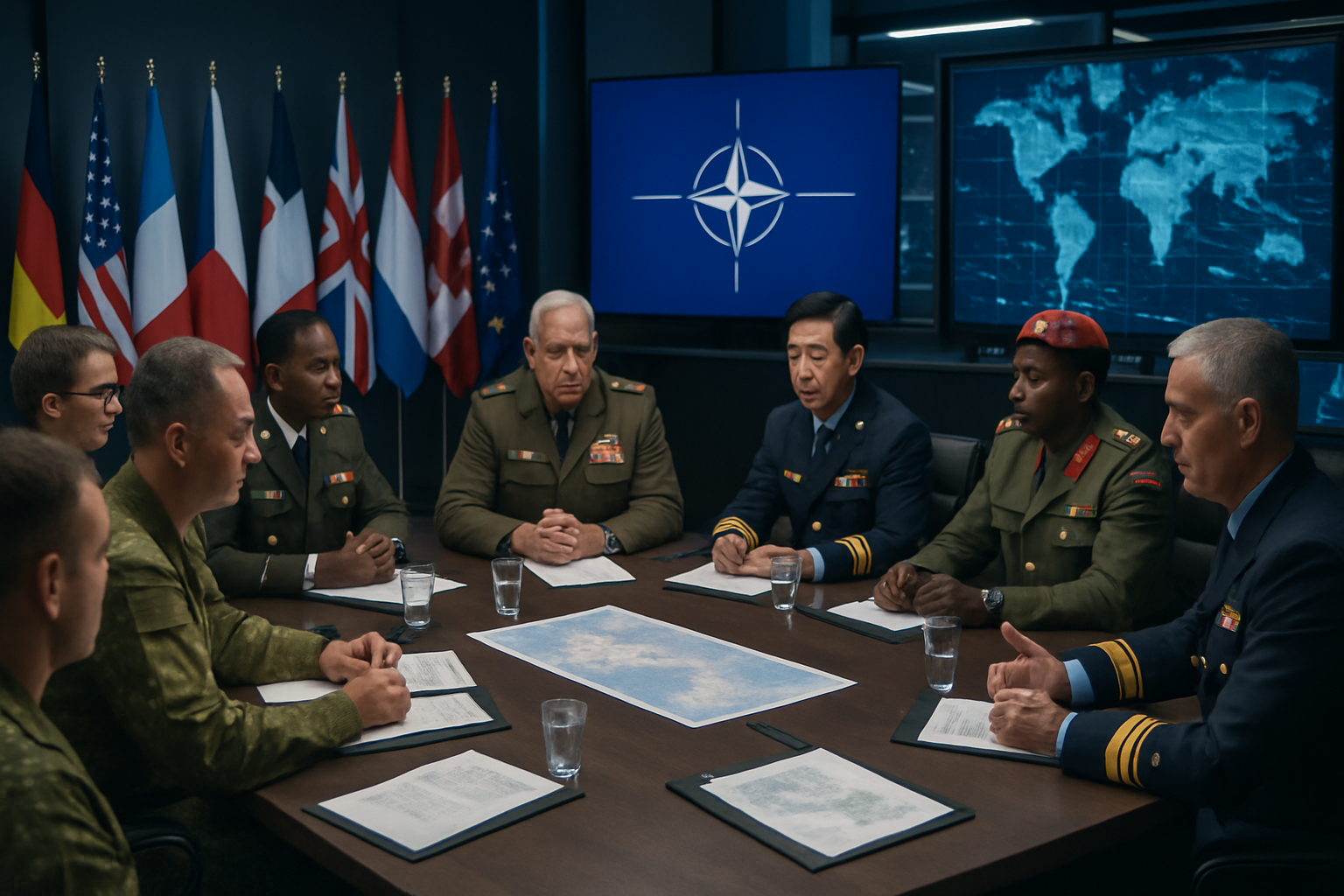
Defense cooperation among allied nations is experiencing unprecedented transformation as military partnerships adapt to complex global security challenges, with NATO at the center of evolving international defense architectures addressing threats from the Arctic to the Indo-Pacific.
Recent developments across multiple continents demonstrate how traditional alliance structures are adapting to 21st-century security realities, from cyber warfare and drone threats to climate change impacts on strategic territories. The evolution reflects both strengthened cooperation and new tensions as nations balance collective security with national sovereignty.
NATO Arctic Strategy Expansion
The alliance's most significant Arctic initiative since the Cold War, NATO Arctic Sentry, has become operational with unprecedented European leadership. The mission addresses Russian military activity increases of 23% in the region since Finland and Sweden joined NATO, representing a fundamental shift in northern security dynamics.
Britain has doubled its troop presence in Norway from 1,000 to 2,000 soldiers over three years, while Finland contributes operational planning expertise developed through decades of Arctic defense experience. Sweden has deployed Gripen fighter jets to Greenland exercises, marking the most comprehensive northern defense coordination in modern NATO history.
"The Arctic has become a domain of great power competition where climate change opens new shipping routes and resource extraction opportunities while exposing strategic vulnerabilities,"
— NATO Official, briefing on Arctic Sentry operations
The mission requires specialized equipment for extreme conditions, including systems operational at temperatures as low as -70°C with winds exceeding 200 km/h. Intelligence sharing frameworks and satellite surveillance create comprehensive monitoring capabilities across the Arctic region.
European Strategic Autonomy in Crisis Response
Recent crises have demonstrated Europe's capacity for independent military coordination while maintaining alliance relationships. The Iranian drone attacks on British sovereign bases in Cyprus marked the first European territory attack since World War II, triggering an unprecedented four-nation response.
France repositioned the aircraft carrier Charles de Gaulle from the Baltic to the Mediterranean, while Greece deployed F-16 fighter jets and naval frigates. Britain contributed HMS Dragon destroyer with Sea Viper missile systems, and Spain provided air defense frigates. The coordination occurred within hours, establishing new templates for European territorial defense.
Cyprus activated its ESTIA evacuation plan for the first time, evacuating Akrotiri village and closing schools in affected areas. The response revealed both capabilities and gaps, with existing shelters providing protection for only 30% of the population.
Nuclear Governance Crisis and Deterrence Evolution
The expiration of the New START Treaty in February 2026 created the first nuclear arms control vacuum between the United States and Russia in over 50 years, fundamentally altering global deterrence calculations. This development has accelerated European discussions about strategic autonomy in nuclear deterrence.
France announced significant expansion of its nuclear arsenal beyond current levels of approximately 290 warheads, with eight European countries agreeing to participate in nuclear deterrence exercises. Germany confirmed direct nuclear cooperation negotiations with France, establishing joint nuclear steering groups in the most significant bilateral nuclear arrangement in postwar European history.
Finland announced plans to lift its comprehensive nuclear weapons ban "as soon as possible," stating current legislation is inadequate for NATO membership requirements. Sweden declared willingness to host nuclear weapons during wartime conditions, breaking the 80-year Nordic nuclear-free tradition.
Baltic Sea Security Concerns Intensify
Intelligence agencies across the Nordic-Baltic region have issued unprecedented warnings about Russian military intentions in the Baltic Sea. Lithuanian intelligence predicts Moscow could be ready for "limited military conflict" within 3-5 years if Ukraine ceasefire conditions permit force reconstitution.
Estonian and Latvian officials report systematic Russian provocations including submarine incursions, GPS jamming operations, and underwater cable sabotage attempts. The pattern represents a coordinated campaign to test NATO response mechanisms and gather intelligence on alliance defensive capabilities.
Latvia's Defense Minister emphasized the need for enhanced drone interception capabilities, noting that completely sealing airspace remains impossible despite improved response systems. Recent drone incidents involving Ukrainian aircraft that crashed in Latvia after flying from Russia demonstrate the challenges of modern air defense.
Indo-Pacific Defense Partnerships
Beyond traditional NATO frameworks, allied nations are developing new partnerships to address Indo-Pacific security challenges. Australia's AUKUS nuclear submarine program represents a $30 billion investment creating 10,000 skilled jobs while establishing Adelaide as a major submarine manufacturing hub.
Canada announced $200 million in space investment for sovereign satellite launch capabilities, building on its $35 billion Arctic defense expansion and $6.6 billion Defense Industrial Strategy. These investments aim for 5% GDP military spending by 2035, exceeding NATO's 2% requirement while reducing foreign dependence.
Japan's electoral mandate under Prime Minister Sanae Takaichi provides unprecedented authority for constitutional reforms enabling enhanced defense capabilities. The two-thirds parliamentary majority opens possibilities for Article 9 pacifist constitution modifications addressing regional security challenges.
Training and Military Exercises Evolution
International military cooperation has expanded through specialized training programs addressing contemporary threats. The EU Military Assistance Mission in Mozambique launched theoretical ammunition courses delivered by Austrian Armed Forces mobile advisory training teams, demonstrating European capacity for stability projection through knowledge transfer.
South Korea conducted large-scale maritime drills commemorating service members killed in past North Korean attacks, with all three Republic of Korea Navy fleets participating in operations designed to reinforce combat readiness. The exercises reflect ongoing tensions despite diplomatic outreach efforts.
Pakistan and China launched their fourth bilateral naval exercise "SEA GUARDIAN" in Karachi, featuring harbor and sea-phase activities including gunnery firings, coordinated patrols, and maritime security operations. The cooperation reflects strengthened naval collaboration amid regional security dynamics.
Technology Integration and Defense Innovation
Modern defense cooperation increasingly emphasizes technology integration alongside traditional hardware exchanges. Estonia's Lockheed Martin HIMARS maintenance center represents the first regional facility for advanced rocket systems, enabling rapid repair without transport to distant locations.
The facility investment of €10 million provides both military capability enhancement and economic benefits, contributing to defense innovation ecosystems across Europe. Such regional maintenance hubs reduce dependence on distant supply chains while building local expertise in advanced weapons systems.
Artificial intelligence integration in defense cooperation has accelerated, with discussions about comprehensive AI partnerships standardizing capabilities across alliance members. These developments address the growing role of autonomous systems in military operations and intelligence gathering.
Challenges and Future Directions
Current defense cooperation faces implementation challenges including sustained political commitment across electoral cycles, coordination of diverse command structures, and balancing deterrent effects with diplomatic stability. The success of Arctic operations requires continued investment in specialized equipment and extreme condition training.
Financial constraints affect all partnership programs, with debates over burden-sharing continuing despite increased European defense spending. The effectiveness of new cooperation models will be tested by their ability to address hybrid warfare, cyber attacks, and space-based threats.
Climate change adds complexity to defense planning as rising Arctic temperatures alter strategic geography while extreme weather events increasingly disrupt military operations and exercises. Adaptation requires new approaches to logistics, equipment design, and operational planning.
"Modern defense cooperation must address traditional threats while adapting to challenges that transcend national boundaries and conventional military responses,"
— Defense Analysis Expert
Regional Partnership Models
Different regions have developed distinct partnership approaches reflecting local security priorities. The Nordic-Canadian Arctic cooperation model emphasizes middle-power coordination through shared expertise and environmental challenges. Six-nation cooperation encompasses joint military exercises, shared intelligence, coordinated surveillance, and defense industrial production adapted to Arctic conditions.
African partnerships focus on capacity building and training, with European missions providing expertise transfers rather than traditional military deployments. The Austrian-led training in Mozambique demonstrates how specialized knowledge sharing can maximize impact through coordinated multilateral efforts.
Middle Eastern partnerships involve complex relationships balancing energy security, territorial defense, and managing proxy conflicts. The unprecedented European naval coalition protecting Cyprus established new precedents for territorial defense coordination when alliance members face direct attacks.
Economic Dimensions of Defense Cooperation
Defense partnerships increasingly integrate economic considerations with strategic objectives. Canada's Defense Industrial Strategy aims to shift 70% of contracts to domestic companies while creating 125,000 jobs, reversing historical dependence on foreign suppliers.
European defense industrial cooperation accelerated through regional manufacturing hubs and technology sharing agreements. The economic multiplier effects extend beyond direct defense spending into supporting industries, research and development, and specialized services.
Investment in defense capabilities now encompasses space technology, cyber capabilities, and climate-resilient infrastructure as traditional distinctions between military and civilian technologies blur in comprehensive security approaches.
Future Security Architecture
The evolution of defense cooperation reflects broader changes in international relations as middle powers seek greater autonomy while maintaining alliance relationships. Success depends on sophisticated diplomatic coordination preventing escalation while enhancing collective capabilities.
Template-setting developments in Arctic cooperation, crisis response coordination, and technology integration will influence defense planning for decades. The effectiveness of these new models in addressing hybrid warfare, space-based defense, and cyber operations will determine their adoption across other regions.
Institutional frameworks continue evolving to preserve alliance unity during internal tensions while addressing external threats. The balance between collective action and national sovereignty remains central to contemporary security architecture as global challenges require both unified responses and flexible adaptation to local conditions.