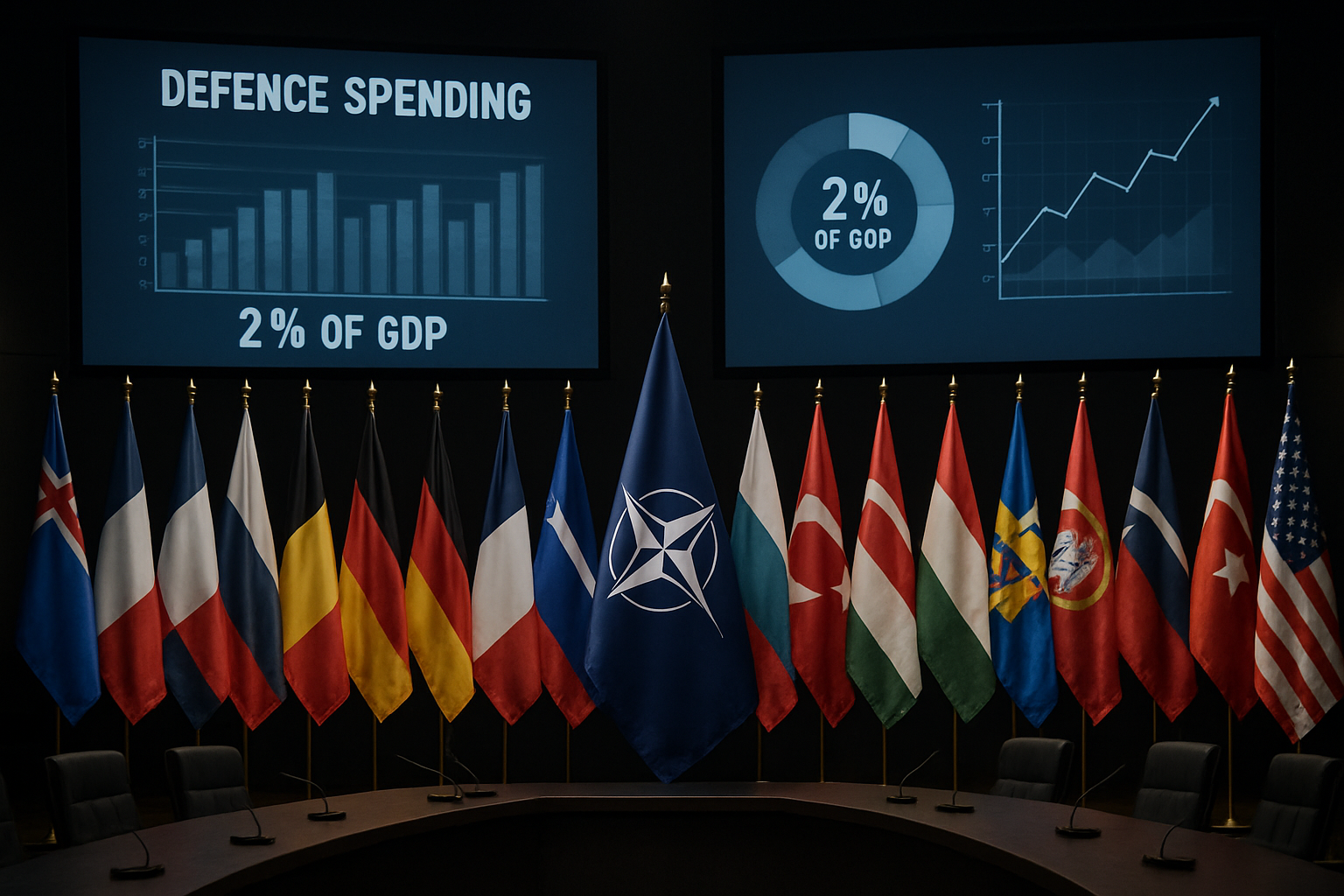
NATO Secretary-General Mark Rutte announced that all 32 alliance members have achieved the 2% GDP defense spending target for 2025, marking the first time in the organization's 75-year history that every nation has met this critical benchmark simultaneously.
The historic milestone, revealed in Rutte's annual report published March 26, 2026, represents a dramatic transformation of alliance burden-sharing dynamics. When NATO established the 2% target at the 2014 Wales Summit following Russia's annexation of Crimea, only three countries met the goal. By 2025, this had expanded to encompass the entire membership.
Final Five Nations Cross the Threshold
The achievement was secured as the last five holdout nations—Spain, Portugal, Albania, Belgium, and Canada—finally reached the minimum spending requirement. According to the Russian source reporting on the milestone, these countries had been working steadily toward compliance amid increasing alliance pressure.
Poland emerged as the alliance's top spender in relative terms, dedicating 4.3% of its GDP to defense in 2025. This substantial investment reflects Poland's frontline position facing Russian aggression and its commitment to deterring further territorial expansion in Eastern Europe.
"This represents a fundamental shift in how NATO approaches collective defense," said a senior alliance official familiar with the spending data. "Every member is now pulling their weight in maintaining our security architecture."
— Senior NATO Official
Record Alliance Investment
The combined defense expenditure across all NATO members reached $1.4 trillion in 2025, representing a 6% increase from the previous year. This massive investment pool provides the alliance with unprecedented resources to address 21st-century security challenges ranging from Russian territorial ambitions to emerging threats in space and cyberspace.
The spending surge has been driven by multiple factors, including the ongoing conflict in Ukraine, Russian military activity increasing 23% in Arctic regions since Finland and Sweden joined NATO, and the need to modernize aging defense infrastructure across the alliance.
Strategic Context and Regional Pressures
The achievement comes amid the most complex security environment NATO has faced since the Cold War. The alliance is simultaneously managing support for Ukraine's defense against Russian invasion, responding to Iranian attacks on European territory for the first time since World War II, and adapting to great power competition with China.
European members have demonstrated unprecedented strategic autonomy, with coordinated responses to crises from the Arctic to the Mediterranean. The Cyprus crisis in March 2026, where Iranian drones struck British sovereign bases, triggered a four-nation European military coalition that showcased the continent's enhanced defense capabilities.
Canada's trajectory exemplifies the transformation. Prime Minister Mark Carney's government committed to reaching 5% GDP defense spending by 2035—far exceeding NATO's target—through a comprehensive defense industrial strategy worth $6.6 billion and a $35 billion Arctic defense investment.
Technology and Industrial Transformation
The spending milestone reflects broader changes in defense procurement and industrial policy. European nations have tripled arms imports since 2021, with Germany surpassing China as the world's fourth-largest arms exporter. This shift toward domestic production reduces dependence on external suppliers while building indigenous technological capabilities.
Advanced systems deployment has accelerated across the alliance. Estonia's partnership with Lockheed Martin for the first regional HIMARS maintenance center represents the evolution toward distributed manufacturing and maintenance networks. Similar facilities are being established throughout Europe to support Western-supplied equipment in active conflict zones.

Nuclear Governance and Extended Deterrence
The spending achievement gains additional significance against the backdrop of nuclear governance crisis. The New START treaty's expiration in February 2026 marked the first time in over 50 years without US-Russia nuclear constraints, prompting European discussions about expanding France's nuclear deterrent beyond national scope.
Finland and Sweden have both signaled willingness to host nuclear weapons during wartime, breaking an 80-year Nordic nuclear taboo. These policy shifts reflect the alliance's adaptation to contemporary threat environments where nuclear risks, according to UN Secretary-General António Guterres, are at their "highest in decades."
Burden-Sharing Success Story
The 2% achievement validates NATO's burden-sharing evolution under successive US administrations' pressure. Former President Trump's demands for increased European defense spending, including controversial calls for 5% GDP targets, created diplomatic tensions but ultimately drove positive change in alliance resource allocation.
European allies have assumed greater leadership roles in regional security operations, from the Arctic Sentry mission to Mediterranean crisis response. The UK's doubling of troop presence in Norway to 2,000 personnel over three years exemplifies this enhanced European commitment to collective defense.
"NATO has never been stronger in terms of resources and capabilities. This milestone proves the alliance can adapt to meet evolving security challenges through shared commitment."
— Mark Rutte, NATO Secretary-General
Future Challenges and Sustainability
While celebrating this historic achievement, alliance officials acknowledge that sustaining 2%+ spending levels requires long-term political commitment across electoral cycles. The challenge extends beyond raw expenditure to ensuring effective capability development, interoperability, and technological innovation.
Regional conflicts from Ukraine to the Middle East demonstrate that defense spending must translate into operational effectiveness. NATO's success in supporting Ukraine's defense while managing multiple simultaneous crises validates the investment in enhanced capabilities and readiness.
Global Security Architecture Impact
The NATO spending milestone occurs as other regional powers reassess their defense commitments. China announced a 7% defense budget increase for 2026 to $277 billion, while maintaining its focus on technological advancement and military modernization toward 2035 objectives.
Japan's historic supermajority election victory for PM Sanae Takaichi provides constitutional reform authority for enhanced defense capabilities, responding to China's 23% increase in military activity around Taiwan during 2025.
The alliance's achievement demonstrates that democratic nations can coordinate substantial defense investments while maintaining institutional unity—a critical capability as great power competition intensifies globally.
Looking Forward
As NATO enters its next phase, the 2% achievement provides a foundation for addressing emerging challenges from artificial intelligence integration to space-based defense systems. The alliance's ability to meet its spending commitments proves institutional resilience and adaptive capacity essential for 21st-century security.
The milestone also establishes precedents for defense cooperation beyond traditional Atlantic boundaries, as NATO's Indo-Pacific partnerships with Australia, Japan, and South Korea deepen amid regional security challenges.
With all members now contributing their fair share, NATO faces its next test: translating unprecedented resources into sustained deterrence and defense capabilities that preserve peace through strength in an increasingly complex global security environment.