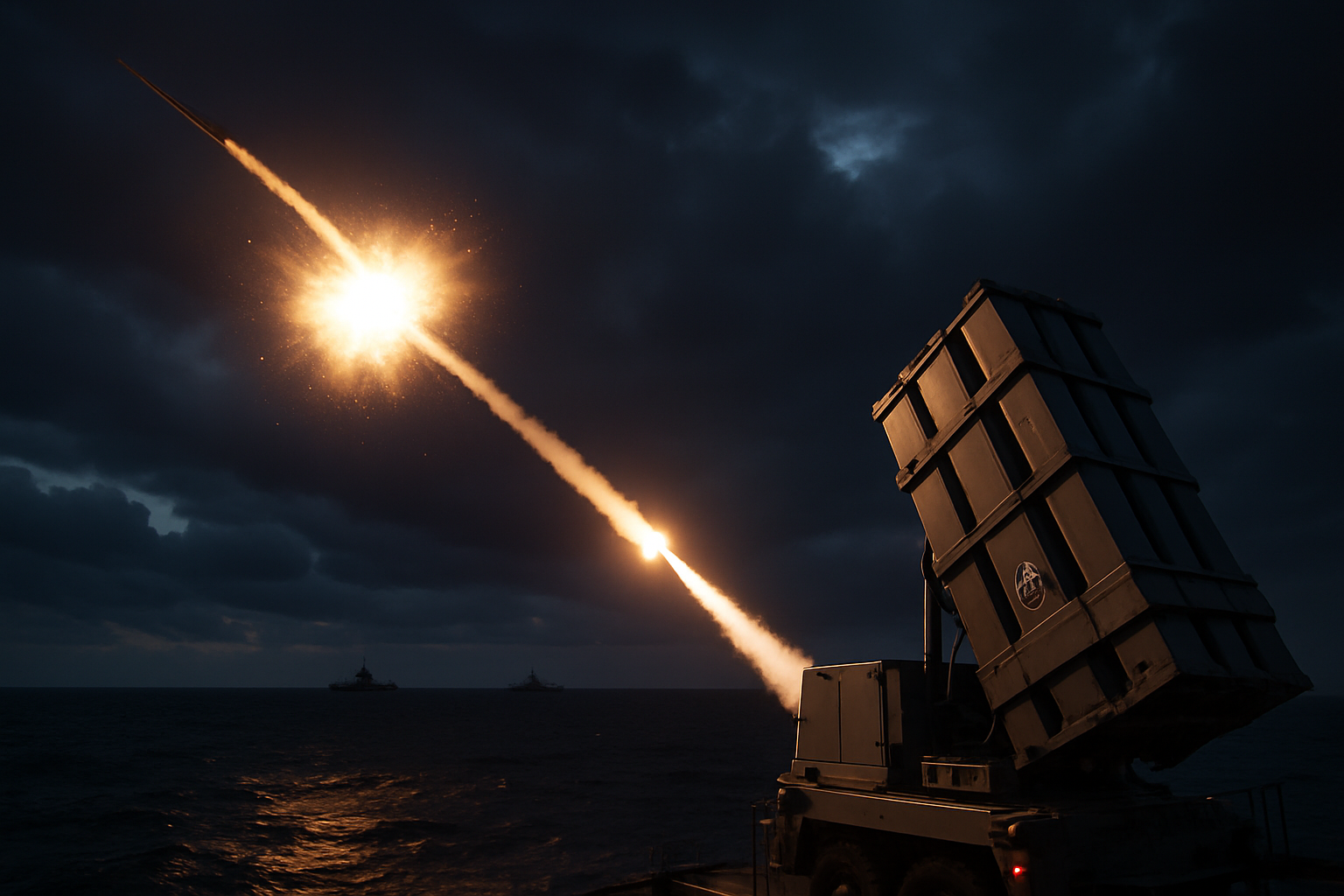
NATO air defense systems successfully intercepted and destroyed an Iranian ballistic missile targeting Turkish airspace on Wednesday, marking the alliance's first direct military engagement in the rapidly escalating Middle East crisis following the death of Iran's Supreme Leader Ali Khamenei.
The Turkish Defense Ministry confirmed that the ballistic missile, fired from Iran and approaching Turkish territory after traversing Iraq and Syria, was neutralized by NATO air and missile defense systems deployed in the eastern Mediterranean Sea. The incident occurred with no casualties or injuries, according to official statements.
Direct NATO Engagement
This represents the most significant NATO military action in the ongoing Iran crisis that began with the massive US-Israeli "Operation Epic Fury" strikes on February 28, 2026. The successful interception demonstrates the alliance's collective defense capabilities while highlighting how regional conflicts can rapidly escalate to involve broader international security frameworks.
According to multiple European sources, the missile was detected crossing Iraqi and Syrian airspace before NATO's integrated defense systems engaged it over the Mediterranean. The interception came as part of Iran's sustained "Operation True Promise 4" retaliation campaign, which has targeted US military installations and allied territories across the Gulf region.
"Our resolve and capacity to ensure the security of our country and its citizens are at the highest level. While Turkey supports regional stability and peace, it is capable of ensuring the security of its territory, regardless of from whom or from where a threat may come."
— Turkish Defense Ministry Statement
Escalating Regional Crisis Context
The missile interception occurs against the backdrop of the most dangerous international crisis since the Cold War's end. The situation began with the complete collapse of US-Iran nuclear diplomacy despite achieving a "broad agreement on guiding principles" in Geneva talks - the most progress since the JCPOA's 2018 breakdown.
Iran's Supreme Leader Ali Khamenei was officially confirmed killed in the coordinated strikes, ending his 37-year rule and triggering a constitutional succession crisis. The Islamic Republic has since declared "no red lines remain," systematically targeting US and Israeli assets across the Middle East.
Global Aviation and Energy Crisis
The Iranian missile targeting Turkey comes amid an unprecedented global aviation crisis, with over 18,000 flights cancelled worldwide as eight Middle Eastern countries have simultaneously closed their airspace. Iran, Iraq, Israel, UAE, Qatar, Syria, Kuwait, and Bahrain have all suspended civilian air traffic, creating the most comprehensive aviation disruption since COVID-19.
Energy markets have been equally affected, with oil prices surging over 10% to $80+ per barrel as Iran has effectively closed the Strait of Hormuz, which handles 40% of global seaborne oil transit. Major shipping companies Maersk and MSC have suspended operations, leaving over 150 tankers anchored in the Persian Gulf.
NATO's Strategic Response
The successful interception demonstrates NATO's Article 5 collective defense principles in practice. Turkey, as NATO's second-largest standing army, has been protected by the alliance's integrated missile defense systems, which include advanced Patriot batteries and naval-based interceptors positioned throughout the eastern Mediterranean.
According to Norwegian sources, NATO's air defense capabilities in the region have been coordinated through the alliance's command structure, providing Turkey with comprehensive protection against ballistic missile threats. This marks the first time NATO defenses have been operationally tested against Iranian ballistic missiles.
Diplomatic Breakdown and Nuclear Concerns
The missile targeting Turkish territory underscores the complete breakdown of diplomatic solutions that had shown promise just days before. Geneva talks had achieved unprecedented progress, with Iranian Foreign Minister Abbas Araghchi announcing a "broad agreement on guiding principles" for nuclear negotiations.
However, fundamental scope disagreements proved insurmountable. Iran maintained that ballistic missiles and regional proxy support were "red lines" excluded from nuclear-only talks, while the US demanded comprehensive agreements including missiles, armed groups, and human rights issues.
The crisis occurs against a broader nuclear governance breakdown, with the New START treaty having expired on February 5, 2026 - the first time in over 50 years that the US and Russia have operated without nuclear constraints. UN Secretary-General António Guterres has warned that nuclear risks are at their "highest level in decades."
"We advise all parties to refrain from steps that could escalate the conflict further."
— Turkish Defense Ministry
Regional Coalition Under Strain
The Iranian attack on Turkish airspace has severely strained the unprecedented regional coalition of Saudi Arabia, UAE, Qatar, and Egypt that had backed diplomatic solutions. Egyptian President Abdel Fattah el-Sisi condemned Iranian attacks on "sisterly Arab countries," warning of "comprehensive chaos" if escalation continues.
Multiple countries have initiated emergency evacuations, with Sweden and Serbia ordering immediate citizen departures from Iran citing "extremely uncertain" security conditions. The US has authorized non-essential embassy personnel to leave Israel, while European nations have issued comprehensive travel warnings.
International Response
The UN Security Council has convened an emergency session requested by France, China, Russia, Colombia, and Bahrain. Russia has condemned what it calls "reckless actions by Washington and West Jerusalem" as violations of international law, while European allies have called for maximum restraint.
The successful NATO interception has drawn support from alliance members, with several European nations pledging additional defensive capabilities to protect Turkey's borders. The incident demonstrates how regional conflicts in the multipolar era can rapidly involve global security architectures.
Historical Significance
March 4, 2026, represents a watershed moment in international relations, marking the most dangerous global crisis since the Cold War's end. The successful NATO interception provides a template for collective defense in the 21st century, while highlighting the fragility of modern crisis management mechanisms.
The stakes extend far beyond the immediate Middle East conflict, encompassing global energy security, nuclear governance credibility, and the post-WWII international order's fundamental principles. Success in containing the escalation could provide a framework for future nuclear crisis resolution, while failure may accelerate military solutions over diplomatic approaches worldwide.
As Turkey warned Iran against further escalation while reserving its right to respond, the international community faces urgent decisions about preventing broader Middle Eastern warfare while addressing the underlying issues that led to this dramatic diplomatic breakdown.