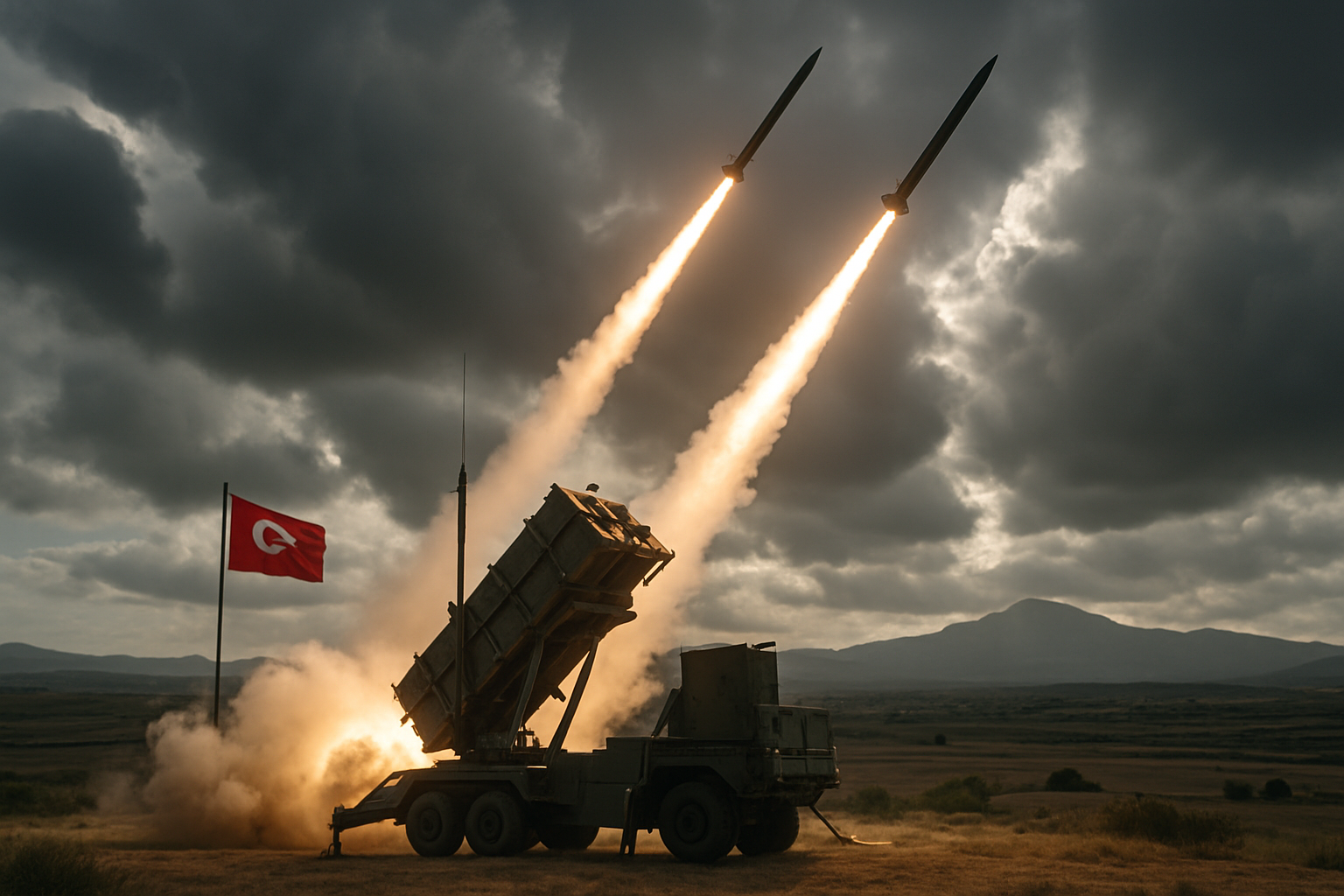
NATO air defense systems successfully intercepted a second Iranian ballistic missile over Turkish airspace on Monday, March 9, 2026, according to Turkey's Defense Ministry, marking an unprecedented escalation in the ongoing Middle East crisis that has now directly threatened Alliance territory for the second time in five days.
The Turkish Defense Ministry confirmed that the ballistic missile, launched from Iran, was "neutralized" by NATO air defense systems deployed in the eastern Mediterranean. Debris from the intercepted missile fell in empty fields near Gaziantep in southeastern Turkey, with no casualties reported from the incident.
This marks the second Iranian ballistic missile to target NATO member Turkey within a week, representing a dangerous expansion of Iran's "Operation True Promise 4" retaliation campaign beyond traditional regional boundaries into Alliance territory.
Unprecedented Challenge to NATO Article 5
The repeated Iranian missile attacks against Turkey constitute the first direct military challenge to NATO's collective defense principles in the 21st century. The Alliance's integrated air defense systems have proven effective in neutralizing the Iranian threats, but the targeting of a NATO member state represents a watershed moment in post-Cold War European security.
NATO officials have described the situation as the Alliance being "directly drawn into" the Middle East conflict for the first time, with Secretary-General sources confirming the organization is "closely monitoring Middle East events" given the implications for Western security architecture.
"Turkey will take necessary steps without hesitation if such attacks continue."
— Turkish Defense Ministry Statement
The missile interceptions have demonstrated NATO's defensive capabilities while raising critical questions about deterrence and proportional response to Iranian aggression against Alliance members.
Escalating Iranian Retaliation Campaign
The Turkish airspace violations are part of Iran's massive "Operation True Promise 4" retaliation campaign launched following the death of Supreme Leader Ali Khamenei in the US-Israeli "Operation Epic Fury" strikes that began March 1, 2026. Iranian Revolutionary Guard commanders have declared "no red lines remain" in their systematic targeting of US and allied assets across the region.
The campaign has resulted in casualties across multiple nations: one civilian killed in the UAE, 32 foreign nationals injured in Kuwait, eight wounded in Qatar despite successful Patriot missile interceptions, and the unprecedented attack on RAF Akrotiri in Cyprus—marking the first strike on European territory since World War II.
Intelligence assessments indicate the Iranian missiles targeting Turkey have been launched through Iraqi and Syrian airspace, highlighting the regional nature of the conflict and the challenges facing air defense coordination across multiple countries.
Regional Coalition Under Severe Strain
The Iranian attacks on Turkish territory have severely strained the unprecedented diplomatic coalition of Saudi Arabia, UAE, Qatar, and Egypt that had backed nuclear diplomacy efforts prior to the current crisis. Egyptian President Abdel Fattah el-Sisi condemned the attacks on "sisterly Arab countries," warning of impending "comprehensive chaos" if the escalation continues.
The targeting of NATO member Turkey adds a European dimension to what had previously been contained as a Middle Eastern conflict, potentially forcing European allies to choose between regional stability and Alliance solidarity. France, Greece, and the United Kingdom have already deployed additional military assets to the Eastern Mediterranean—the most significant mobilization since the 1974 Turkish invasion of Cyprus.
Global Consequences Intensify
The missile interceptions occur amid the most severe international crisis since the Cold War, with over 18,000 flights cancelled worldwide and oil prices surging past $80 per barrel as Iran has effectively closed the Strait of Hormuz, affecting 40% of global oil transit.
Dubai International Airport, the world's busiest, remains completely shut down from missile damage sustained in Iranian attacks, while major carriers including Emirates, Air France-KLM, and Wizz Air have suspended operations indefinitely. The aviation crisis represents the most comprehensive disruption since the COVID-19 pandemic.
Natural gas prices have surged 24% in Europe and 78% in the United States, while Qatar has halted LNG production affecting approximately 20% of global exports. Over 150 oil and gas tankers remain stranded in the Persian Gulf, representing billions of dollars in cargo.
Nuclear Diplomacy Collapse Context
The current crisis stems from the complete breakdown of US-Iran nuclear negotiations despite achieving what diplomats called "broad agreement on guiding principles"—the most significant progress since the collapse of the Joint Comprehensive Plan of Action (JCPOA) in 2018.
The fundamental disagreement that proved insurmountable centered on scope: Iran insisted on excluding ballistic missiles and regional proxy support as "red lines" while demanding nuclear-only talks, while the US insisted on a comprehensive approach including missiles, armed groups, and human rights concerns.
Iran continues enriching uranium to 60% purity with over 400 kilograms of material—approaching the 90% weapons-grade threshold and sufficient for multiple nuclear weapons if weaponized, according to international nuclear experts.
Historical Precedent and Template-Setting Implications
The March 4 and March 9 missile interceptions represent the first time NATO's integrated air defense systems have engaged enemy missiles in combat since the Alliance's founding. The successful interceptions demonstrate both the effectiveness of NATO's defensive capabilities and the unprecedented nature of the current crisis.
The crisis occurs amid a broader nuclear governance breakdown, with the New START treaty having expired on February 5, 2026—marking the first time in over 50 years without US-Russia nuclear constraints. Combined with China's nuclear expansion, UN Secretary-General António Guterres has warned that nuclear risks are at their "highest in decades."
"This represents a template-setting moment for 21st-century crisis management and collective defense."
— NATO Strategic Analysis
International Evacuation Crisis
The escalating conflict has triggered the largest coordinated international evacuation since the Arab Spring in 2011, with over 500,000 citizens being extracted from Middle Eastern conflict zones. Australia alone has 115,000 nationals trapped in the region, while Germany is coordinating the evacuation of 30,000 tourists.
Cyprus has activated its ESTIA national evacuation plan for the first time in history, coordinating the extraction of over 2,000 EU nationals from the UAE. Multiple countries including Sweden and Serbia have ordered immediate evacuations from Iran, citing "extremely uncertain" security conditions.
Economic and Strategic Implications
The crisis has triggered a global stock market crash, with Pakistan's KSE-100 experiencing its largest single-day decline in history at -8.97%. The Dow futures have dropped 400-570 points, while central banks including the European Central Bank and Bank of Japan are coordinating emergency liquidity measures to prevent financial contagion.
Supply chain vulnerabilities have been exposed across manufacturing sectors dependent on Gulf logistics networks, affecting automotive, electronics, and textile industries worldwide. The Persian Gulf's role as a critical trade hub extends far beyond energy, encompassing consumer goods and industrial materials.
Looking Forward: Containment vs. Escalation
The successful missile interceptions demonstrate NATO's defensive capabilities while highlighting the dangerous expansion of Middle Eastern conflicts into European security considerations. The Alliance faces critical decisions about deterrence measures and proportional responses to continued Iranian aggression.
Recovery timelines remain uncertain, depending entirely on military operations resolution and diplomatic normalization rather than predictable natural disaster patterns. The aviation industry cannot implement long-term scheduling with multiple airspaces closed, while energy markets remain volatile with critical transit routes blocked.
The template-setting nature of this crisis will influence international approaches to conflict resolution for decades to come. Success in containing the escalation could provide frameworks for future nuclear and territorial dispute resolution, while failure may accelerate military solutions over diplomatic approaches, fundamentally reshaping 21st-century international relations.
As NATO continues to monitor the situation closely, the Alliance's unity and defensive capabilities face their greatest test since the Cold War, with the stakes encompassing not just regional war prevention but global energy security, nuclear governance credibility, and the enforcement of international law principles that have underpinned the post-World War II order.