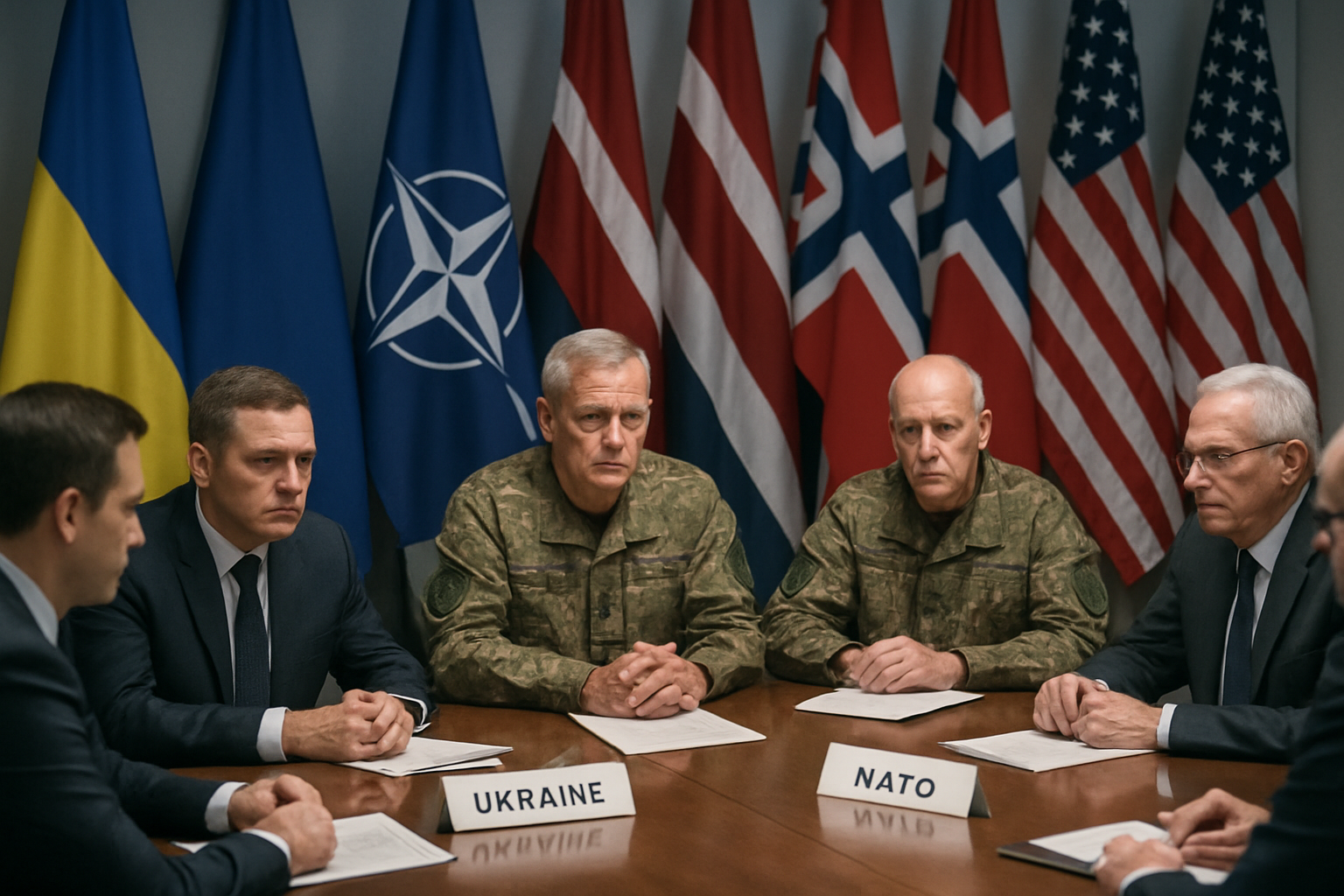
A NATO delegation led by French Admiral Pierre Vandieront arrived in Kyiv on Sunday for the first high-level Alliance visit to the Ukrainian capital since Russia's full-scale invasion began over four years ago, as Moscow simultaneously announced territorial gains and preparations for expanded offensive operations across multiple fronts.
According to Pavlo Palisa, deputy head of Ukraine's presidential office, the unprecedented NATO delegation focused discussions on Ukrainian military participation in future Alliance exercises and training programs, marking a significant escalation in military cooperation despite the ongoing conflict.
Russian Territorial Claims and Military Preparations
The diplomatic breakthrough comes as Russian forces claim control of a border village in Ukraine's Sumy region, with Moscow asserting it has been "trying to establish a 'buffer zone' in the region for months, making small breakthroughs across the border." Intelligence reports indicate Russian forces have "stepped up their redeployment and are preparing for new offensive operations on several fronts simultaneously."
These territorial claims follow a pattern of accelerated Russian gains documented throughout early 2026, when Moscow forces captured 481 square kilometers in January alone compared to 260 square kilometers in December 2025 - an 85% increase representing the fastest monthly territorial expansion in recent periods.
Alliance Response and Military Integration
The NATO delegation's visit represents a dramatic shift from the Alliance's previous cautious approach to direct engagement with Ukrainian leadership on their territory. Admiral Vandieront's discussions with Ukrainian officials signal growing confidence in sustainable military cooperation frameworks despite active combat operations.
The timing coincides with broader NATO preparations for enhanced Ukrainian integration, including advanced training programs that would mark the first formal Alliance exercises involving Ukrainian personnel since the conflict began. These developments suggest NATO is positioning for long-term strategic partnership regardless of immediate battlefield outcomes.
Economic Warfare and Sanctions Erosion
Ukrainian President Volodymyr Zelensky warned via Telegram that sanctions weakening has enabled Russia to increase oil export revenues that directly finance the war effort. The statement highlights growing international concern over enforcement gaps that allow Moscow to maintain economic leverage despite years of Western restrictions.
This economic dimension adds complexity to military developments, as Russia's ability to sustain prolonged offensive operations depends heavily on energy revenues that sanctions were designed to curtail. Zelensky's warning comes amid reports of "shadow fleet" operations and sanctions circumvention mechanisms that have restored significant portions of Russian oil income.
Strategic Implications for Regional Security
The convergence of NATO's first high-level Kyiv visit with Russian territorial gains and offensive preparations creates a critical inflection point in the conflict's trajectory. Alliance officials are reportedly assessing whether enhanced Ukrainian integration can provide sufficient deterrent effect against expanded Russian operations.
Military analysts note that Russian preparations for "operations on several fronts simultaneously" suggest Moscow may be testing NATO's resolve to maintain Ukrainian support amid potential escalation. The Alliance delegation's focus on training programs indicates confidence in Ukraine's long-term defensive capabilities.
Diplomatic Context and Peace Negotiations
These developments occur against the backdrop of suspended Ukraine-Russia-US trilateral peace negotiations, which were postponed indefinitely due to the Iran crisis despite achieving significant breakthroughs in early 2026, including a historic 314-prisoner exchange and restoration of US-Russia military communications after a four-year suspension.
The NATO visit suggests the Alliance is pursuing parallel diplomatic tracks while formal peace negotiations remain stalled, potentially creating new frameworks for conflict resolution that bypass traditional bilateral approaches.
International Support and Strategic Partnerships
The timing of the NATO delegation coincides with ongoing international support initiatives, including the European Union's historic €90 billion loan package - the largest single-nation assistance program in European history. This financial commitment demonstrates sustained Western backing despite the prolonged nature of the conflict.
However, challenges persist within the Alliance itself, with Hungary continuing to block certain EU aid packages over pipeline disputes, exposing persistent divisions in European unity that Russia may seek to exploit during its planned offensive operations.
Future Military Cooperation Framework
The discussions between Admiral Vandieront's delegation and Ukrainian officials regarding "participation of Ukrainian military in future Alliance exercises" represent unprecedented integration planning during active combat. This approach suggests NATO is preparing for scenarios where Ukrainian forces transition from defensive operations to structured Alliance partnership.
Such integration would mark a fundamental shift in NATO's approach to non-member military cooperation during wartime, potentially creating templates for future conflicts involving Alliance partners facing external aggression.
Regional Impact and Border Security
Russian claims of establishing buffer zones in Sumy region, combined with preparations for multi-front operations, raise immediate concerns for NATO's eastern flank members. The Alliance delegation's visit likely addressed coordination mechanisms for regional defense should Russian operations expand beyond current territorial boundaries.
Baltic states and Poland have expressed particular concern about Russian military preparations, viewing enhanced Ukrainian integration as essential for regional deterrence effectiveness.
Conclusion
The historic NATO delegation visit to Kyiv, occurring simultaneously with Russian territorial gains and offensive preparations, marks a critical juncture in the conflict's evolution. While Moscow advances militarily and economically through sanctions erosion, the Alliance's unprecedented direct engagement in the Ukrainian capital signals determination to maintain strategic partnership regardless of immediate battlefield dynamics.
The success of these new diplomatic and military frameworks may determine whether NATO can effectively deter Russian expansion while supporting Ukrainian territorial integrity. With peace negotiations suspended and military preparations intensifying on both sides, the Alliance's direct engagement represents a significant strategic commitment whose implications will resonate across European security architecture.
As both sides prepare for potentially decisive phases of the conflict, the NATO delegation's focus on long-term military cooperation suggests the Alliance views Ukrainian integration as essential for regional stability, regardless of immediate territorial outcomes or suspended peace initiatives.