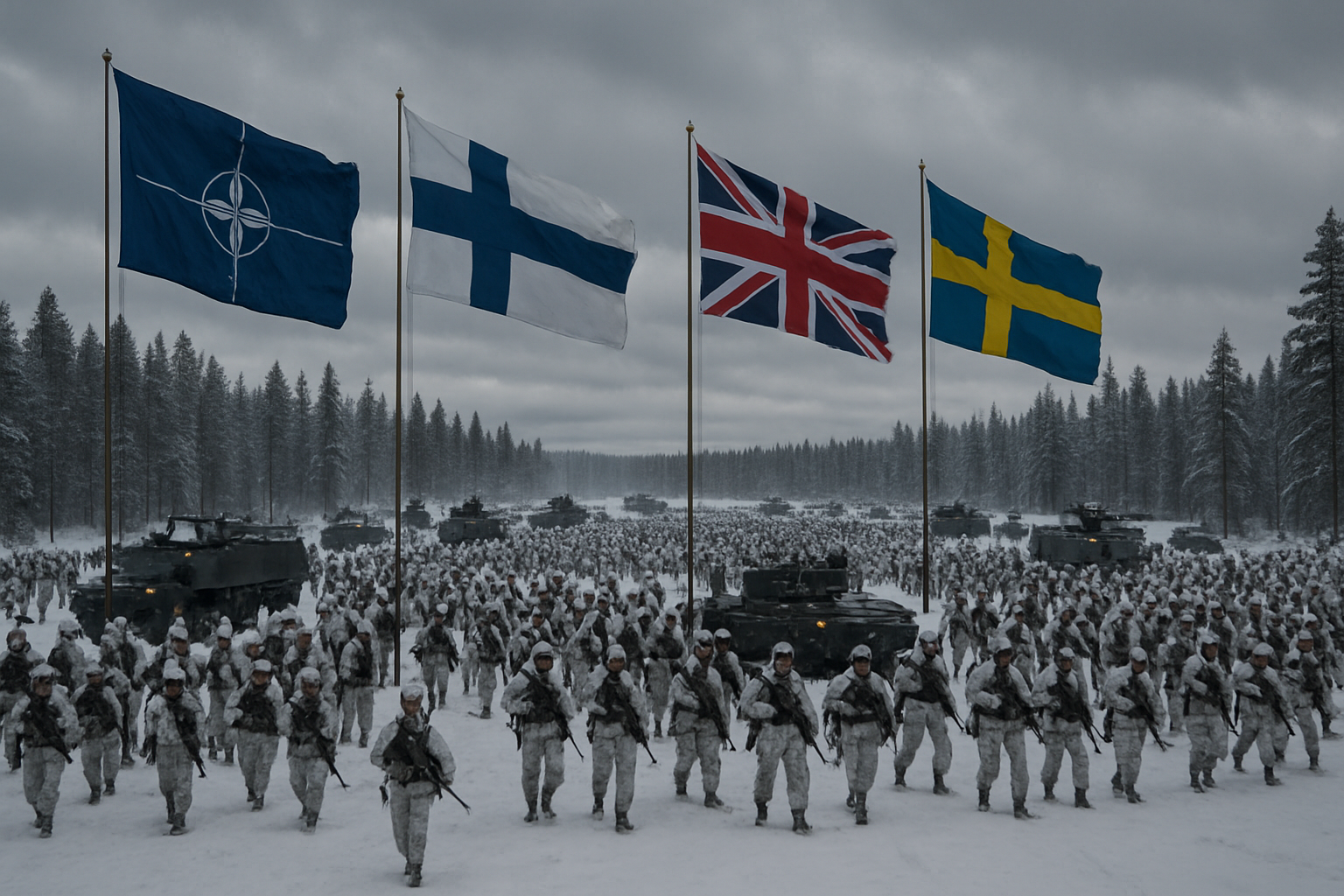
NATO has launched its most comprehensive military exercises in the Nordic region since the Cold War, with thousands of allied soldiers participating in large-scale drills across Finland and other northern territories as the alliance strengthens its Arctic defense posture amid evolving security challenges.
The exercises represent a dramatic expansion of NATO's presence in the region, building upon the successful integration of Finland into the alliance following its historic membership in April 2023. The drills come at a critical time as the alliance faces multiple security challenges, including heightened Russian military activity in the Arctic and the ongoing transformation of European defense architecture.
Arctic Sentry Mission Framework
The military exercises are conducted within NATO's Arctic Sentry mission, officially launched in February 2026 as the alliance's most comprehensive Arctic security response. The European-led initiative has seen unprecedented coordination among member nations, with the UK doubling its troop presence in Norway from 1,000 to 2,000 soldiers over the next three years, while Sweden has deployed Gripen fighter jets for Greenland exercises.
Finland's contribution to the operational planning has proven crucial, leveraging the nation's extensive Arctic warfare expertise and strategic geographical position. The country's military capabilities, honed through decades of preparing for potential northern conflicts, have become invaluable assets to the alliance's collective defense strategy.
Enhanced Alliance Burden-Sharing
The exercises demonstrate a significant shift in NATO's burden-sharing arrangements, with European allies taking on greater leadership roles in regional security operations. This evolution addresses longstanding American calls for increased European responsibility while maintaining unified command structures across the alliance.
British Defence Secretary John Healey's announcement of the enhanced British-Norwegian cooperation serves as a model for other NATO partnerships in the Arctic domain. The investment in specialized Arctic equipment, extreme weather training, and logistical support systems reflects the alliance's long-term commitment to northern defense capabilities.
Strategic Response to Arctic Threats
The military drills address mounting concerns over Russian re-establishment of Arctic military presence, including the reopening of Cold War-era bases. Nordic intelligence agencies have reported a dramatic increase in Russian reconnaissance activities since Sweden and Finland joined NATO, with military activity up 23% in 2025 according to regional assessments.
Climate change has fundamentally altered Arctic geopolitics, opening new shipping routes and exposing previously inaccessible natural resources. These developments have intensified great power competition in the region, making NATO's coordinated response increasingly vital for maintaining regional stability.
International Law and Sovereignty Framework
The exercises also serve a diplomatic function, establishing frameworks for collective action in support of territorial sovereignty principles. The coordinated European response builds upon successful precedents set during recent Greenland sovereignty tensions, where France and Canada opened consulates in Nuuk as symbols of international solidarity.
The military cooperation demonstrates practical implementation of Article 5 collective defense principles, showing how the alliance adapts to contemporary security challenges while respecting international law and territorial integrity. This approach provides templates for addressing other contested regions where climate change intersects with strategic competition.
Technological and Industrial Implications
The large-scale exercises showcase significant investments in next-generation military capabilities, including advanced surveillance systems, Arctic-specific equipment, and integrated command structures. European defense industrial cooperation has accelerated, with multiple nations coordinating on specialized Arctic warfare technologies and logistical innovations.
Intelligence sharing frameworks activated during the exercises represent enhanced cooperation mechanisms designed to improve real-time threat assessment and response coordination. These developments signal a fundamental shift toward more autonomous European defense capabilities while maintaining transatlantic alliance commitments.
Regional and Global Impact
The success of these military exercises will influence NATO's broader adaptation to 21st-century security challenges, including hybrid warfare, space-based defense, and cyber operations. The enhanced presence in Finland particularly strengthens the alliance's ability to monitor and respond to activities across the broader Baltic Sea region.
Norway's position remains critical for North Atlantic and Arctic Ocean access, with the enhanced British troop presence providing additional power projection capabilities across vital Arctic waterways. The coordination between Nordic partners creates a template for other regional groupings within the alliance structure.
Future Trajectory and Sustainability
The exercises test whether sustained political commitment can maintain enhanced Arctic capabilities across electoral cycles and changing strategic priorities. Success requires continued coordination among diverse stakeholder interests while balancing deterrent effects with diplomatic stability.
The military drills represent more than tactical training; they establish precedents for how NATO adapts institutional frameworks to contemporary threats while preserving alliance unity during periods of internal tension and external pressure. The effectiveness of these exercises will influence the alliance's credibility in addressing non-traditional security challenges in an increasingly competitive global environment.
As the exercises continue across Finland's northern territories, they mark a decisive moment in European security architecture evolution, demonstrating the alliance's capacity for strategic adaptation while maintaining collective defense principles that have defined transatlantic security cooperation for over seven decades.