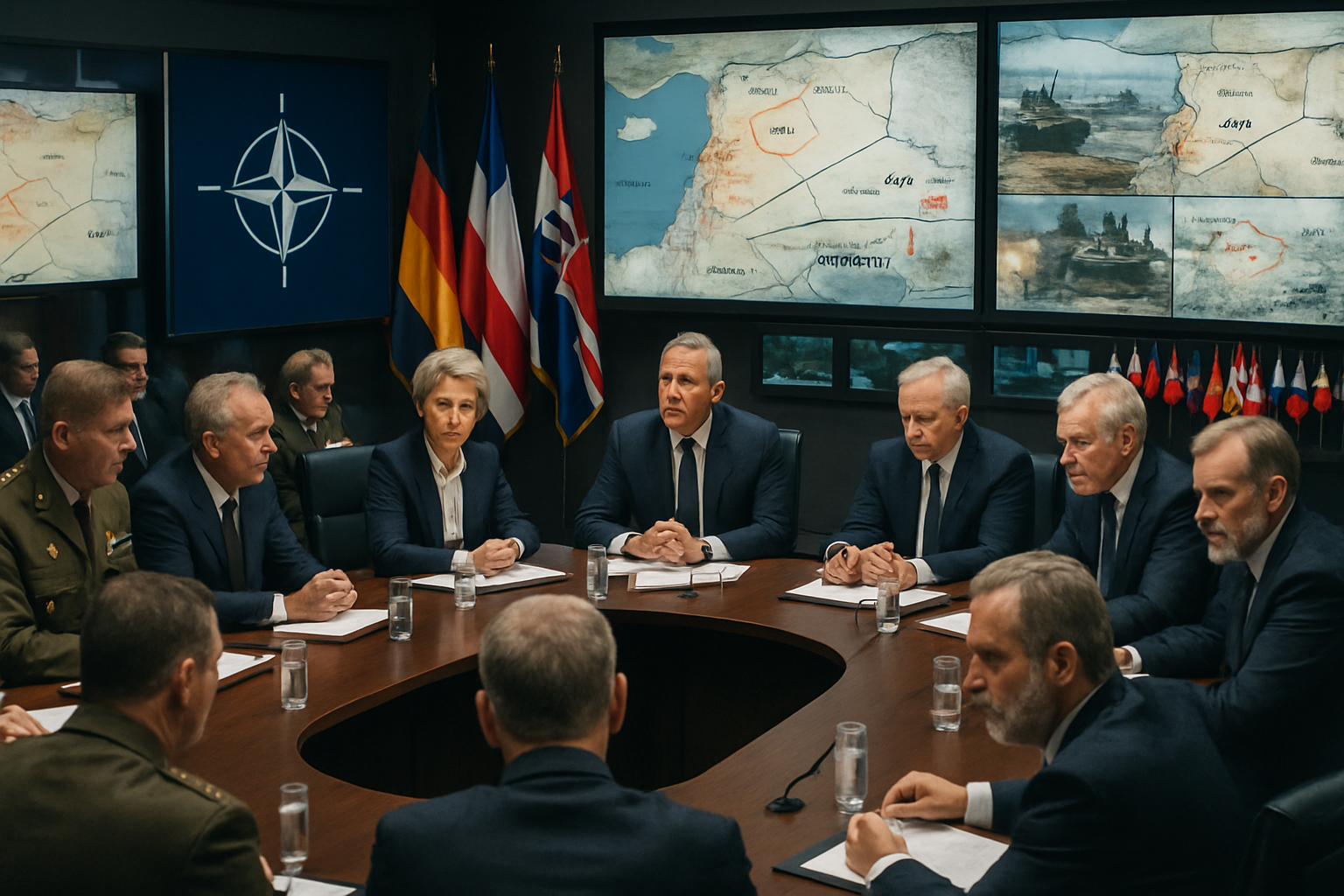
NATO countries are coordinating an unprecedented military assistance package and defensive measures as Iran's systematic targeting of Western forces intensifies, marking the most serious international security crisis since the Cold War ended.
The latest developments underscore the rapidly evolving nature of the conflict, with Iranian drone strikes hitting British military installations in Iraq and Cyprus, while US forces prepare for extended operations that Pentagon officials now admit could stretch through September 2026.
British Forces Under Direct Attack
Iranian drones successfully penetrated British air defenses Wednesday night, striking a UK military base in Erbil, northern Iraq, in what marks the third direct attack against British forces since Operation Epic Fury began. The strike comes after previous Iranian attacks on RAF Akrotiri in Cyprus and a near-miss at another Iraqi facility housing British personnel.
"British air-defence troops destroyed two drones during the attack, but other devices broke through and hit the air base," UK officials confirmed to the Telegraph. While no British soldiers were injured in the Erbil attack, American troops at the same base suffered minor injuries, highlighting the international scope of Iranian targeting.
The successful penetration of British defenses represents a significant escalation in Iran's "Operation True Promise 4" campaign, which Revolutionary Guards commanders have declared operates under "no red lines." The attacks demonstrate Iran's growing tactical sophistication, with UK Defence Secretary John Healey noting that Iranian pilots are adopting Russian-developed low-altitude flight patterns that make interception more difficult.
Italian Military Withdrawal Signals European Concerns
Italy announced the temporary withdrawal of all personnel from its military base in Iraqi Kurdistan following the drone attacks, completing a retreat that Italian ministers described as already underway. The decision reflects broader European unease about the expanding scope of Iranian retaliation.
"Italy is temporarily withdrawing all personnel from a military base in Iraqi Kurdistan which came under a drone attack," Defense Minister Crosetto confirmed Thursday, emphasizing the precautionary nature of the move while maintaining Italy's commitment to regional security.
The withdrawal comes as European allies grapple with balancing support for US operations against Iran while protecting their own forces from increasingly sophisticated Iranian targeting. France has explicitly declined to send naval vessels to the Strait of Hormuz, with Defence Minister Catherine Vautrin stating that Paris "has no plans to send naval vessels to the strategic waterway."
US Readiness for Extended Operations
American military officials are preparing for a significantly longer engagement than initially projected, with Pentagon sources indicating operations could extend through September 2026—far beyond the 4-6 week timeline initially suggested by the White House.
The reality of extended operations is becoming apparent as Iran's Supreme Leader succession crisis complicates diplomatic resolution prospects. With the Assembly of Experts selecting a new Supreme Leader under unprecedented wartime conditions, US officials acknowledge that meaningful negotiations may be impossible until Iran's political succession stabilizes.
Military analysts note that the dual-carrier deployment of USS Gerald R. Ford and USS Abraham Lincoln represents approximately one-third of the US Navy's active fleet positioned in Middle Eastern waters—the largest such deployment since the 2003 Iraq invasion.
UK Strategic Complications
Britain faces particular complications as Iranian strikes have targeted both RAF Akrotiri in Cyprus and UK personnel in Iraq. The targeting of British forces reflects Iran's strategy of pressuring US allies to withdraw support for Operation Epic Fury.
The use of RAF Fairford by US forces for loading "bunker-busting" bombs highlights Britain's increasingly active role in supporting American operations against Iran, despite public statements emphasizing diplomatic solutions. Al Jazeera reported that specialized munitions were being loaded onto US aircraft at the British airbase, indicating deep operational coordination between Washington and London.
Defence Secretary Healey's assessment that Iranian tactics show Russian influence—specifically the adoption of low-altitude flight patterns developed in Ukraine—underscores the international dimensions of the crisis and growing military cooperation between Tehran and Moscow.
NATO's Collective Response Framework
The attacks on European territory, particularly the strike on RAF Akrotiri in Cyprus, have triggered unprecedented NATO coordination mechanisms. The alliance has deployed an international naval coalition including HMS Dragon, Spanish frigates, and vessels from Italy, France, Netherlands, and Greece to protect European interests in the Eastern Mediterranean.
This marks the first direct Iranian attack on European soil since World War II, fundamentally altering the conflict's scope from a regional Middle Eastern confrontation to one directly threatening European security architecture.
NATO officials are privately discussing Article 5 implications, though the attacks on British bases in Iraq and Cyprus fall into complex legal categories that don't automatically trigger collective defense provisions. However, the alliance's response demonstrates unprecedented unity in face of Iranian aggression.
Russian Intelligence Sharing Complicates Operations
US intelligence officials have confirmed that Russia is providing Iran with targeting information on American military assets in the Middle East, including precise locations of warships and aircraft. This intelligence sharing represents a significant escalation in Russian support for Iranian operations and complicates NATO planning.
The revelation that Moscow is actively assisting Iranian targeting efforts against Western forces has prompted urgent discussions within NATO about appropriate responses to Russian facilitation of attacks on alliance members' military personnel.
Ukrainian military experts are reportedly being deployed to assist US forces, leveraging their extensive experience combating Russian-supplied drones and tactics—a development that further internationalizes the conflict.
Economic and Strategic Implications
The military response occurs against a backdrop of severe global economic disruption, with oil prices surging above $100 per barrel as Iran maintains its closure of the Strait of Hormuz. The chokepoint handles 40% of global oil transit, and Iran's mining operations there represent an act of economic warfare against the international community.
European energy security concerns are driving much of the continental response, with natural gas prices increasing 24% across Europe. The International Energy Agency has announced its largest strategic petroleum reserve release in 50 years—400 million barrels from 32 member countries—to stabilize global markets.
The aviation crisis continues with over 18,000 flights cancelled worldwide, making this the most extensive transportation disruption since COVID-19. Eight Middle Eastern countries maintain simultaneous airspace closures, with Dubai International Airport—the world's busiest—remaining shut due to missile damage.
Congressional and Parliamentary Scrutiny
Both US Congress and European parliaments are demanding greater transparency about long-term military commitments. Senator Richard Blumenthal expressed being "more concerned than ever" about potential ground troop deployment, while the conflict's unpopularity in early stages has reached "almost unprecedented" levels according to foreign policy analysts.
The financial cost of operations—reaching $3.7 billion in the first week alone at $891.4 million daily—is emerging as what experts term the "ultimate constraint" on continued escalation. Congressional leaders are demanding comprehensive briefings on exit strategies and total cost projections.
Diplomatic Deadlock
The military escalation follows the complete collapse of nuclear negotiations that had achieved the most progress since the 2018 JCPOA withdrawal. Despite reaching "broad agreement on guiding principles" in Geneva talks, fundamental disagreements over scope proved insurmountable.
Iran's insistence on nuclear-only discussions while excluding ballistic missiles and regional proxy forces as "red lines" conflicted with US demands for comprehensive agreements addressing the full spectrum of Iranian military capabilities.
Trump's demand for Iran's "unconditional surrender" and his claim of the right to personally choose Iran's next Supreme Leader effectively eliminates any near-term diplomatic resolution prospects, leaving military options as the primary policy tool.
Historical Context and Global Implications
Military analysts describe the current crisis as the most dangerous international confrontation since the Cold War, occurring amid a broader breakdown of nuclear governance frameworks. The New START treaty's expiration in February 2026 marked the first time in over 50 years that major powers operate without nuclear constraints.
UN Secretary-General António Guterres has characterized the crisis as "the greatest test of multilateral cooperation and crisis management in the modern era." The rapid transition from promising diplomatic breakthrough to military confrontation demonstrates what experts term the fragility of crisis management mechanisms in the current multipolar world order.
The outcome will establish precedents for 21st-century conflict resolution, potentially determining whether diplomatic or military approaches become the preferred method for addressing territorial and nuclear disputes globally.
Looking Ahead
With Iran's new Supreme Leader succession process underway under wartime conditions and growing international military coordination, the crisis appears likely to extend well beyond initial projections. European allies face difficult decisions about balancing support for US operations against protecting their own forces from Iranian retaliation.
The unprecedented NATO coordination in response to Iranian attacks on European territory may establish new frameworks for collective defense in an era of hybrid warfare and non-state proxy conflicts. However, the alliance's unity will be tested as casualties mount and economic disruptions intensify.
As one senior NATO official noted privately, "We're writing the playbook for international crisis response in real time, with stakes that couldn't be higher for global security architecture."