Five European nations have formally accused Russia of assassinating opposition leader Alexei Navalny using a rare toxin derived from South American poison dart frogs, presenting what they describe as "conclusive" scientific evidence two years after his death in an Arctic prison colony.
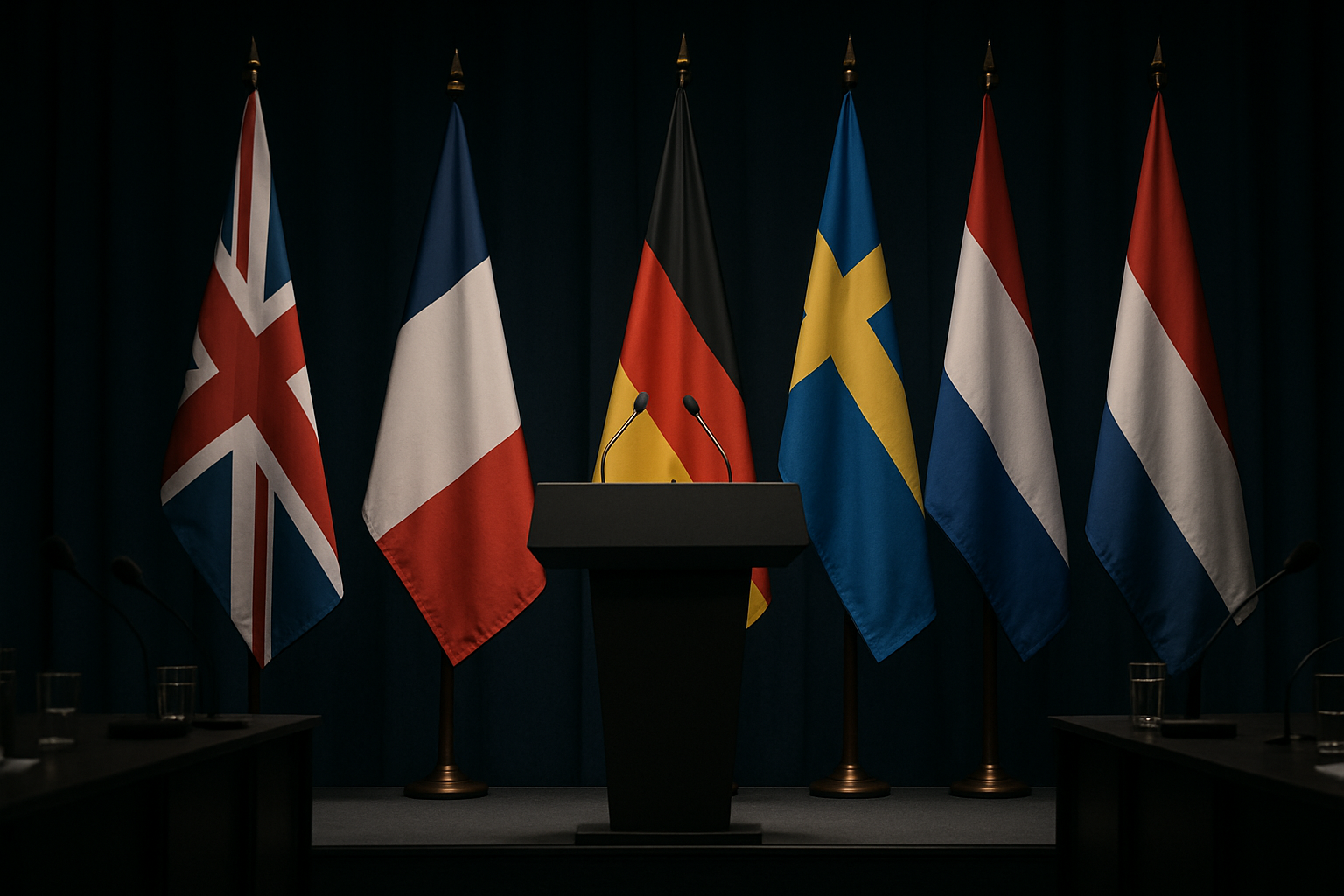
Britain, France, Germany, Sweden, and the Netherlands announced their findings in a joint statement on Saturday at the Munich Security Conference, revealing that laboratory analysis of biological samples confirmed the presence of epibatidine in Navalny's body – a deadly neurotoxin not naturally found in Russia.
Scientific Evidence Points to State-Level Assassination
The epibatidine toxin is extracted from the skin of the Epipedobates tricolor, commonly known as the South American poison dart frog. This highly toxic alkaloid was first discovered by American chemist John Daly in 1974, with its complete molecular structure determined only in 1992.
According to the joint statement, the five governments based their conclusions on analyses of samples from Navalny's body, which "conclusively confirmed the presence of epibatidine." The toxin acts as a powerful neurotoxin affecting receptors responsible for pain signal transmission and movement control throughout the central and peripheral nervous systems.
"The Russian state used this lethal toxin to target Navalny out of fear of his opposition," the UK Foreign Office stated in the joint declaration.
— Joint Statement, Five European Nations
The sophisticated nature of the poison suggests state-level resources were required for its synthesis and deployment. Swedish Foreign Minister Maria Malmer Stenergard emphasized, "It can only be Russia since he was in Russian custody."
Pattern of Exotic Poison Attacks
This latest revelation adds to an established pattern of Russian use of exotic substances in assassination attempts against political opponents and former intelligence officers. The epibatidine case follows previous high-profile incidents including Navalny's 2020 survival of Novichok poisoning, the 2006 polonium poisoning of Alexander Litvinenko, and the 2018 Novichok attack on Sergei Skripal in Salisbury.
The use of epibatidine represents what intelligence analysts describe as an evolution toward increasingly exotic and theoretically untraceable substances, demonstrating sophisticated state deployment capabilities that go beyond traditional chemical weapons.
International Legal Consequences
The five European nations announced they will formally report Russia to the Organisation for the Prohibition of Chemical Weapons (OPCW) for violating the Chemical Weapons Convention. This marks the first documented case of epibatidine being used in a suspected state assassination.
The unprecedented multi-nation investigation required extraordinary coordination and secrecy to transport biological samples across international borders for analysis. Multiple European laboratories used advanced mass spectrometry and specialized chemical weapons analysis techniques to confirm the findings.
Russia has repeatedly denied any responsibility for Navalny's death, with the Kremlin dismissing the latest allegations as "insinuations." However, the scientific certainty provided by this investigation removes much of the doubt that surrounded previous cases, which relied primarily on intelligence assessments.
The Death of Russia's Leading Opposition Figure
Navalny died on February 16, 2024, while serving a 19-year sentence in the IK-3 Arctic penal colony. The 47-year-old had been Russia's most prominent opposition leader and a fierce critic of President Vladimir Putin's regime, leading large-scale anti-corruption investigations and organizing nationwide protests.
His widow, Yulia Navalnaya, responded to the latest findings by stating that Navalny's murder is now "a scientifically proven fact" and declared that "murderer Putin must be held accountable."
The timing of the announcement, exactly two years after Navalny's death, appears calculated to maximize international attention and underscore the systematic nature of what European officials describe as Russian state-sponsored assassination programs.
Technical Challenges of Detection
The detection of epibatidine two years post-mortem represents a significant technical achievement, as the toxin breaks down quickly in biological systems. The successful identification required specialized equipment and expertise that only advanced laboratories possess, adding credibility to the findings through their technical complexity.
The investigation demonstrates unprecedented resources invested by European intelligence and forensic services to establish the truth about Navalny's death, moving beyond previous reliance on circumstantial evidence to provide concrete scientific proof.
Broader Implications for Russian Opposition
Navalny's assassination has effectively decapitated Russia's organized opposition movement. While his Anti-Corruption Foundation continues operating from abroad, it lacks his charismatic leadership that once mobilized millions of Russians in street protests.
The sophistication of the epibatidine attack sends a chilling message to Russian dissidents worldwide about the regime's technical capabilities and determination to eliminate opposition regardless of international consequences.
International Response and Sanctions
The formal OPCW referral begins international legal proceedings that could result in sanctions, asset freezes, and travel bans targeting Russian intelligence services. However, Russia's position on the UN Security Council limits the effectiveness of some international legal mechanisms.
European officials indicate the scientific certainty of this case will likely trigger more comprehensive sanctions packages than previous incidents, as the evidence provides an unassailable foundation for international action.
Strategic Implications
The Navalny case establishes a dangerous precedent for 21st-century international relations, demonstrating how authoritarian regimes can employ sophisticated assassination techniques against political opponents. The European response, involving unprecedented intelligence sharing among NATO allies and EU members, represents a coordinated Western effort to document and respond to Russian assassination programs.
This revelation comes amid ongoing tensions over Russia's war in Ukraine and broader concerns about Moscow's willingness to use extreme measures against perceived enemies. The timing, announced during the Munich Security Conference while international security is under severe strain, underscores the gravity with which European nations view Russian assassination operations.
The case ultimately tests whether meaningful accountability can be achieved against state-sponsored international crimes, or whether elite impunity will continue to characterize responses to authoritarian regime violence. The scientific certainty achieved in the Navalny case may provide a template for investigating other suspicious deaths of Russian opposition figures and dissidents worldwide.