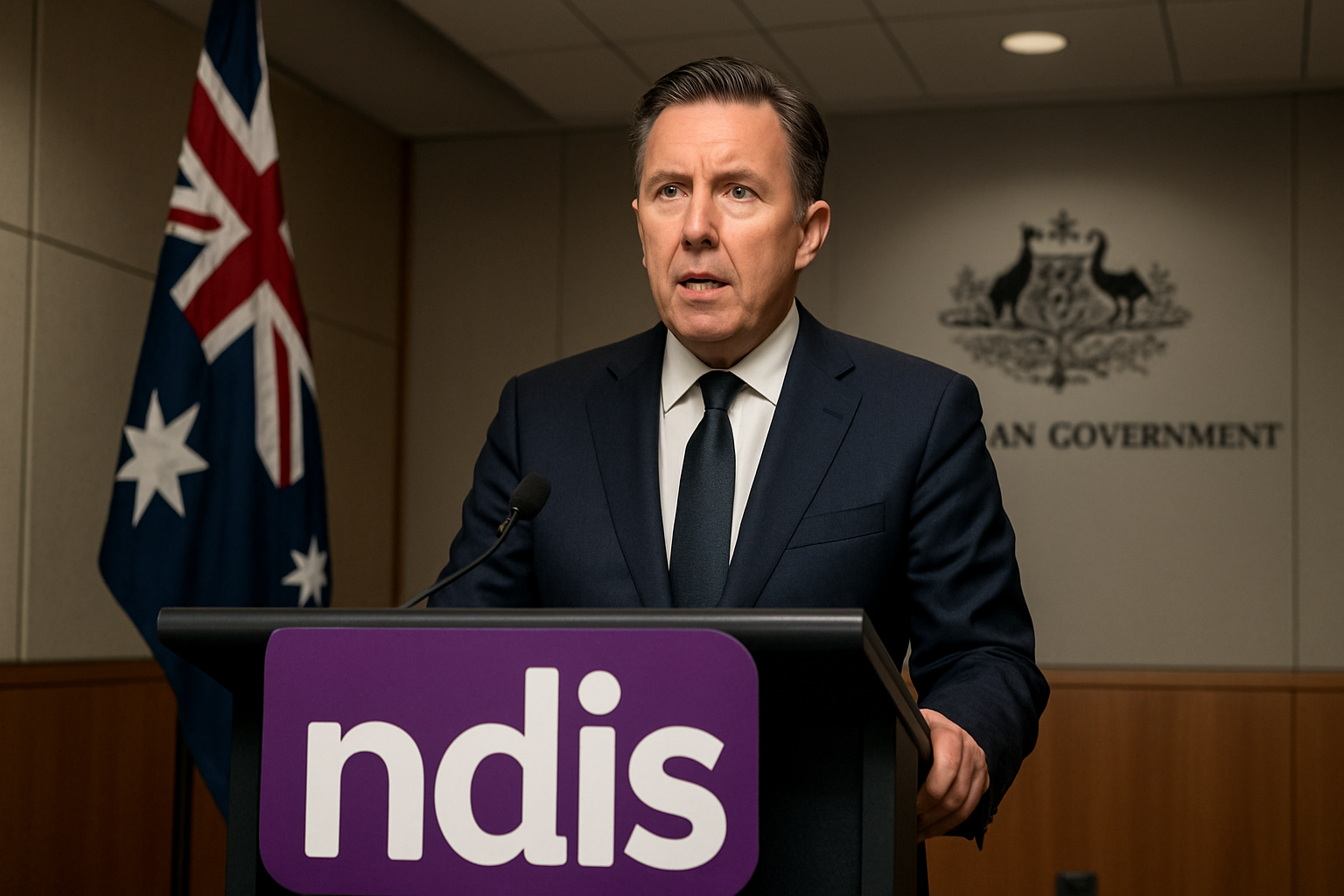
The Australian government has announced major reforms to the National Disability Insurance Scheme (NDIS) that will drastically slash costs by billions of dollars over the next four years, targeting widespread fraud that has turned the program into what Health Minister Mark Butler called "an ATM for shonks, grifters, fraudsters and crooks."
In a National Press Club address on April 22, 2026, Butler delivered the sweeping changes ahead of the federal budget, describing them as "hard but unavoidable" decisions to ensure the scheme's long-term sustainability.
Combating the $15 Billion Problem
The reforms address what Butler termed a "$15 billion blow to the NDIS" that has severely compromised the program's integrity and financial sustainability. The scheme, originally designed to provide essential support to Australians with disabilities, has become increasingly inundated by fraudulent providers exploiting vulnerable participants and taxpayer funds.
"The NDIS will no longer be an ATM for shonks, grifters, fraudsters and crooks. These hard but unavoidable decisions will ensure the scheme serves those who genuinely need it most."
— Mark Butler, Health Minister
The government's comprehensive overhaul comes as recent investigations have exposed systematic fraud across the program. From banned providers illegally entering specialist disability accommodation to regional participants facing severe access barriers due to travel costs consuming up to 40% of their support budgets, the NDIS has been plagued by multiple crisis points requiring urgent intervention.
Regional Access Crisis Exposed
The reforms also address critical geographic inequities that have created a two-tier system within the NDIS. Regional participants have been forced to spend significant portions of their support packages on travel costs to access metropolitan services, with some using 30-40% of their allocated funds just for transportation.
This geographic sorting has concentrated disadvantage in rural and remote areas while reducing service diversity. The government's response includes plans for regional service delivery targets, additional remote area funding loadings, and enhanced oversight mechanisms to ensure equitable access regardless of location.
Strengthening System Integrity
Recent incidents have highlighted critical gaps in the NDIS verification processes. In one concerning case documented in March 2026, a banned individual was filmed entering specialist disability accommodation in Melbourne despite having no permission to contact NDIS services. This breach exposed fundamental weaknesses in the scheme's safeguarding systems.
The proposed reforms include:
- Strengthened verification systems to prevent unauthorized access
- Enhanced compliance audits and severe penalties for violations
- Multi-layered verification processes for all service providers
- Regular compliance monitoring with zero tolerance for breaches
Learning from International Models
The Australian reforms draw on successful international disability support models that have achieved both cost-effectiveness and participant protection. Countries implementing differential funding rates that reflect the true costs of remote service delivery have demonstrated superior equity outcomes while maintaining fiscal sustainability.
These international examples show that market-based disability support models require specific interventions to achieve equity objectives, particularly regarding geographic access and participant safeguarding.
Healthcare Context and Broader Reforms
The NDIS reforms occur within the context of Australia's broader healthcare transformation during what experts term the "Therapeutic Revolution of 2026" – a global shift toward prevention-first healthcare strategies. This revolution emphasizes early intervention and community-based support over reactive crisis management, potentially offering more effective and cost-efficient disability support models.
The changes also reflect growing recognition that disability support should be treated as essential community infrastructure rather than a market commodity, ensuring sustainable access regardless of geographic or economic constraints.
Economic and Social Implications
The economic implications of NDIS fraud extend far beyond immediate financial losses. When fraudulent providers exploit the system, legitimate participants receive reduced support while taxpayer confidence in the scheme erodes. The reforms aim to break this cycle by ensuring every dollar reaches those who genuinely need support.
Prevention-first strategies, increasingly adopted globally, demonstrate superior cost-effectiveness through reduced crisis interventions while achieving better outcomes for participants. These approaches align with the NDIS's original vision of early intervention and community inclusion.
Implementation Challenges and Timeline
The success of these reforms will depend on sustained political commitment beyond electoral cycles, comprehensive stakeholder engagement, and adequate funding for enhanced oversight mechanisms. The government faces the challenge of eliminating fraud while preserving the scheme's fundamental accessibility for legitimate participants.
The reforms require complex coordination between federal and state authorities, service providers, and participant advocacy groups. The timeline for implementation will be critical, as delayed action could allow further exploitation while rushed changes might inadvertently harm vulnerable participants.
Looking Forward
These NDIS reforms represent a critical test of Australia's commitment to sustainable disability support. The outcome will influence not only the scheme's future but also international approaches to disability services, as other countries monitor Australia's experience with market-based disability support models.
Success will require balancing robust fraud prevention with genuine accessibility, ensuring that legitimate participants receive enhanced support while eliminating opportunities for exploitation. The stakes are high: millions of Australians with disabilities depend on the NDIS for essential support, making the integrity and sustainability of the scheme a matter of both social justice and fiscal responsibility.
As Butler emphasized, these "hard but unavoidable" decisions aim to preserve the NDIS for future generations while ensuring it serves its intended purpose: providing life-changing support to Australians with disabilities, not profit opportunities for fraudulent operators.