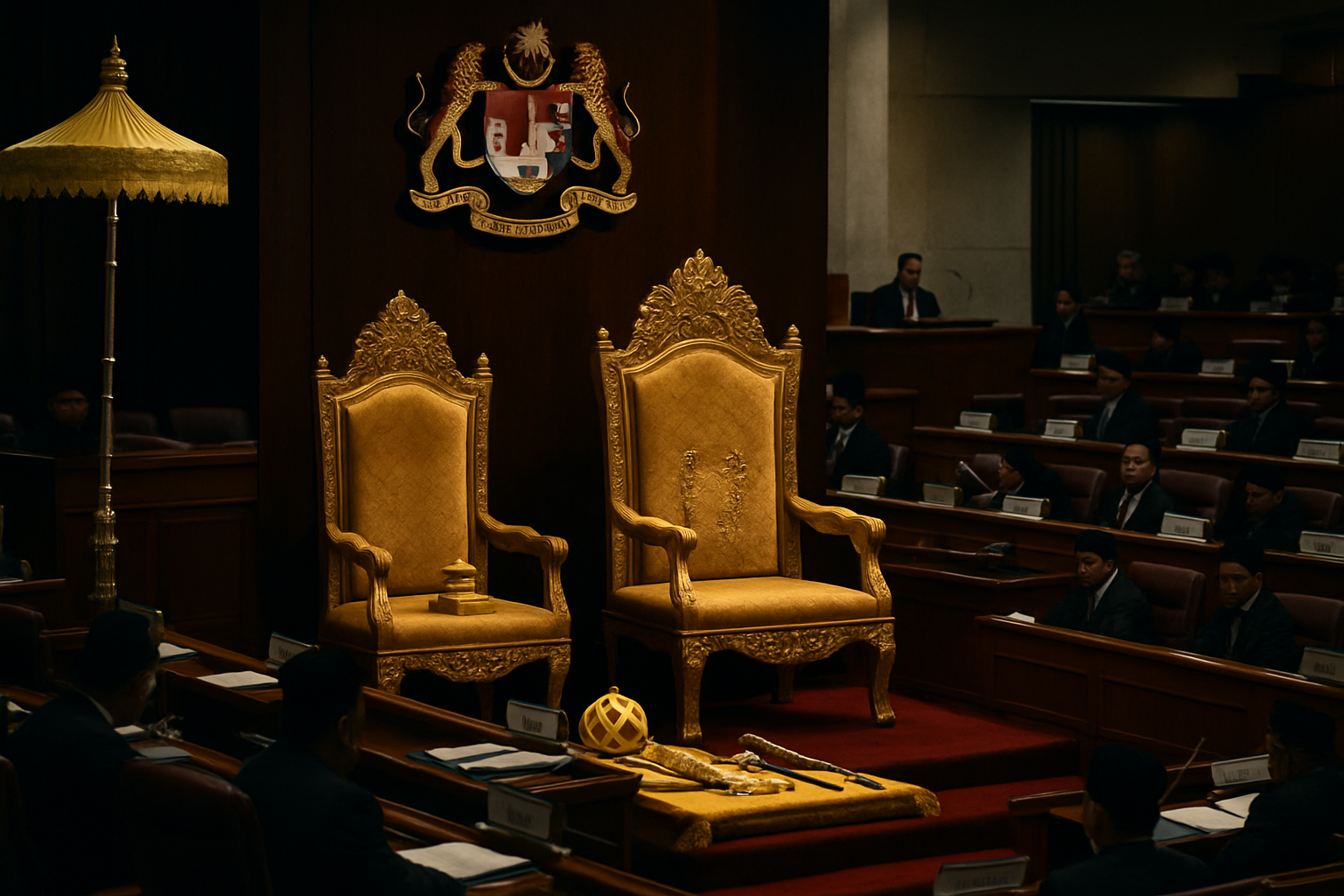
A deepening constitutional crisis has gripped Malaysia's Negeri Sembilan state as traditional nobles stage an unprecedented boycott of legislative proceedings, challenging the authority of the state ruler and raising fundamental questions about due process within Malaysia's complex system of constitutional monarchy.
The dispute centers on interpretations of the state constitution's Article 10, with legal experts expressing serious concerns about whether proper constitutional procedures have been followed in recent royal succession matters. The controversy has escalated to the point where state assembly sessions have been postponed indefinitely, marking one of the most significant constitutional challenges in modern Malaysian state governance.
Constitutional Questions Mount
The crisis intensified when former appeals court judges and constitutional lawyers began questioning whether the Negeri Sembilan chieftains were accorded due process according to the state constitution's Article 10. These concerns stem from what legal experts describe as procedural irregularities in the handling of succession protocols and traditional royal prerogatives.
The state legislature session, which was scheduled to be officiated by the state ruler, was ultimately boycotted by traditional nobles, creating an unprecedented standoff that has paralyzed normal governmental functions. This boycott represents the first time in modern Malaysian history that traditional noble houses have collectively withdrawn from state legislative proceedings.
Sources close to the matter indicate that the dispute involves fundamental disagreements over the interpretation of constitutional provisions governing royal succession and the role of traditional chieftains in state governance. The constitutional framework established during Malaysia's formation has come under intense scrutiny as various parties debate the proper application of both federal constitutional principles and state-specific royal protocols.
Ruler Maintains Institutional Stance
Despite the mounting tensions, the Negeri Sembilan ruler has maintained what palace sources describe as "business as usual," continuing official duties while addressing the constitutional controversy through appropriate channels. In a measured response to critics, the ruler reportedly emphasized the importance of fulfilling constitutional responsibilities without being influenced by "desires and emotions."
Palace insiders suggest that the ruler's approach reflects a careful balance between maintaining traditional authority and respecting constitutional processes. This stance has been interpreted by constitutional scholars as an attempt to preserve institutional stability while allowing legal and procedural questions to be resolved through appropriate channels.
The ruler's continued performance of official duties, despite the boycott by nobles, has raised questions about the sustainability of state governance under these extraordinary circumstances. Legal experts note that while the ruler possesses constitutional authority to proceed with official business, the absence of traditional noble participation creates an unprecedented governance vacuum.
Historical Constitutional Context
Malaysia's unique federal system incorporates both constitutional monarchy principles and traditional Malay royal structures, creating a complex framework that has generally functioned smoothly since independence. Each state maintains its own constitutional arrangements, with some states retaining hereditary rulers while others operate under different governance systems.
Negeri Sembilan's constitutional system is particularly intricate, involving not just the state ruler but also traditional chieftains who play significant roles in state governance and royal succession processes. This system, rooted in centuries of Malay royal tradition, has been adapted to function within Malaysia's modern federal democratic framework.
Constitutional experts point out that the current crisis represents the first major test of these arrangements in decades, potentially setting precedents for how similar disputes might be resolved in other Malaysian states with hereditary royal systems. The outcome could significantly influence the future operation of Malaysia's constitutional monarchy framework.
Legal and Political Implications
The dispute has attracted attention from Malaysia's legal community, with senior lawyers and former judges expressing concerns about the constitutional implications of the standoff. Some legal experts argue that the situation highlights potential gaps in constitutional provisions governing state-level royal disputes and succession procedures.
Political observers note that while the crisis remains confined to Negeri Sembilan, its resolution could establish important precedents for federal-state relations and the role of traditional institutions within Malaysia's modern democratic system. The federal government has thus far maintained a position of non-interference, respecting the state's constitutional autonomy while monitoring developments.
The postponement of state assembly sessions has raised practical questions about the continuity of state governance and the approval of essential legislation. Administrative functions continue under existing legal frameworks, but the inability to convene proper legislative sessions threatens the state's ability to address pressing governance matters.
Broader Constitutional Monarchy Questions
The Negeri Sembilan crisis occurs against the backdrop of broader discussions about the role of constitutional monarchy in 21st-century Malaysia. While the federal system has generally maintained stability through careful balance between democratic institutions and traditional royal authorities, state-level disputes like this one test the resilience of these arrangements.
Constitutional scholars emphasize that Malaysia's system differs significantly from other constitutional monarchies, incorporating multiple hereditary rulers within a federal framework. This complexity, while reflecting Malaysia's rich cultural heritage, can create situations where constitutional interpretation becomes particularly challenging.
The current dispute also highlights questions about the relationship between traditional authority structures and modern democratic governance, issues that extend beyond Malaysia to other societies attempting to balance historical institutions with contemporary political frameworks.
Resolution Pathways and Future Implications
Legal experts suggest several potential pathways for resolving the constitutional crisis, including formal constitutional interpretation procedures, mediation through traditional channels, or intervention by federal constitutional authorities. However, each approach carries significant political and constitutional implications that must be carefully considered.
The resolution of this crisis will likely establish important precedents for handling similar constitutional disputes in the future. Legal scholars emphasize that the outcome should strengthen rather than undermine Malaysia's constitutional framework while respecting both democratic principles and traditional institutions.
As the standoff continues, all parties face pressure to find solutions that preserve institutional integrity while addressing the legitimate concerns that have led to this unprecedented constitutional crisis. The stakes extend beyond Negeri Sembilan to the broader question of how Malaysia's unique constitutional system adapts to contemporary challenges while maintaining its foundational principles.
The coming weeks will be crucial in determining whether Malaysia's constitutional monarchy framework can successfully navigate this crisis and emerge with strengthened institutions and clearer procedural guidelines for addressing similar disputes in the future.