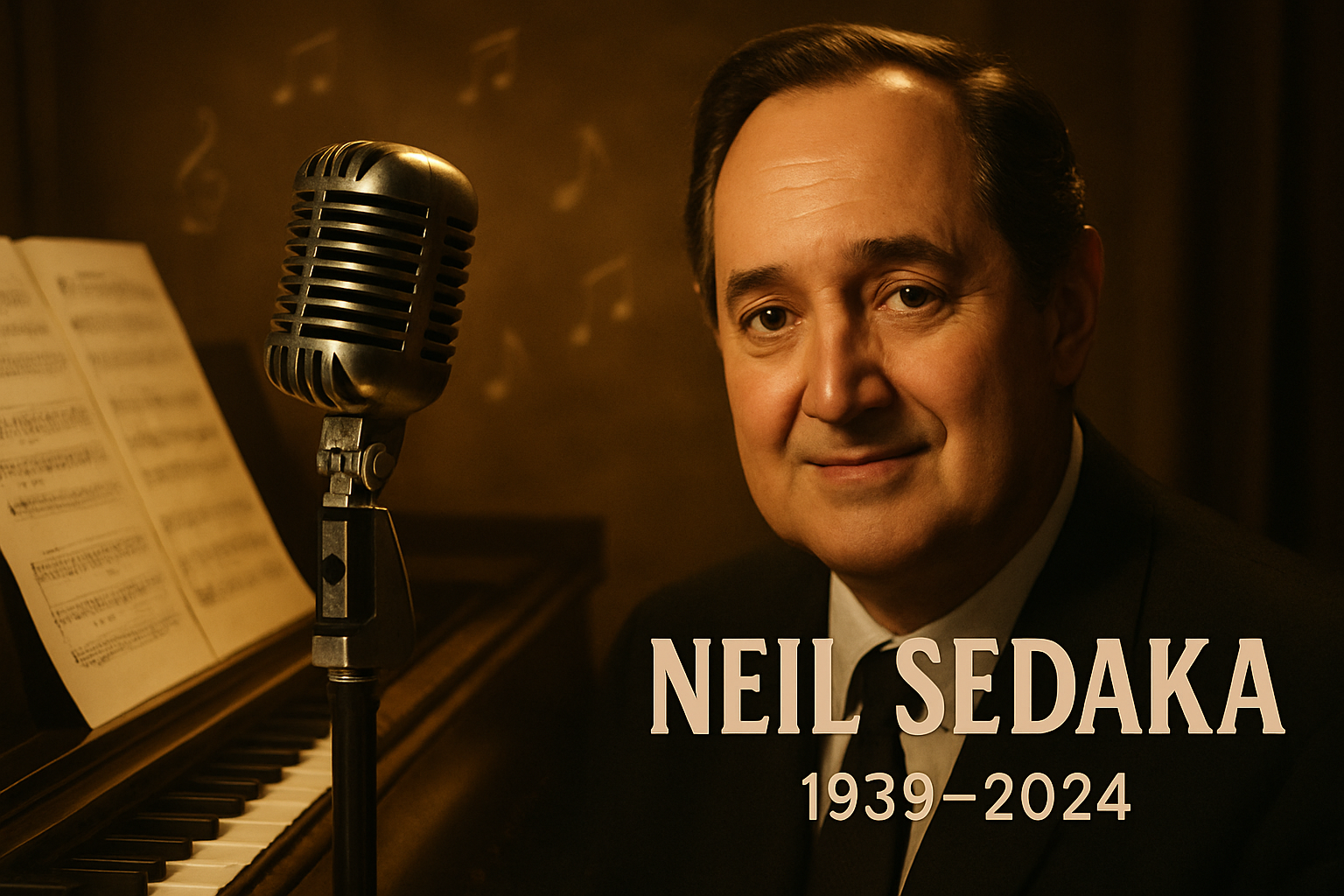
Neil Sedaka, the prolific American singer-songwriter whose boyish soprano voice and memorable melodies defined the early rock 'n' roll era, died Friday at age 86 after being hospitalized in Los Angeles, his family announced.
The Brooklyn-born musician, known for classics such as "Breaking Up Is Hard to Do," "Oh! Carol," and "Laughter in the Rain," passed away surrounded by family members following complications related to his hospitalization earlier in the week. His family described the loss as "devastating" and called him a "true rock and roll legend" and "incredible human being."
"Our family is crushed by the sudden loss of our beloved husband, father and grandfather," the family said in a Facebook statement. "Neil was an inspiration to millions of people around the world through his music and his generous spirit."
A Career Spanning Six Decades
Born in Brooklyn on March 13, 1939, to a Jewish taxi driver, Neil Sedaka emerged from New York's famed Brill Building era in the late 1950s to become one of the most successful songwriters and performers of his generation. His career encompassed more than 60 years, during which he achieved three number-one hits in the United States and wrote countless songs for other artists.
Sedaka's breakthrough came with "The Diary" in 1959, which launched a string of early 1960s successes that established him as a major force in popular music. His youthful appearance and distinctive voice made him an instant teen idol, while his sophisticated songwriting—often in collaboration with lyricist Howard Greenfield—set him apart from many of his contemporaries.
"Neil represented a bridge between the big band era and modern pop music,"
— Music historian commenting on his legacy
The Hits That Defined a Generation
Throughout the early 1960s, Sedaka produced a remarkable series of hits that remain staples of oldies radio today. "Calendar Girl," "Happy Birthday Sweet Sixteen," and the autobiographical "Oh! Carol"—written about his high school sweetheart, future songwriter Carole King—all reached the top of the charts and demonstrated his ability to craft both catchy melodies and emotionally resonant lyrics.
"Breaking Up Is Hard to Do," perhaps his most enduring composition, topped the charts in 1962 and was later successfully reimagined as a slower ballad in 1975, giving Sedaka the rare distinction of having the same song reach number one in two different arrangements.
His ability to adapt to changing musical tastes became evident in the 1970s when he experienced a remarkable comeback. The album "Sedaka's Back" (1974) proved that his songwriting talents could transcend generational shifts in popular music. "Laughter in the Rain" and "Bad Blood"—the latter featuring backing vocals by a young Elton John—both reached number one, making Sedaka one of the few artists to achieve chart-toppers in both the 1960s and 1970s.
The Brill Building Legacy
Sedaka's emergence from the Brill Building—the legendary New York songwriting factory that produced hits for countless artists in the 1950s and 1960s—placed him at the center of American popular music's most creative period. Working alongside contemporaries like Carole King, Barry Mann, Cynthia Weil, and Jeff Barry, Sedaka helped define the sound of early rock 'n' roll.
His songwriting partnership with Howard Greenfield proved particularly fruitful, producing not only Sedaka's own hits but also songs for other artists. This collaborative approach to music-making was characteristic of the Brill Building era and contributed to the sophisticated craftsmanship that distinguished the period's output.
International Success and Later Years
While Sedaka achieved his greatest commercial success in the United States, his music found audiences worldwide. His last major public performance was in Israel in 2010, where he was warmly received by fans who had followed his career for decades.
Even as musical styles evolved dramatically over the decades, Sedaka's songs maintained their appeal through their fundamental craftsmanship. The melodies were memorable, the lyrics relatable, and the performances genuine—qualities that transcended changing fashions in popular music.
According to his family, Sedaka had been feeling unwell on Friday morning when he was transported by ambulance to a Los Angeles hospital. Sheriff's deputies assisted fire department personnel during the medical emergency response. Despite medical efforts, he passed away later that day.
A Lasting Musical Legacy
Neil Sedaka's death marks the end of an era in American popular music. As one of the last surviving major figures from the early rock 'n' roll period, his passing represents the closing of a chapter that began in the late 1950s when young songwriters like Sedaka were helping to define a new musical landscape.
His influence extended beyond his own recordings to the countless artists who covered his songs and the generations of songwriters who learned from his approach to melody and lyric writing. The enduring popularity of songs like "Breaking Up Is Hard to Do" and "Calendar Girl" on oldies radio and streaming platforms demonstrates the timeless quality of his work.
Sedaka's ability to successfully reinvent himself in the 1970s also provided a template for artistic longevity that many performers have attempted to emulate. His comeback demonstrated that good songwriting could overcome changes in musical fashion—a lesson that remains relevant for contemporary artists.
"Neil was not just a performer but a true craftsman who understood that a great song could transcend any era,"
— Industry colleague reflecting on his contributions
Remembering a Musical Pioneer
As news of Sedaka's death spread internationally, tributes poured in from fellow musicians, industry professionals, and fans who had been touched by his music over the decades. His songs had provided the soundtrack to countless personal moments—first dances, heartbreaks, celebrations, and quiet reflections.
The family has indicated that details regarding memorial services will be announced in the coming days. They have requested privacy during this difficult time while expressing gratitude for the outpouring of support from fans around the world.
Neil Sedaka leaves behind a musical legacy that spans generations and continues to bring joy to listeners discovering his work for the first time. His death represents not just the loss of a talented performer, but the end of a direct connection to one of popular music's most creative and influential periods.
From the teen-oriented pop of the early 1960s to the more sophisticated adult contemporary sound of the 1970s, Sedaka's career trajectory reflected the evolution of American popular music itself. His songs remain a testament to the power of well-crafted melody and sincere emotion—qualities that ensure his musical legacy will endure long after his passing.