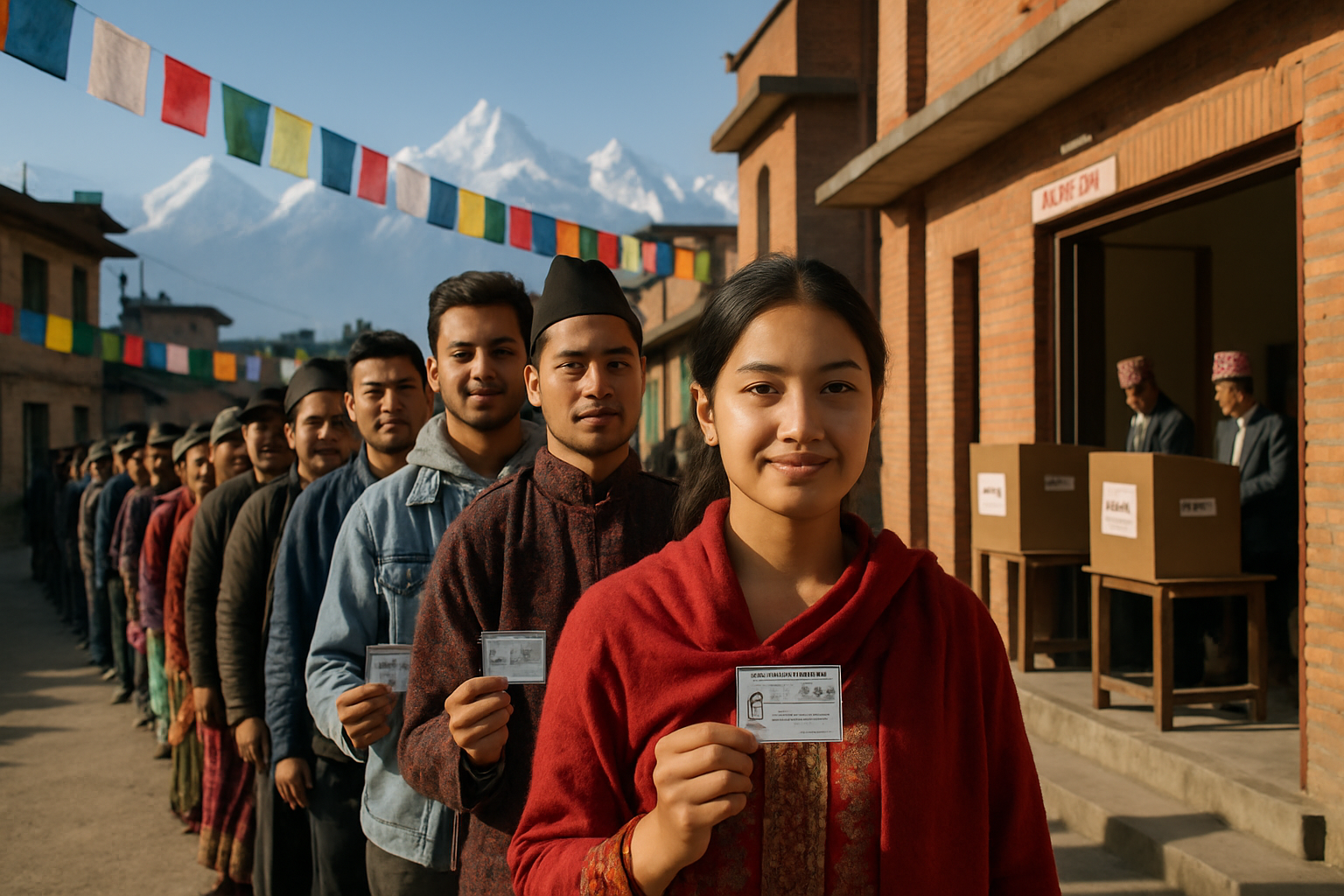
Nepal began voting Thursday in its first parliamentary elections since a Gen Z-led revolution last September toppled the previous government, with former rapper-turned-mayor Balendra Shah galvanizing young voters as a potential prime ministerial candidate who could break decades of traditional political dominance.
The historic elections, taking place just six months after deadly protests swept the nation, mark a pivotal moment for the South Asian democracy as millions of young Nepalis seek to transform their political landscape through the ballot box rather than street demonstrations.
From Music to Politics: The Rise of Balendra Shah
At the center of Nepal's political transformation stands Balendra Shah, known professionally as "Balen" during his hip-hop career. The 35-year-old current mayor of Kathmandu has emerged as the face of Nepal's youth movement, drawing massive crowds with his anti-establishment message and promises of systemic reform.
"This election represents more than just a change of government – it's about fundamentally reshaping how Nepal is governed," Shah told supporters at a recent rally in the capital, where thousands of young voters chanted slogans demanding an end to corruption and ineffective governance.
Shah's political journey from underground rapper to mayoral candidate to potential prime minister reflects the broader generational shift sweeping Nepal. His background in music has proven to be an asset rather than a liability, resonating with voters who see his artistic past as evidence of his connection to ordinary Nepalis rather than the political elite.
The September Revolution That Changed Everything
The path to these elections began last September when widespread protests against unemployment, corruption, and inequality swept across Nepal. The demonstrations, initially triggered by a government ban on social media platforms, quickly evolved into a broader movement demanding political accountability and systemic change.
The protests, which resulted in numerous casualties and thousands of arrests, ultimately succeeded in forcing the resignation of the previous government and creating the political opening that has led to Thursday's polls. The movement drew inspiration from similar youth-led uprisings across South Asia, including Bangladesh's successful Gen Z revolution that transformed that country's political landscape in 2024.
"The September protests weren't just about social media – they were about decades of failed promises and corrupt leadership," explained Dr. Shanta Chaudhary, a political analyst at Tribhuvan University. "Young Nepalis finally said enough was enough."
International Context and Regional Implications
Nepal's elections are being closely watched across South Asia, where youth-led movements have successfully challenged established political orders in multiple countries. The recent democratic transformation in Bangladesh, where student protesters ended Sheikh Hasina's 15-year rule and established a new government through peaceful elections, has provided a template for sustainable political change through electoral processes.
The international community has deployed significant resources to monitor Nepal's democratic process, with observer missions from multiple countries ensuring electoral integrity. The success or failure of Nepal's democratic transition could influence similar movements across the region.
Youth Demographics Drive Electoral Dynamics
Perhaps the most significant factor in these elections is Nepal's demographic reality: millions of voters under 30 who have grown increasingly frustrated with traditional political parties and their failure to deliver economic opportunities and effective governance.
These young voters, many participating in their first parliamentary election, represent a decisive demographic that could fundamentally alter Nepal's political balance. Unlike previous generations who voted along traditional party lines, these voters are prioritizing candidates' track records on transparency, development outcomes, and anti-corruption efforts.
"We're not interested in the same old promises from the same old politicians," said Priya Maharjan, a 24-year-old university student in Kathmandu. "Balen has actually delivered results as mayor – fixing roads, improving services, fighting corruption. That's what we want to see nationwide."
Challenges Facing the New Government
Whoever emerges victorious from Thursday's vote will inherit significant economic and social challenges. Nepal faces high unemployment rates, particularly among young people, infrastructure deficits, and the ongoing effects of natural disasters that have repeatedly struck the mountainous nation.
The new government will also need to navigate complex regional relationships, balancing Nepal's ties with neighboring India and China while maintaining the country's traditional neutrality. Economic development remains a critical priority, with millions of Nepalis working abroad due to limited domestic opportunities.
"The real test won't be winning the election – it will be delivering the change that young Nepalis have demanded."
— Dr. Kanak Mani Dixit, Political Commentator
Electoral Process and International Oversight
Thursday's elections are being conducted under enhanced security measures, with thousands of police and military personnel deployed across the country to ensure peaceful voting. Election officials have worked to address logistical challenges in Nepal's mountainous terrain, where some remote polling stations require helicopter access.
International observers have praised the preparation and organization of the electoral process, noting improvements in voter registration and ballot security compared to previous elections. The successful conduct of these polls will be crucial for maintaining Nepal's democratic credentials and ensuring international confidence in the results.
Beyond the Vote: Institutional Reform Agenda
The elections represent just the first step in what many hope will be a broader process of institutional reform. Key issues on the agenda include constitutional amendments to strengthen local governance, anti-corruption measures, and economic policies to create domestic employment opportunities.
Shah and other reform candidates have promised to prioritize transparency in government operations, merit-based appointments to public positions, and policies that address the concerns of young Nepalis who have felt marginalized by traditional politics.
"This is our moment to prove that democracy can deliver for ordinary people," Shah said in his final campaign message. "The young people of Nepal have shown they can change history – now we need to show we can govern effectively."
Regional and Global Significance
The outcome of Nepal's elections will reverberate beyond the country's borders, potentially inspiring similar movements across South Asia and demonstrating whether youth-led political transformations can successfully transition from protest movements to effective governance.
The international community is watching closely to see if Nepal can follow Bangladesh's model of peaceful democratic transition following popular uprisings. Success could provide a template for democratic renewal in other countries facing similar challenges of corruption, youth unemployment, and ineffective governance.
As voting continues throughout the day, the stakes extend far beyond Nepal's borders. The world is witnessing whether the energy and idealism of a generation demanding change can be successfully channeled into sustainable democratic governance that delivers real improvements in people's lives.
Results are expected within days, but the true test of Nepal's democratic revolution will be measured in the years ahead as new leaders attempt to fulfill the promises that brought them to power.