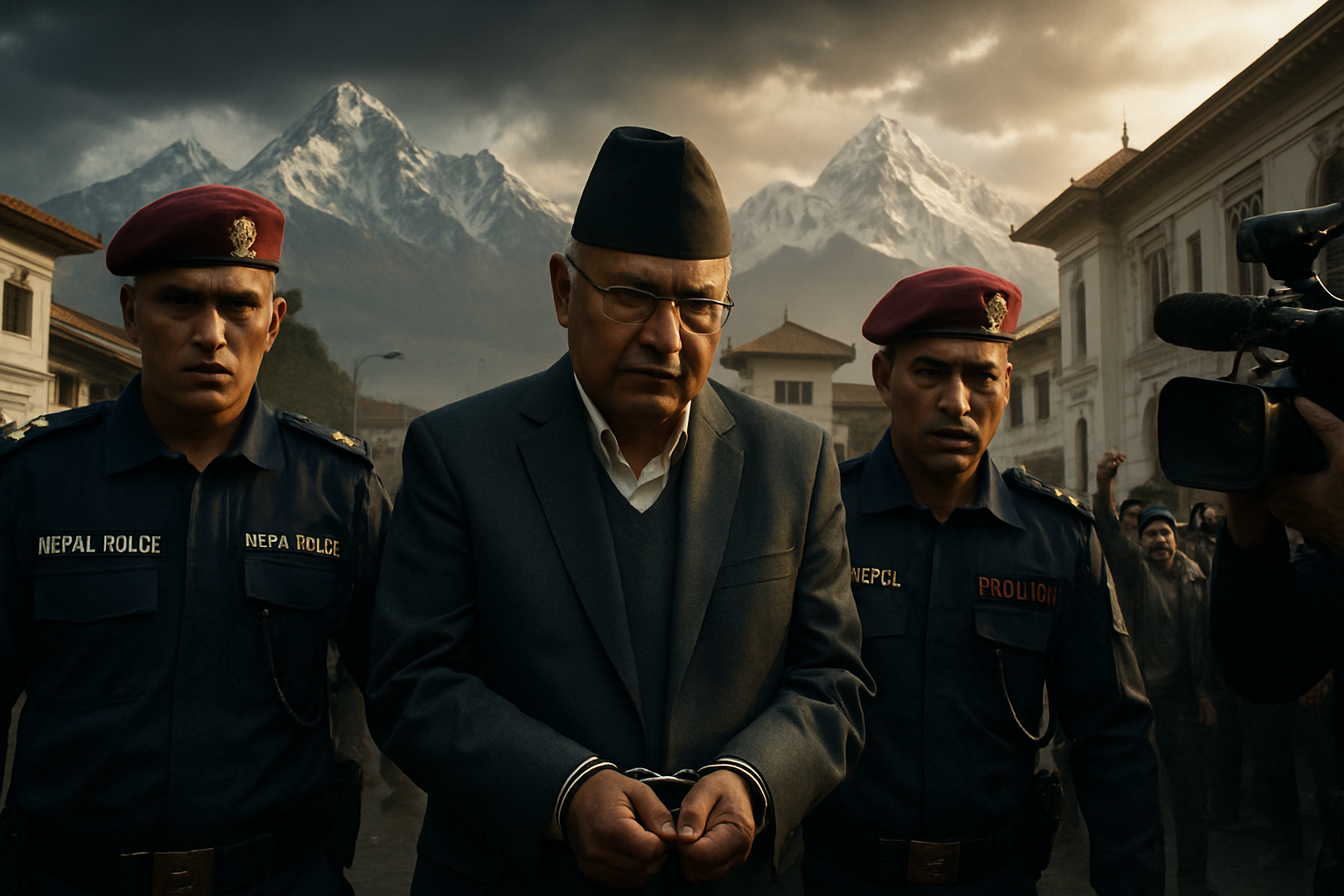
Nepal's former Prime Minister K.P. Sharma Oli was arrested on Saturday in connection with the deaths of dozens of protesters during a brutal crackdown on Gen Z-led anti-corruption demonstrations last September, marking an unprecedented shift toward accountability in the Himalayan nation's turbulent political landscape.
The arrest of the 74-year-old veteran politician, along with his former Home Minister Ramesh Lekhak, came just one day after rapper-turned-politician Balendra "Balen" Shah was sworn in as Nepal's youngest-ever Prime Minister. The timing underscores the new government's commitment to addressing the violent suppression of protests that claimed 77 lives and injured over 2,000 people.
According to police officials, Oli is being investigated for potential negligence in failing to prevent the deaths during the September 2025 crackdown on what began as protests against social media restrictions but evolved into a broader anti-corruption movement. The arrests followed a recommendation by an investigative panel that both men should be prosecuted for their roles in the violence.
A Historic Moment for Nepal's Democracy
The arrests represent a dramatic departure from Nepal's traditional political culture, where leaders have historically enjoyed impunity through negotiated settlements and amnesty provisions. This marks the first time in the nation's modern democratic history that a former prime minister has been held accountable for human rights violations committed while in office.
"This is illegal and politically motivated," Oli's lawyer declared, as supporters clashed with police outside the detention facility. The arrest sparked immediate protests from Oli's Communist Party of Nepal (Unified Marxist-Leninist), with party officials denouncing what they called a "witch hunt" against their leader.
The September 2025 protests began when Oli's government imposed restrictions on social media platforms, ostensibly to combat misinformation. However, the move triggered massive demonstrations led primarily by Generation Z activists who viewed it as an attack on press freedom and democratic discourse. The protests quickly expanded into a broader anti-corruption movement that ultimately forced Oli's resignation.
The September 2025 Uprising
International observers documented systematic violations during the government's response to the protests. Security forces under Lekhak's command used live ammunition against peaceful demonstrators, deployed excessive force, and targeted medical personnel attempting to treat the wounded. Banned tear gas was used extensively, and protesters reported deliberate targeting by snipers positioned on government buildings.
The violence reached its peak in mid-September when security forces opened fire on a peaceful march in Kathmandu, killing 23 protesters in a single day. Videos of the incident, widely shared on social media despite government attempts to restrict internet access, sparked international condemnation and intensified calls for Oli's resignation.
"We documented clear evidence of excessive force, including the use of live ammunition against peaceful protesters. This was not crowd control – it was systematic violence designed to suppress democratic expression."
— International Human Rights Observer (name withheld for security)
The protests drew comparisons to the youth-led uprising that toppled Bangladesh's Sheikh Hasina government in August 2024. Like Bangladesh, Nepal's movement successfully transitioned from street activism to electoral politics, with many protest leaders forming the National Citizen Party and other youth-oriented political movements.
Balendra Shah's Accountability Agenda
Prime Minister Balendra Shah, who emerged as a prominent figure during the 2025 protests, made accountability a central promise of his Rastriya Swatantra Party (RSP) campaign. The 35-year-old former rapper and civil engineer won a decisive electoral mandate in March 2026, with his party securing 182 of 275 parliamentary seats on a platform of transparency, anti-corruption, and justice for protest victims.
Shah's government moved quickly to implement its accountability agenda. Within 24 hours of taking office, the new administration prioritized the arrest warrants that had been prepared by the investigative commission but not acted upon by the interim government.
The arrests also represent a test of Nepal's democratic institutions. The investigative panel, composed of retired judges and civil society representatives, spent months documenting the September violence and building legal cases against those responsible. Their work provided the legal foundation for Saturday's arrests.
Regional and International Implications
The arrests are being closely watched across South Asia as a potential template for democratic accountability following popular uprisings. Nepal's approach contrasts sharply with Bangladesh, where the post-Hasina government has focused more on political transition than prosecuting officials from the previous regime.
International human rights organizations have welcomed the arrests while calling for fair and transparent legal proceedings. The European Union, which deployed observers during Nepal's March 2026 elections, issued a statement supporting the rule of law while emphasizing the importance of due process.
The developments also have significant implications for Nepal's relationships with regional powers. India, which maintained close ties with Oli's government, has remained notably silent on the arrests. China, which invested heavily in infrastructure projects during Oli's tenure, is reportedly concerned about the stability of its Belt and Road Initiative investments in Nepal.
Challenges Ahead for Justice
Legal experts anticipate that the prosecution of Oli and Lekhak will be complex and protracted. Nepal's judicial system has limited experience with cases involving such high-level political figures and human rights violations. The defense is expected to challenge both the legal basis for the charges and the jurisdiction of the courts.
Families of protest victims have welcomed the arrests but emphasized the need for comprehensive investigations extending beyond the top officials. They argue that mid-level commanders, regional administrators, and individual security personnel who carried out the violence must also be held accountable.
"This is just the beginning," said Kamala Devi, whose 22-year-old son was killed in the September protests. "We want justice for all our children, not just symbolic arrests of the leaders."
Testing Democratic Resilience
The coming months will test whether Nepal's latest democratic experiment can deliver sustainable transformation while maintaining political stability. Shah's government faces the delicate balance of pursuing justice while governing effectively and addressing the high expectations of the youth voters who brought them to power.
The arrests have also raised questions about the role of the military and security forces in Nepal's democracy. Some analysts worry that aggressive prosecution of former officials could create resistance within the security apparatus, potentially destabilizing the new government.
However, supporters of the accountability measures argue that addressing past violations is essential for preventing their recurrence and strengthening democratic institutions. They point to successful transitional justice processes in other countries as evidence that accountability and stability can coexist.
A Generational Shift
The arrests symbolize a broader generational shift in Nepal's political culture. The country's traditional political parties, dominated by figures like Oli who have been active since the 1970s, are facing challenges from younger leaders who prioritize transparency and accountability over political accommodation.
This transformation reflects the influence of the "uprising generation" – the millions of young Nepalis who participated in or supported the September 2025 protests. Unlike previous generations who experienced decades of political instability and civil conflict, these young citizens expect democratic institutions to function effectively and hold leaders accountable.
The success or failure of Nepal's accountability efforts will have implications far beyond its borders. As democratic institutions face pressure worldwide, Nepal's example could provide valuable lessons about the possibilities and challenges of achieving justice while maintaining democratic governance.
As the legal proceedings against Oli and Lekhak begin, Nepal stands at a critical juncture. The outcome will determine whether the country can break its cycle of impunity and establish a new standard of democratic accountability, or whether traditional patterns of political accommodation will reassert themselves. For the families of the September victims and the millions who participated in the uprising, the stakes could not be higher.