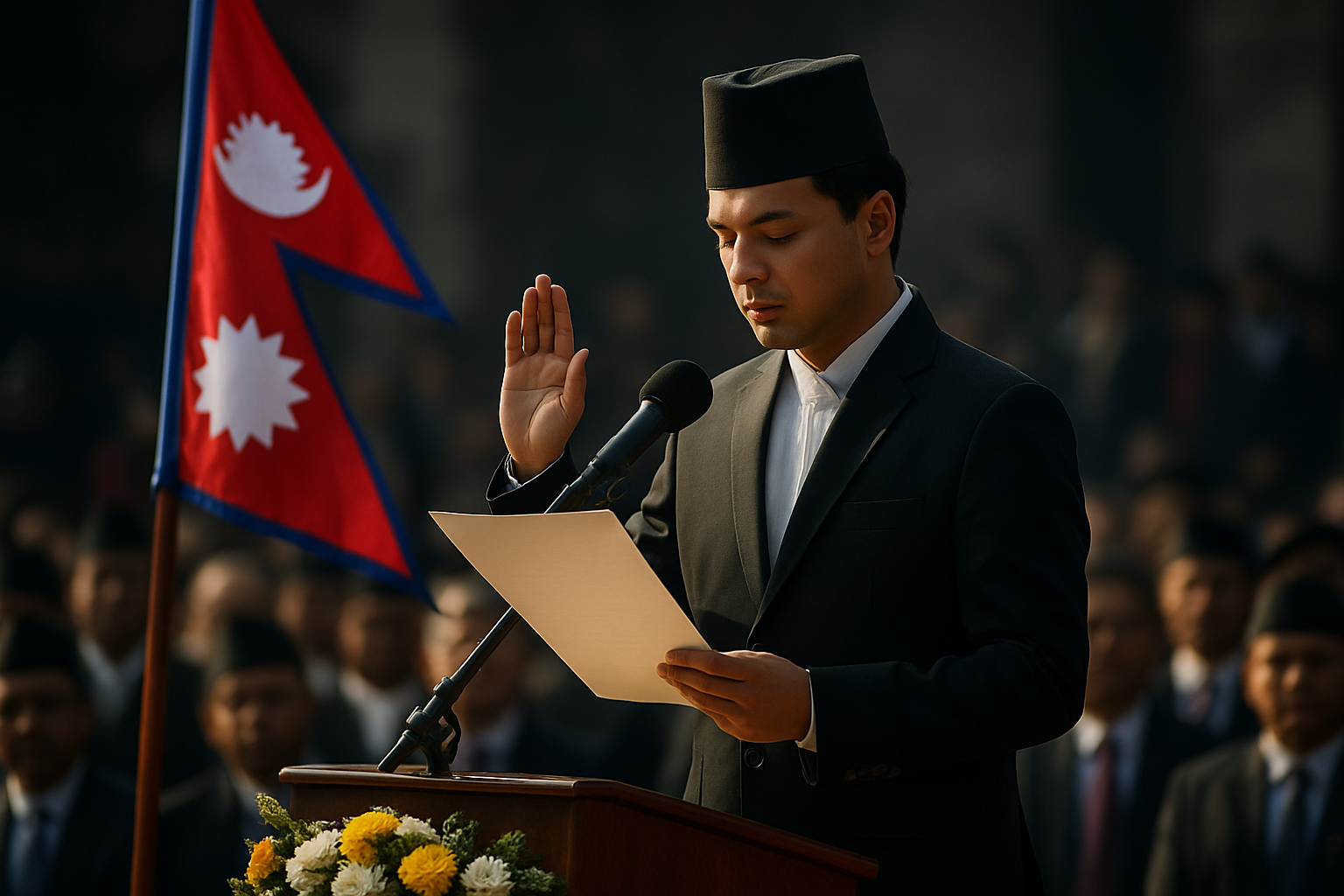
Nepal witnessed a historic political transformation as Balendra "Balen" Shah, a 35-year-old former rapper and civil engineer, was sworn in as the country's youngest-ever Prime Minister on Friday, March 27, 2026, completing a remarkable journey from street artist to the highest office in the land.
The swearing-in ceremony at the presidential palace marked the culmination of a dramatic political shift that began with deadly student protests in September 2025 and continued through Nepal's first free elections since the Gen Z-led uprising that toppled the previous government.
Electoral Victory Following Youth-Led Revolution
Shah's Rastriya Swatantra Party (RSP) dominated the March elections with a decisive mandate, securing enough seats to form a government after a campaign focused on youth-driven political change. The victory represents the successful institutionalization of the "uprising generation" that took to Nepal's streets demanding accountability and transparency from their leaders.
Speaking at his inauguration, dressed characteristically in all black including his trademark attire, Shah pledged his loyalty to Nepal's constitution and its people. "I, Balendra Shah, in the name of the country and people, pledge that I will be loyal to the constitution," he declared before a gathering of officials and international observers.
Journey from Hip-Hop to Political Leadership
Shah's path to power is unprecedented in South Asian politics. Originally known as a rapper and later establishing himself as a civil engineer, he first gained national recognition as mayor of Kathmandu, where his unconventional approach and direct communication style resonated with young voters frustrated by traditional politics.
The September 2025 protests that ultimately brought Shah to power began as demonstrations against social media restrictions but evolved into a broader anti-corruption movement. The uprising resulted in 77 deaths and more than 2,000 injuries before forcing the resignation of the previous government led by K.P. Sharma Oli.
"This represents more than a change of government – it's a fundamental shift in how politics operates in Nepal," said Dr. Sohela Nazneed, a political analyst at Tribhuvan University. "The youth of Nepal have successfully translated street protests into electoral victory."
— Dr. Sohela Nazneed, Political Analyst
Challenges Facing the New Administration
Shah inherits significant challenges including high unemployment, particularly among young people, and complex regional relationships with Nepal's giant neighbors, India and China. His government must also address infrastructure deficits while managing the country's traditional neutrality between the two Asian superpowers.
The new Prime Minister has acknowledged the difficulties ahead, particularly in keeping young Nepalis in their home country rather than seeking work abroad. His campaign focused heavily on job creation and reducing the forced migration that has seen millions of Nepalis working overseas.
International Implications and Regional Significance
Nepal's democratic transition is being closely watched across South Asia as a potential template for youth-led political transformation. The success of Shah's government could influence similar movements in neighboring countries, particularly as Bangladesh recently completed its own youth-driven democratic transition in February 2026.
International observers have praised Nepal's electoral process, with enhanced security measures ensuring peaceful voting across the mountainous terrain. The election required thousands of police and military personnel and helicopter access to remote polling stations, demonstrating the country's commitment to democratic participation.
Breaking Traditional Political Structures
Shah's rise represents a break from Nepal's traditional political families and established parties that have dominated the country's politics for decades. His direct communication style, often delivered through social media, and his background outside conventional politics have appealed to voters demanding change.
The transformation has been remarkable – from performing as a rapper to leading a major city as mayor, and now governing a nation of nearly 30 million people. Shah's trajectory reflects broader generational changes occurring across South Asia, where young populations are increasingly demanding accountability from their leaders.
Economic and Development Priorities
The new government faces immediate economic challenges, including developing infrastructure, creating jobs for the country's young population, and maintaining balanced relationships with international partners. Shah has emphasized the need to build opportunities within Nepal to stem the tide of youth migration to Gulf countries and other destinations.
His administration's success will largely be measured by its ability to translate the energy of the youth movement into effective governance and tangible improvements in people's lives. The high expectations from supporters who backed his rise to power will require sustained policy implementation and institutional reform.
Democratic Consolidation Test
Shah's swearing-in represents a crucial test of democratic consolidation in a region where authoritarian tendencies have been strengthening. Nepal's successful transition from street protests to electoral politics through peaceful means provides hope for democratic movements worldwide.
The international community is watching closely to see whether the enthusiasm that brought Shah to power can be sustained through the often difficult work of governing. His ability to deliver on promises of change while maintaining democratic institutions will influence not only Nepal's future but also serve as an example for youth movements globally.
As Shah begins his tenure as Prime Minister, Nepal enters a new chapter in its political history – one where the voice of young people has been decisively heard and where traditional power structures have been challenged by a former rapper who dared to dream of transforming his country.