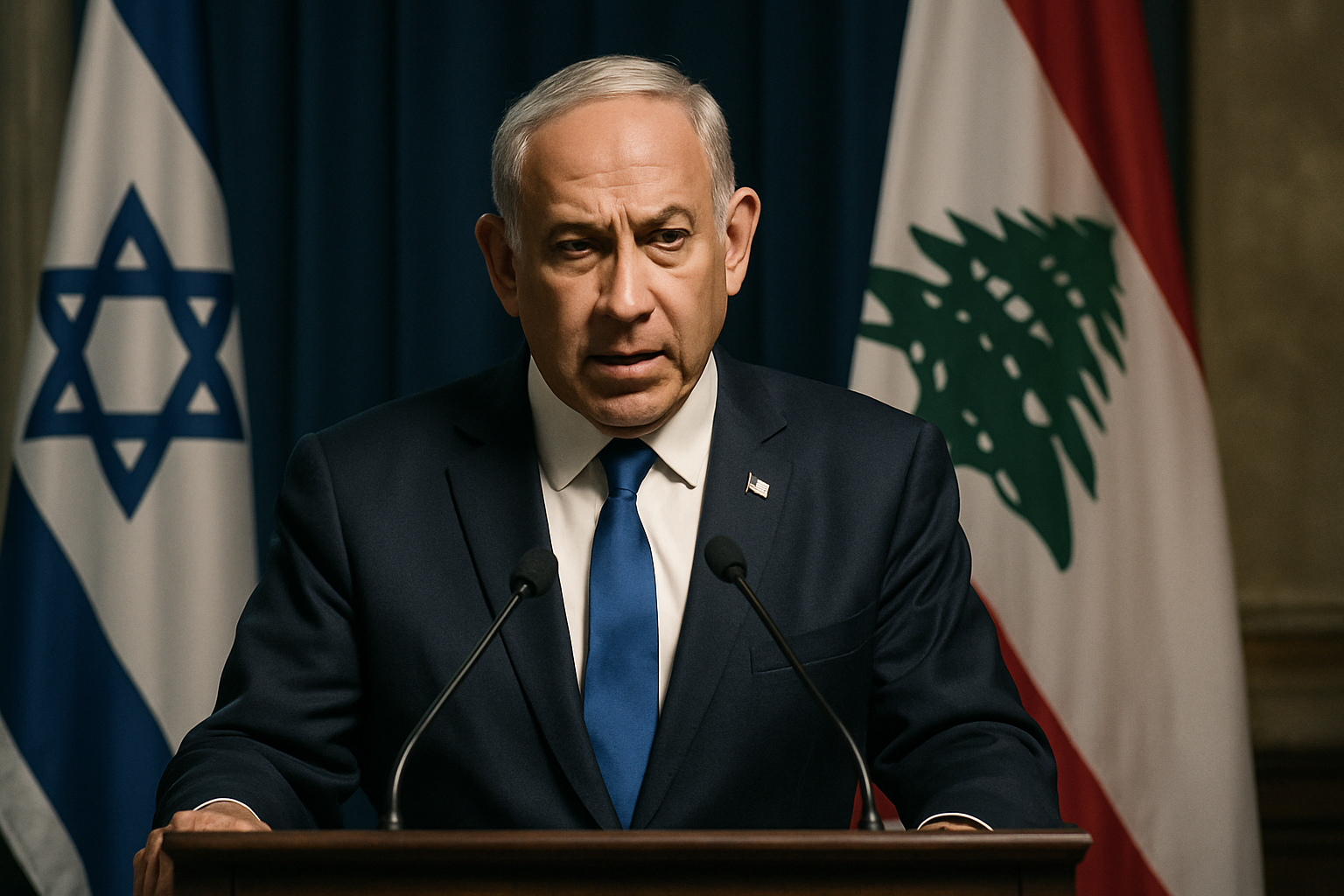
Israeli Prime Minister Benjamin Netanyahu announced plans to initiate direct negotiations with Lebanon "as soon as possible," even as his forces conducted the deadliest bombardment of the country since the conflict began in March, killing over 254 people in a single day. The announcement comes as Pakistan successfully mediated a historic ceasefire between the United States and Iran, ending what UN Secretary-General António Guterres called "the greatest test of multilateral cooperation in the modern era."
Speaking Thursday, Netanyahu stated that Israel had ordered the start of peace negotiations with Lebanon that would focus on the disarmament of Hezbollah and securing lasting peace between the two countries. The declaration came just hours after Israeli forces launched their largest coordinated strike against Lebanon, targeting over 100 Hezbollah sites across Beirut, the Bekaa Valley, and southern Lebanon.
Critical Diplomatic Breakthrough Amid Escalating Violence
The Israeli leader's announcement coincided with Pakistan's diplomatic triumph in mediating the "Islamabad Accord" - a historic ceasefire between the US and Iran reached just 88 minutes before President Trump's "whole civilization will die tonight" deadline. Pakistani Prime Minister Shehbaz Sharif and Field Marshal Asim Munir successfully facilitated the breakthrough through round-the-clock contact with VP JD Vance and Iranian officials.
However, a critical loophole emerged in the ceasefire framework. While Pakistan stated the agreement "covers all fronts including Lebanon," Netanyahu explicitly declared that Lebanon was not covered by the ceasefire arrangement, creating a dangerous gap in the diplomatic breakthrough that threatens to unravel the broader peace framework.
"Due to repeated calls from Beirut and the need for regional stability, we are prepared to begin direct negotiations with Lebanon immediately."
— Benjamin Netanyahu, Israeli Prime Minister
Humanitarian Catastrophe in Lebanon
The humanitarian crisis in Lebanon has reached unprecedented proportions, with over 1.2 million people displaced - representing 25% of the country's population. Emergency shelters are overwhelmed, forcing thousands to sleep on the streets of Beirut. The systematic targeting of medical personnel continues to violate international humanitarian law, with 26 paramedics killed and 51 wounded since March 2.
The deadliest single incident occurred at the Burj Qalaouiyah primary healthcare center in the Bint Jbeil district, where Israeli strikes killed 12 medical workers including doctors, nurses, and paramedics. Israeli military spokesman Avichai Adraee threatened strikes against ambulances and medical facilities, claiming Hezbollah was using them for military purposes - allegations categorically denied by the organization.
French President Emmanuel Macron offered to host direct Israel-Lebanon talks in Paris, marking the first such diplomatic initiative since the complete collapse of the November 2024 US-French brokered ceasefire. Sweden provided 65 million kronor in humanitarian aid, while Turkey warned against what it called Israel's use of "new genocide" tactics under the pretext of fighting Hezbollah.
Pakistan's Historic Mediation Success
Pakistan's emergence as the crucial mediator in the US-Iran crisis represents a template-setting moment for 21st-century diplomacy. The breakthrough came after Foreign Minister Ishaq Dar publicly acknowledged Pakistan's role in facilitating "indirect talks" between the US and Iran through a "message relay system."
The success of Pakistani mediation demonstrates how middle powers can bridge major adversary divides when traditional diplomatic mechanisms fail. China provided "full support" for the Pakistan initiative, with German officials noting "positive signs" for the direct talks scheduled in Islamabad.
Oil prices crashed nearly 20% from $119.50 Brent to below $100 following the ceasefire announcement - the steepest decline in six years. Asian markets saw explosive rallies, with Pakistan's KSE-100 recording a historic 8.15% surge, while the aviation industry prepared for recovery from the 18,000+ flight cancellations that had paralyzed global travel.
Collapse of Previous Peace Frameworks
The current crisis stems from the complete breakdown of the November 2024 US-French ceasefire agreement between Israel and Hezbollah, which had held for over a year until March 2026. The collapse occurred following the death of Iranian Supreme Leader Ali Khamenei on March 1, when Hezbollah faced what analysts described as an "impossible choice" between maintaining the ceasefire or responding to Iranian pressure for retaliation.
Hezbollah ultimately chose what it called "Iranian solidarity over Lebanese sovereignty," declaring "resistance as the only option" and pulling Lebanon into the broader regional conflict. The organization's estimated 20,000 fighters have since conducted over 40 operations targeting northern Israeli military sites, including strikes that reached Haifa.
UN peacekeepers have also come under fire, with a UNIFIL base near Mais al-Jabal struck and one peacekeeper wounded - representing the first major breach of peacekeeping arrangements since the original ceasefire implementation. UNIFIL spokeswoman Kandice Ardiel described the situation as "precarious and volatile."
International Response and Regional Implications
The international community has reacted with alarm to the escalating violence despite the US-Iran ceasefire breakthrough. UK officials expressed being "deeply troubled" by the continued bombardment, while France called the attacks "unacceptable." Italy condemned the "bombings of the civilian population," showing unified European criticism of Israeli targeting of non-combatants.
Lebanese Prime Minister Nawaf Salam declared a national day of mourning and called for Arab coordination to stop Israeli attacks. The Lebanese government has firmly rejected any Israeli presence in the country, including proposed buffer zones, while calling for international intervention to protect civilians.
The crisis has broader regional implications, as it threatens to undermine the carefully preserved coalition of Saudi Arabia, UAE, Qatar, and Egypt that supported the diplomatic breakthrough with Iran. Egyptian President Abdel Fattah el-Sisi's warnings about avoiding "comprehensive chaos" across the region appear increasingly prescient as violence continues in Lebanon despite the broader ceasefire.
Nuclear Diplomacy and Strategic Context
The Lebanon crisis unfolds against the backdrop of a broader nuclear governance crisis, with the New START treaty having expired in February 2026 - marking the first time in over 50 years without US-Russia nuclear constraints. Iran continues its uranium enrichment at 60% purity with over 400 kilograms of weapons-grade material, sufficient for multiple nuclear weapons if weaponized.
The original crisis emerged from the collapse of US-Iran nuclear talks in Geneva, despite achieving what diplomats described as "broad agreement on guiding principles" - the most progress since the 2018 JCPOA breakdown. The fundamental disagreement persisted over scope, with Iran demanding nuclear-only talks while the US insisted on comprehensive agreements including ballistic missiles, regional proxies, and human rights issues.
Looking Forward: Critical Diplomatic Window
The two-week ceasefire window created by Pakistani mediation represents a critical opportunity for broader diplomatic engagement. Scheduled talks in Islamabad featuring potentially VP JD Vance, Steve Witkoff, and Jared Kushner represent the most direct US-Iran diplomatic engagement in decades, with Iran's 10-point proposal addressing Hormuz protocols, sanctions relief, regional conflicts, and security guarantees.
However, the continued violence in Lebanon threatens to derail this diplomatic progress. Iran has indicated it may not attend the Friday negotiations unless a comprehensive ceasefire is enforced on all fronts, including Lebanon. This creates a dangerous situation where the exclusion of Lebanon from the ceasefire framework could collapse the broader diplomatic breakthrough.
Netanyahu's announcement of direct negotiations with Lebanon, while continuing military operations, represents the kind of diplomatic complexity that has characterized this crisis. The success or failure of containing the Lebanese escalation while preserving the US-Iran ceasefire will determine whether innovative diplomacy can triumph over military solutions in resolving 21st-century international conflicts.
"This represents the greatest test of multilateral cooperation and crisis management in the modern era. Success or failure will establish precedents for how the international community addresses territorial and nuclear disputes for decades to come."
— António Guterres, UN Secretary-General
As the most dangerous crisis since the Cold War enters this critical phase, the international community watches to see whether Pakistan's diplomatic innovation can bridge the remaining gaps between adversaries, or whether the fragility of negotiated agreements when underlying political tensions remain unresolved will lead to a broader regional war with global consequences.
The template-setting implications of these events extend far beyond the Middle East, potentially determining whether diplomatic credibility can be strengthened through multilateral cooperation or whether military escalation becomes the preferred solution for future international crises. The coming days will prove decisive in shaping conflict resolution approaches for the remainder of the 21st century.