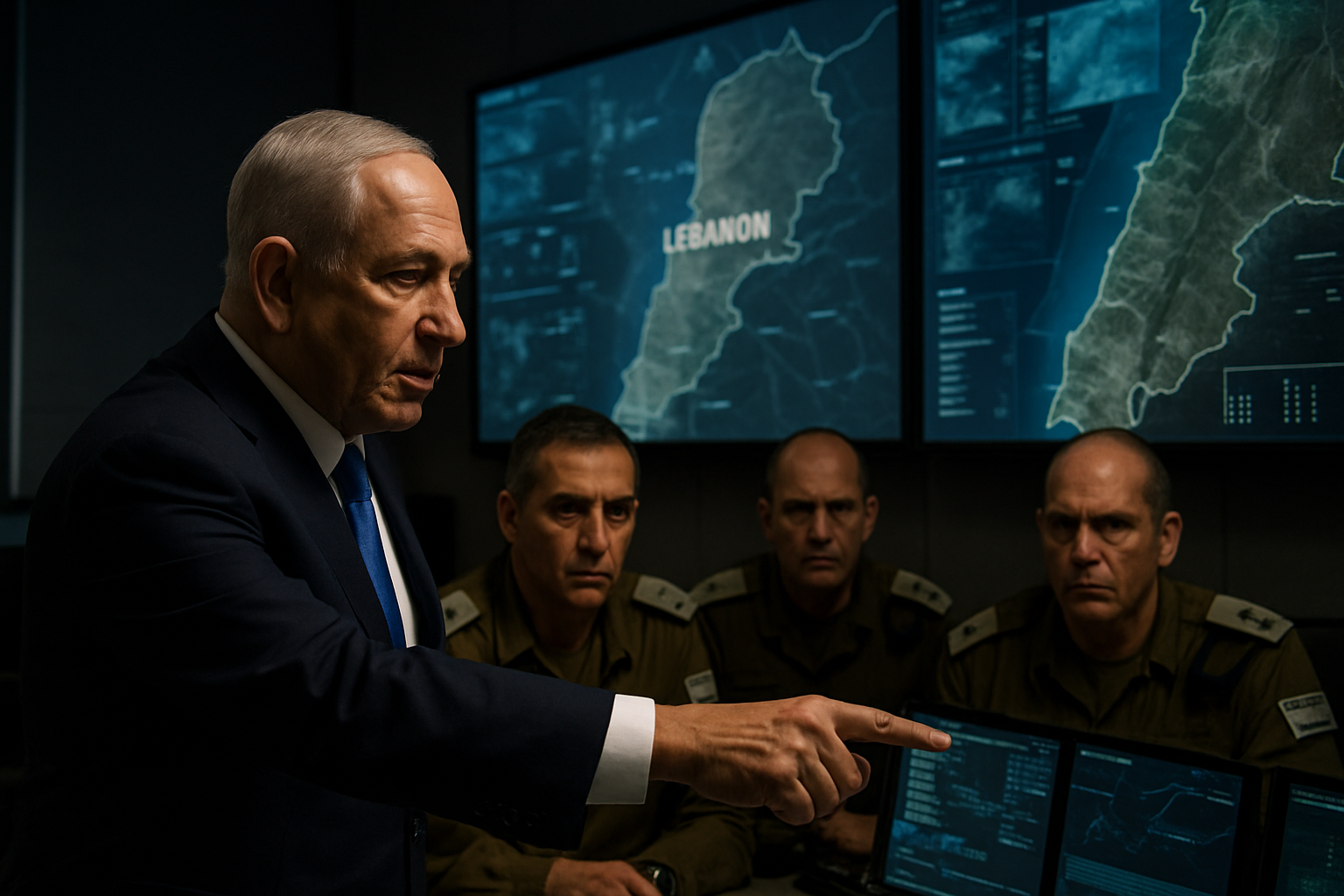
Israeli Prime Minister Benjamin Netanyahu announced on Sunday that Israel will expand its military operations and security zones in southern Lebanon, vowing to "fundamentally change the situation in the north" as the conflict with Hezbollah intensifies into its fourth week.
During a visit to northern Israel, Netanyahu declared that Israeli forces would widen what he called the "existing security strip" in Lebanon while continuing operations against the Iranian-backed Hezbollah militant group. "We are determined to fundamentally change the situation in the north," he stated, adding that "Hezbollah still has residual capability to fire rockets at us."
Escalating Military Operations
The announcement represents a significant escalation in Israel's military campaign, which began following the collapse of the November 2024 US-French brokered ceasefire. Israeli Defense Forces (IDF) have been conducting what they describe as "limited and targeted operations" against Hezbollah positions throughout southern Lebanon, but Sunday's declaration signals a more expansive approach to establishing Israeli control over Lebanese territory.
According to multiple international reports, Israeli forces have already moved beyond the five positions held since the ceasefire agreement to target "new locations" across southern Lebanon. The operations have focused on Hezbollah strongholds in the Bekaa Valley, southern Lebanon positions, and Beirut's southern suburbs, representing the most intensive campaign since the ceasefire breakdown.
IDF Chief of Staff Eyal Zamir described the current operation as "just beginning," with military sources indicating "several weeks" of continued ground operations are planned. Israeli forces have also destroyed strategic infrastructure, including the Qasmiyeh Bridge over the Litani River, and issued demolition orders for homes near the border.
Humanitarian Crisis Deepens
The expanded operations have created an unprecedented humanitarian crisis in Lebanon. The Lebanese Health Ministry reports over 800 killed and more than 800,000 displaced since the resumption of hostilities. The displacement figure represents nearly 20% of Lebanon's population, overwhelming emergency shelters and forcing thousands to sleep on Beirut streets.
Particularly concerning is the systematic targeting of medical personnel and facilities. According to official Lebanese statistics, 26 paramedics have been killed and 51 wounded since March 2, raising serious concerns about violations of international humanitarian law. The deadliest single attack occurred at the Burj Qalaouiyah primary healthcare center in Bint Jbeil district, where 12 medical workers, including doctors, nurses, and paramedics, were killed.
"Israeli military spokesperson Avichai Adraee has threatened strikes against ambulances and medical facilities, claiming Hezbollah is using ambulances extensively for military purposes without providing evidence."
— Lebanese Health Ministry Official
Hezbollah categorically denies these allegations, while international human rights organizations have called for investigations into potential Geneva Conventions violations.
Ceasefire Collapse and Regional Context
The current escalation stems from the complete breakdown of the November 2024 US-French brokered ceasefire agreement, which had held for over a year despite minor violations. The ceasefire required both Israeli forces and Hezbollah to withdraw from southern Lebanon, with Lebanese army and UN peacekeepers establishing buffer zones.
The agreement collapsed when Hezbollah faced what regional analysts describe as an "impossible choice" between maintaining the ceasefire and responding to Iranian pressure for retaliation following the death of Iran's Supreme Leader Ali Khamenei on March 1, 2026. Hezbollah ultimately chose Iranian solidarity, declaring that "resistance is the only option."
This decision pulled Lebanon into the broader Iran-Israel conflict that has engulfed the Middle East since late February 2026. The regional war, known as Operation Epic Fury, has caused unprecedented global disruptions, including the cancellation of over 18,000 flights worldwide and oil prices surging past $100 per barrel due to the closure of the Strait of Hormuz.
International Response and Diplomatic Efforts
French President Emmanuel Macron has offered to host direct Israel-Lebanon talks in Paris, marking the first such negotiations since the ceasefire collapse. The offer represents a significant diplomatic initiative as international mediators work to prevent the Lebanon conflict from escalating into a broader regional war.
UN Secretary-General António Guterres, during a visit to Beirut, urged diplomatic solutions and called the overall regional situation "the greatest test of multilateral cooperation in the modern era." However, UN peacekeepers themselves have come under attack, with a UNIFIL base near Mais al-Jabal struck, wounding one peacekeeper.
Turkey has warned that Israel is committing a "new genocide" under the pretext of targeting Hezbollah, while Sweden has provided 65 million kronor in humanitarian aid responding to UN appeals for assistance to displaced Lebanese civilians.
Hezbollah's Military Response
Despite suffering significant losses, Hezbollah continues to maintain substantial military capabilities. The organization, estimated to have around 20,000 fighters, has conducted over 40 operations targeting northern Israeli military sites, with some attacks reaching as far as Haifa. The group has declared "direct confrontations" with Israeli forces in southern Lebanon, marking a significant operational escalation.
Military analysts note that Hezbollah's decision to join the regional conflict represents a fundamental shift from the organization's previous strategy of maintaining relative restraint along the Lebanese border. This change reflects the broader realignment of Iranian proxy groups following the regional crisis that began with Khamenei's death.
Strategic Implications
Netanyahu's announcement of expanded security zones carries significant strategic implications beyond the immediate military objectives. Israeli Defense Minister Israel Katz has warned that Lebanon could face territorial losses and infrastructure damage unless Hezbollah is disarmed, linking the return of displaced Lebanese civilians to Israeli security guarantees.
The expansion of Israeli control over Lebanese territory raises questions about long-term Israeli intentions and the viability of Lebanon's sovereignty. International legal experts warn that prolonged Israeli occupation of expanded areas could constitute de facto annexation, similar to concerns raised about Israeli policies in other occupied territories.
Global Crisis Context
The Lebanon operations occur within the broader context of the most serious Middle East crisis since the end of the Cold War. The regional conflict has created unprecedented global disruptions, affecting energy markets, aviation networks, and supply chains worldwide.
The crisis has also exposed the fragility of international crisis management mechanisms in the multipolar era. The rapid transition from diplomatic engagement to military confrontation has raised questions about the effectiveness of traditional conflict resolution approaches in managing modern regional crises.
Looking Forward
As Netanyahu's expanded operations continue, the coming days and weeks will be crucial in determining whether diplomatic intervention can successfully contain the Lebanon-Israel fighting or whether it represents the beginning of a prolonged regional warfare with devastating humanitarian consequences.
The international community faces the challenge of managing multiple simultaneous crises: the broader Iran conflict, the Lebanese humanitarian catastrophe, and the succession crisis in Tehran following Khamenei's death. Success or failure in containing these interconnected crises will likely establish precedents for 21st-century conflict resolution approaches with implications extending far beyond the current events.
For now, Netanyahu's determination to "fundamentally change the situation in the north" signals that Israel is prepared for an extended campaign, regardless of international diplomatic pressure or humanitarian concerns. The expanded security zones represent not just a tactical military decision, but a strategic commitment to reshaping the security architecture of the Israel-Lebanon border through force.