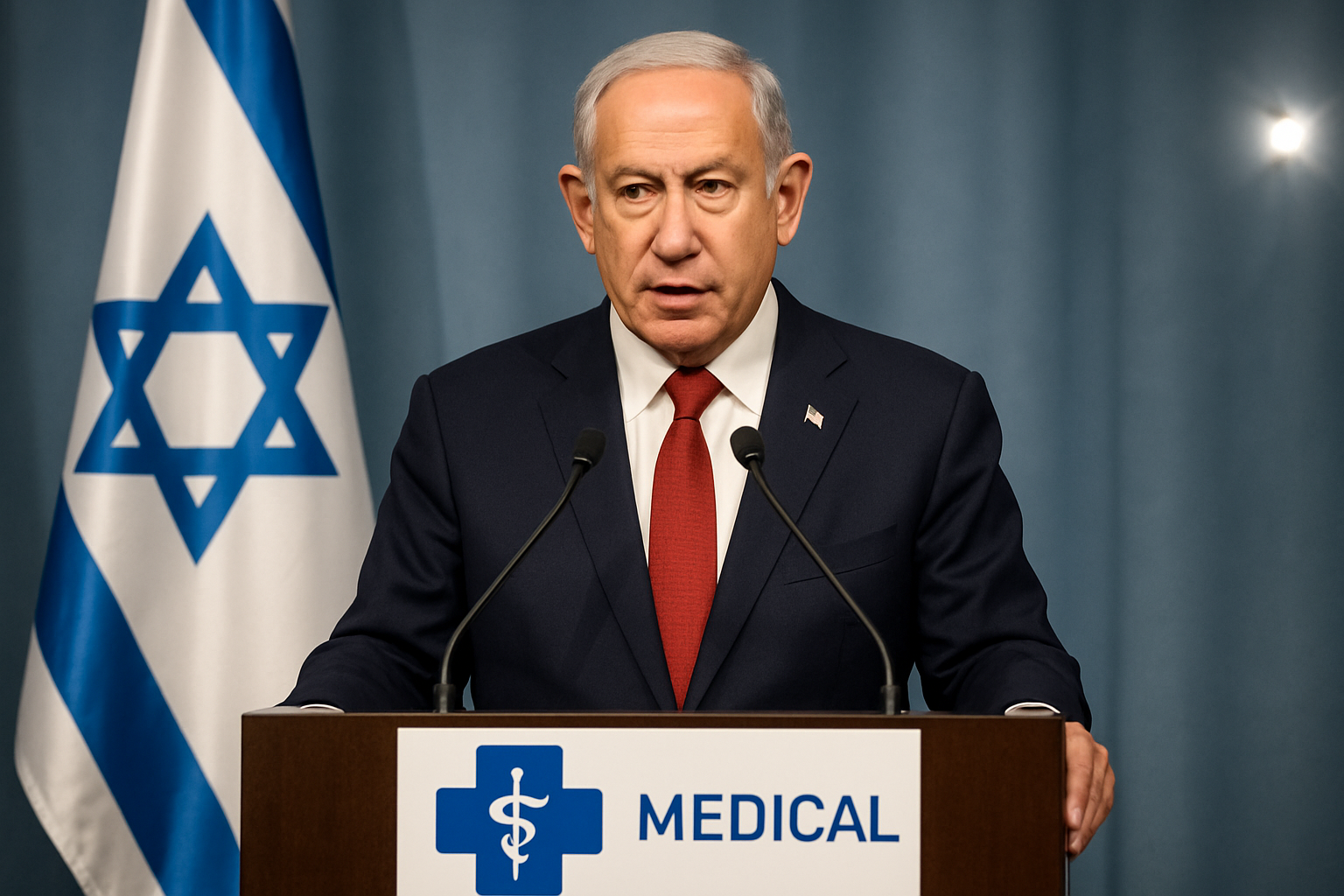
Israeli Prime Minister Benjamin Netanyahu has disclosed that he successfully underwent treatment for early-stage prostate cancer, revealing the diagnosis only as he released his annual medical report Friday, which had been delayed by two months to prevent exploitation by adversaries during a volatile period in the Middle East.
Netanyahu, 76, said in a statement released alongside his medical report that the malignant tumor was discovered during a routine checkup and was successfully treated with radiation therapy. The Prime Minister's office confirmed that "targeted treatment" had completely eliminated the cancer, leaving no trace of the disease.
Strategic Delay to Counter Disinformation
The Israeli leader explained his decision to withhold the diagnosis, stating he delayed the release of his annual medical report specifically to prevent Iran from using it as propaganda material during the ongoing regional crisis. "I delayed this by two months so that it wouldn't be used as propaganda by Iran," Netanyahu said, referring to Iran's extensive disinformation campaigns targeting Israeli leadership.
This disclosure comes at a particularly sensitive time, with Netanyahu having been the subject of death rumors circulated by Iranian media and social platforms earlier this year. In March, he posted a video response from a Jerusalem café to counter false claims about his death, demonstrating the intensity of the information warfare surrounding his leadership during regional tensions.
Medical Details and Prognosis
According to medical sources familiar with the case, the cancer was detected at an early stage during routine screening. The treatment involved radiation therapy, a standard approach for early-stage prostate cancer that offers excellent prognosis when caught early. Netanyahu's medical team confirmed that the treatment was successful and that follow-up examinations show no evidence of remaining cancer cells.
"Thanks to God, I have defeated this too,"
— Benjamin Netanyahu, on social media
The Prime Minister had previously undergone surgery for an enlarged prostate in December 2024, an operation that was disclosed publicly at the time. However, the cancer diagnosis remained undisclosed until Friday's announcement, highlighting the delicate balance between medical transparency and national security concerns during wartime.
Historical Context and Leadership Continuity
Netanyahu, Israel's longest-serving prime minister, has maintained an active schedule throughout his treatment period, continuing to lead the country through one of its most challenging periods. The 76-year-old leader has been at the center of major regional developments, including expanded military operations in Lebanon and ongoing diplomatic efforts to address multiple conflict zones.
His decision to delay disclosure reflects the complex intersection of personal health, national leadership, and information warfare in modern conflict. Medical experts note that early-stage prostate cancer treatment typically doesn't impair daily functioning, allowing leaders to continue their duties while undergoing therapy.
Regional Security Implications
The timing of this disclosure is particularly significant given the ongoing tensions in the Middle East. Netanyahu's health has been a subject of speculation and disinformation campaigns by Iranian state media, which have used health-related rumors as part of broader propaganda efforts designed to destabilize Israeli leadership and public confidence.
Intelligence sources indicate that Iranian information warfare operations have consistently targeted high-profile Israeli figures with health speculation, making Netanyahu's decision to control the timing and narrative of his medical disclosure a calculated strategic choice.
Medical Transparency in Leadership
The case highlights the ongoing challenge political leaders face in balancing medical transparency with security considerations. While public officials generally have obligations to disclose health issues that might affect their ability to serve, wartime conditions create additional complexities around the timing and manner of such disclosures.
Medical experts emphasize that prostate cancer, when detected early, has excellent treatment outcomes. The five-year survival rate for early-stage prostate cancer exceeds 99%, and modern radiation therapy techniques minimize side effects while maximizing effectiveness.
Broader Health Context
Netanyahu's disclosure comes during what medical experts are calling the "Therapeutic Revolution of 2026," a period marked by significant advances in cancer detection and treatment worldwide. Early detection and targeted therapy approaches have dramatically improved outcomes for prostate cancer patients globally.
Recent international research has emphasized the importance of regular screening for men over 70, particularly those in high-stress leadership positions. The case also underscores the evolution of cancer treatment from traditional approaches to precision medicine based on individual genetic and molecular profiles.
Impact on Israeli Politics
The revelation is unlikely to immediately affect Netanyahu's political standing, as his medical team has confirmed his full recovery and ability to continue serving. However, it does add another dimension to discussions about leadership succession and continuity planning within Israeli political circles.
Political analysts note that Netanyahu's strategic handling of the disclosure—controlling the timing and narrative while emphasizing successful treatment—reflects his characteristic approach to crisis management and public communications.
Looking Forward
As Netanyahu continues in his role as Prime Minister, his successful treatment and strategic disclosure provide a case study in modern leadership communication during crisis periods. The balance between personal privacy, public accountability, and national security remains a delicate one for leaders worldwide.
The Prime Minister's medical team has indicated that regular follow-up examinations will continue as part of standard post-treatment monitoring, but no additional health concerns have been identified. Netanyahu's office has stated that he will maintain his full schedule of official duties and continue leading Israel through current regional challenges.
This disclosure also serves as a reminder of the human element in political leadership, even as leaders navigate complex international crises and security challenges. Netanyahu's successful treatment and return to full duties demonstrate the advances in modern cancer care that allow leaders to continue serving while addressing serious health challenges.