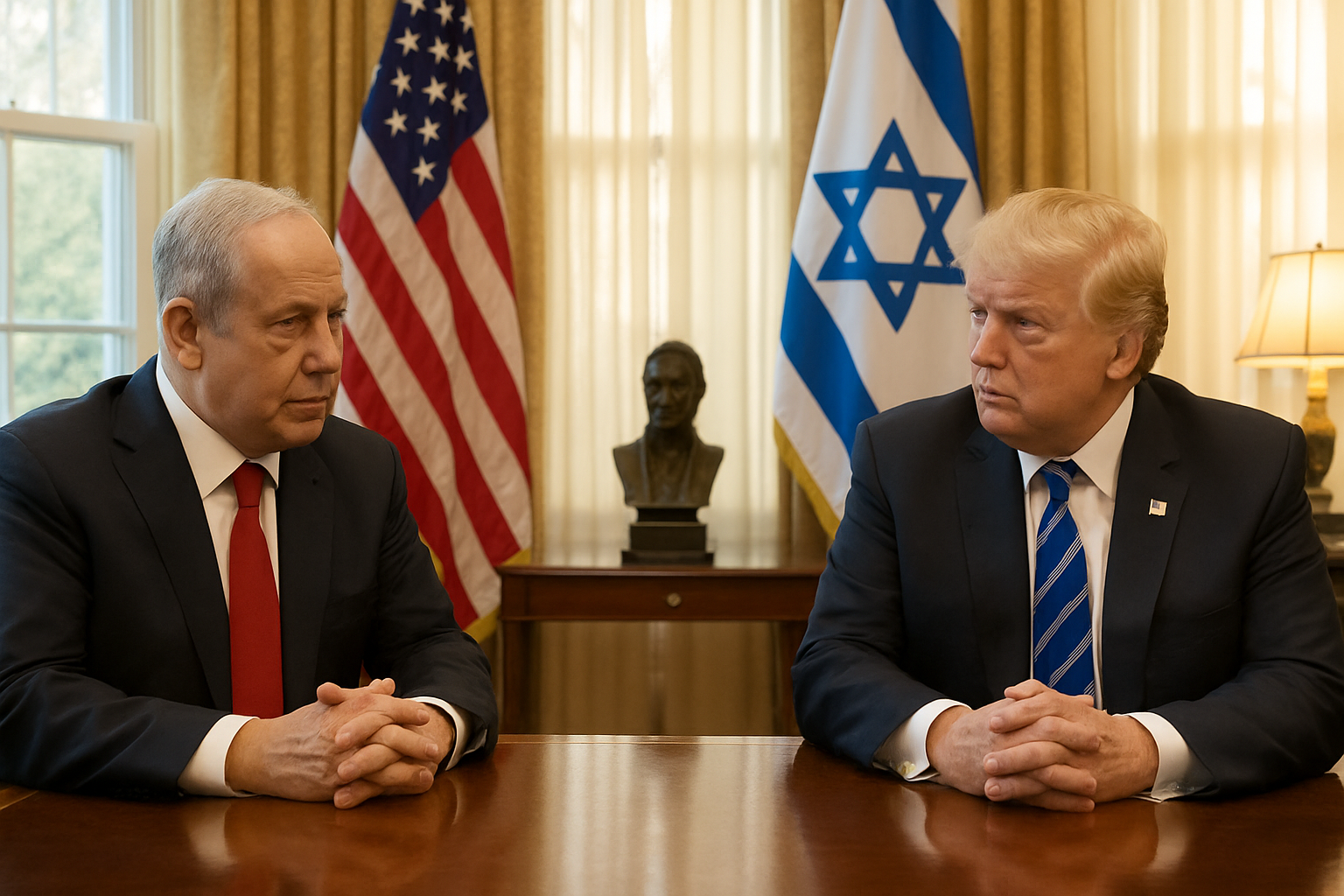
Israeli Prime Minister Benjamin Netanyahu will meet with President Donald Trump at the White House on Wednesday, February 11, 2026, to coordinate strategy on ongoing Iran nuclear negotiations and discuss broader regional security issues.
The high-level bilateral meeting comes at a critical juncture in Middle East diplomacy, just days after historic US-Iran nuclear talks resumed in Muscat, Oman, on February 7. According to Netanyahu's office, the Israeli leader "appreciates the opportunity to discuss negotiations with Iran" directly with Trump as diplomatic engagement intensifies.
Strategic Timing Amid Nuclear Diplomacy
The meeting is strategically scheduled one day before Trump's Board of Peace summit on February 19, which will bring together 27 international leaders at the Donald Trump Institute of Peace in Washington. The proximity of these events underscores the interconnected nature of regional diplomatic initiatives currently underway.
Both the Azerbaijan and Iraqi sources confirm that Netanyahu's primary focus will be ensuring Iran nuclear talks address what Israel views as comprehensive security threats, including ballistic missile capabilities and support for regional proxy forces. Netanyahu's office emphasized that "all negotiations must include limiting ballistic missiles and ending support for Iranian axis."
The Trump administration has maintained a dual-track approach of diplomatic engagement backed by maximum pressure. Hours after declaring Iran nuclear talks "very good" on February 7, Trump signed executive orders threatening 25% tariffs on countries trading with Iran, demonstrating continued economic coercion alongside diplomatic outreach.
Iran Nuclear Talks Progress and Challenges
The resumption of US-Iran nuclear negotiations in Oman represents the most significant diplomatic engagement between the two nations since the Joint Comprehensive Plan of Action (JCPOA) collapsed in 2018. Iranian Foreign Minister Abbas Araghchi described talks with US Special Envoy Steve Witkoff as having a "positive atmosphere" despite fundamental disagreements.
Iran currently enriches uranium at 60% purity, significantly above the 3.67% limit established in the original JCPOA and approaching the 90% threshold required for weapons-grade material. Intelligence sources suggest Iran is considering a three-year enrichment halt and transferring existing stockpiles to Russia as potential concessions.
However, critical scope disagreements persist. Iran maintains "red lines" excluding ballistic missiles and regional proxy activities from nuclear-only talks, while US Secretary of State Marco Rubio insists any comprehensive agreement must address Iran's missile program and support for armed groups throughout the region.
Israeli Security Concerns
For Israel, incomplete nuclear agreements that address only uranium enrichment while leaving Iran's missile capabilities and proxy network intact represent an existential security threat. The Netanyahu government has consistently argued that Iran's ballistic missile program and support for groups like Hezbollah, Hamas, and the Houthis constitute equal threats to regional stability.
Recent military tensions underscore these concerns. US forces shot down an Iranian Shahed-139 drone that aggressively approached the USS Abraham Lincoln in the Arabian Sea, while Iranian Revolutionary Guard Corps vessels harassed US-flagged tankers in the Strait of Hormuz during the same period when diplomatic talks were proceeding.
The military incidents highlight the complex challenge of maintaining deterrence while pursuing diplomatic solutions. Oil prices rose more than $1 per barrel following the confrontations, demonstrating the global economic implications of Middle Eastern tensions.
Regional Coalition Building
Unprecedented regional support has emerged for the diplomatic process, with Saudi Arabia, the UAE, Qatar, and Egypt all backing negotiations—a remarkable Middle Eastern consensus aimed at preventing military confrontation. The Persian Gulf handles approximately 40% of global oil transit, making regional stability crucial for international energy markets.
Oman's role as neutral mediator has proved essential, leveraging its historical mediation experience from the 2015 JCPOA negotiations. The venue change from Istanbul to Muscat at Iran's request enabled nuclear-focused discussions while excluding broader regional issues Iran considers "red lines."
Broader Diplomatic Context
The Netanyahu-Trump meeting occurs within a broader context of simultaneous diplomatic initiatives. Ukraine-Russia peace talks in Abu Dhabi achieved a breakthrough prisoner exchange of 314 individuals and restored US-Russia military communications after a four-year suspension. The New START nuclear treaty between the US and Russia expired on February 5, eliminating bilateral nuclear constraints for the first time in over 50 years.
These parallel diplomatic tracks demonstrate the Trump administration's comprehensive approach to multiple global challenges, seeking to prevent military confrontations through sustained engagement while maintaining pressure on adversaries.
Implementation Challenges Ahead
Any successful Iran nuclear agreement requires unprecedented verification mechanisms given Iran's advanced centrifuge technology and expanded nuclear infrastructure developed since 2018. Technical complexity far exceeds the original JCPOA framework, requiring innovative monitoring and enforcement mechanisms.
Domestic pressures in Iran, including over 42,000 protest arrests and severe economic sanctions, create regime survival imperatives for sanctions relief. However, Iran's leadership appears to prioritize maintaining nuclear capabilities over economic recovery, as evidenced by recent hardline statements rejecting uranium enrichment limitations.
For the Trump administration, balancing Republican congressional pressure viewing engagement as appeasement against foreign policy victory needs presents ongoing political challenges. The dual-track approach of negotiation backed by economic pressure represents an attempt to maintain leverage while exploring diplomatic solutions.
Stakes for Regional Stability
The outcomes of Wednesday's Netanyahu-Trump coordination meeting could significantly influence the trajectory of Iran nuclear negotiations and broader Middle East stability. Success in achieving Israeli security concerns within a comprehensive Iran agreement could prevent regional military confrontation and provide a diplomatic template for other conflicts.
Failure to address Israeli existential security concerns, or breakdown of the Iran nuclear talks entirely, may accelerate military solutions that could destabilize the Persian Gulf region and trigger broader regional conflict with global implications.
The meeting represents a critical test of whether innovative diplomatic approaches can bridge decade-old security challenges in the Middle East or whether the region faces another cycle of escalating tensions and potential military confrontation. The international community will be closely monitoring the coordination between Washington and Jerusalem as these high-stakes negotiations continue in the coming weeks.