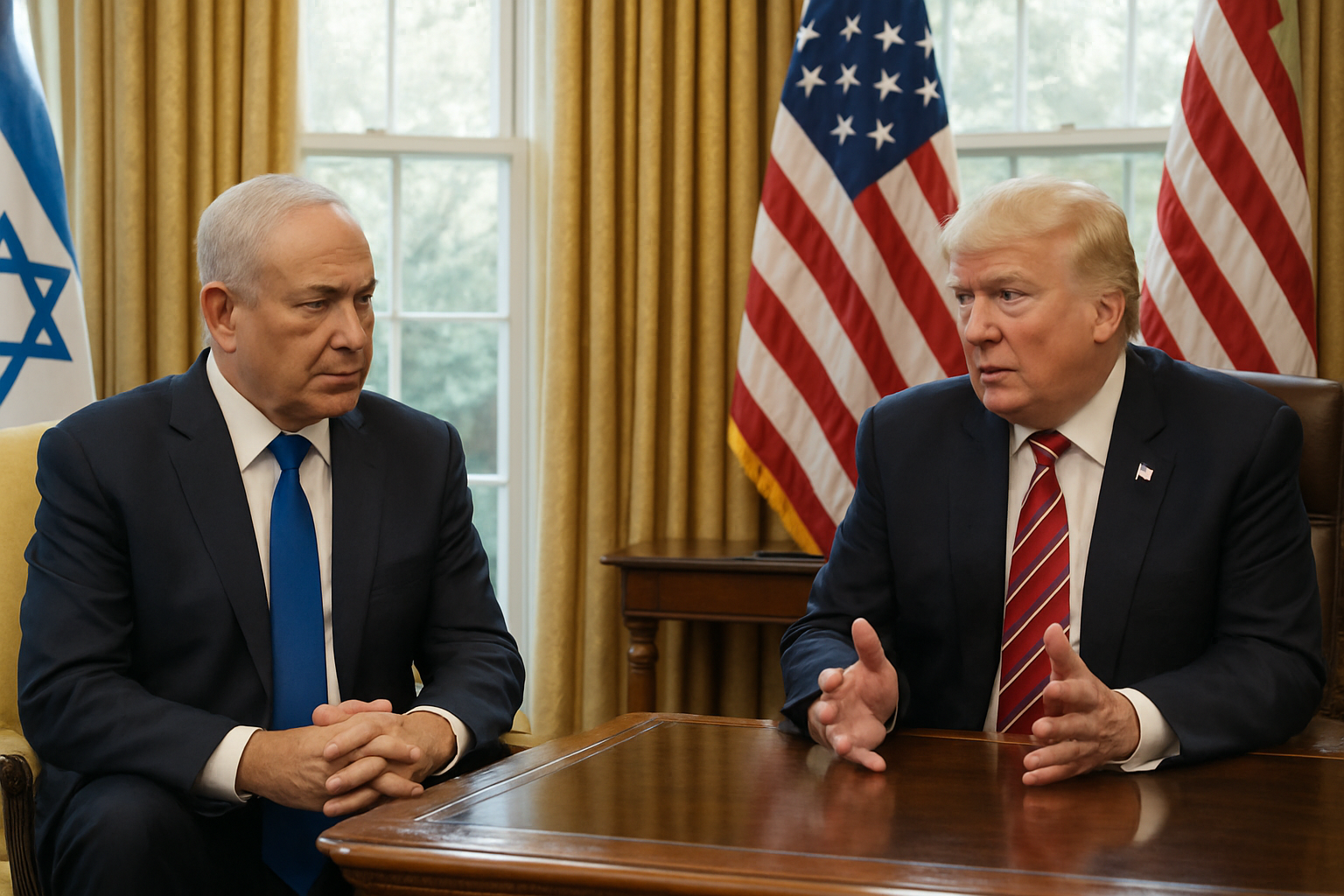
Israeli Prime Minister Benjamin Netanyahu is arriving in Washington for high-stakes discussions with President Donald Trump, as the United States navigates complex nuclear negotiations with Iran while managing ongoing challenges in Gaza ceasefire implementation.
The meeting, scheduled for February 11, 2026, comes at a critical juncture in Middle Eastern diplomacy. Netanyahu's office emphasizes that "all negotiations must include limiting ballistic missiles, ending support for Iranian axis," establishing clear Israeli red lines for comprehensive regional security arrangements.
Iran Nuclear Talks Create Urgent Diplomatic Timeline
The Netanyahu-Trump bilateral follows directly after the conclusion of historic U.S.-Iran nuclear talks in Muscat, Oman, where both sides agreed to continue negotiations despite fundamental disagreements. Iranian Foreign Minister Abbas Araghchi described a "positive atmosphere" while maintaining firm exclusion of ballistic missiles and regional proxy activities from nuclear-only discussions.
President Trump declared the February 7 talks "very good" with Iran "very eager to make a deal," yet significant obstacles remain. Iran continues enriching uranium at 60% purity – far exceeding the 3.67% limit set by the original JCPOA agreement and approaching the 90% threshold required for weapons-grade material.
"The plan is that Iran is talking to us, and we'll see if we can do something. Otherwise, we'll see what happens."
— President Donald Trump
Intelligence sources suggest Iran may consider a three-year enrichment halt and transfer existing stockpiles to Russia as potential concessions. However, U.S. Secretary of State Marco Rubio insists any comprehensive agreement must address Iran's ballistic missile capabilities and support for regional armed groups – creating a fundamental scope disagreement that threatens progress.
Military Tensions Underscore Diplomatic Stakes
The diplomatic engagement occurs against a backdrop of escalating military incidents. A U.S. F-35C fighter jet from the USS Abraham Lincoln shot down an Iranian Shahed-139 drone that aggressively approached the carrier in the Arabian Sea, approximately 800 kilometers from Iran's coast. The same day, Iranian Revolutionary Guard vessels harassed a U.S.-flagged tanker in the strategic Strait of Hormuz.
These incidents, which drove oil prices up more than $1 per barrel, demonstrate the volatile security environment surrounding the negotiations. The USS Abraham Lincoln carrier strike group remains positioned in the region as both a deterrent and potential military option should diplomacy fail.
Gaza Ceasefire Implementation Challenges
Netanyahu's Washington visit also addresses mounting concerns over Gaza ceasefire violations and the stalled peace plan implementation. According to sources familiar with the discussions, Israel will inform the Trump administration that "phase 2 of Gaza peace plan is not moving," potentially requiring additional military operations to ensure Hamas disarmament and fulfill Trump's vision for the territory.
The Gaza Government Media Office has documented over 1,520 ceasefire violations since the October 10, 2025 truce, resulting in 556 Palestinian deaths during the supposed ceasefire period. These systematic violations threaten the broader regional peace framework that Trump has championed through initiatives like the Board of Peace summit scheduled for February 19, 2026.
International pressure is mounting from multiple directions. Eight Arab nations – Saudi Arabia, Jordan, Egypt, UAE, Qatar, Indonesia, Pakistan, and Turkey – have issued joint condemnations of the ceasefire violations. Over 400 European Union diplomats have called for increased pressure on Israeli authorities, while a European Left Coalition petition against EU-Israel partnerships has exceeded 400,000 signatures.
Regional Coalition Building and International Dynamics
The Netanyahu-Trump meeting occurs within an unprecedented regional diplomatic landscape. Saudi Arabia, the UAE, Qatar, and Egypt are backing the Iran nuclear negotiation process – representing remarkable Middle Eastern consensus for preventing military confrontation. This coalition recognizes the Persian Gulf's role in handling 40% of global oil transit and the regional investment in stability.
However, Israeli security concerns extend beyond nuclear weapons to Iran's comprehensive regional threat network. Netanyahu's position emphasizes that incomplete nuclear-only agreements would leave missile threats and proxy support networks – including Hezbollah, Hamas, and the Houthis – unaddressed, creating what Israel views as an existential security gap.
Domestic Pressures Influencing Policy
Both leaders face significant domestic constraints affecting their negotiating positions. Iran confronts severe internal pressure with over 42,000 protest arrests and economic sanctions creating regime survival imperatives for relief. The Trump administration must balance Republican hawk pressure viewing engagement with Iran as appeasement against the need for foreign policy victories.
Netanyahu's domestic situation includes ongoing legal challenges and coalition management issues, while also dealing with international criticism over West Bank settlement expansion policies approved by his security cabinet. These measures, described by Finance Minister Bezalel Smotrich as removing "bureaucratic obstacles" to settlement growth, have drawn widespread international condemnation and complicated U.S.-Israel relations.
Verification and Implementation Challenges
Any future agreement with Iran would require unprecedented verification mechanisms far exceeding the complexity of the original JCPOA. Iran's nuclear infrastructure has advanced significantly since 2018, incorporating sophisticated centrifuge technology and expanded facilities that would demand entirely new monitoring frameworks.
The recent Iranian decision to seal all entrances to the Isfahan nuclear facility with earth and concrete – captured by satellite imagery from the Washington Institute for Science and International Security – demonstrates Tehran's preparation for potential military scenarios despite ongoing diplomatic engagement.
Strategic Implications for Regional Architecture
The outcome of the Netanyahu-Trump discussions will significantly influence the broader Middle Eastern security architecture. Success in coordinating positions on both Iran and Gaza could establish a template for innovative diplomatic solutions to decade-old regional challenges. Failure might accelerate military solutions, fundamentally reshaping regional geopolitics with global implications.
The meeting also occurs within the broader context of Trump's multi-front diplomatic initiatives, including the February 19 Board of Peace summit featuring 27 member nations and over $1 billion in Gaza reconstruction commitments, with Hungarian Prime Minister Viktor Orbán confirmed to attend.
Looking Ahead: Critical Weeks for Regional Stability
The coming weeks will prove decisive for Middle Eastern stability. The framework establishment achieved in Oman represents diplomatic progress despite substantive disagreements on scope and substance. However, hardline positions on both sides suggest that innovative compromise solutions will be required to bridge challenges that have persisted for over a decade.
International observers are closely monitoring whether this diplomatic momentum can translate into genuine breakthrough or represents another false start in regional conflict resolution. The stakes extend beyond bilateral relationships to encompass nuclear governance, territorial sovereignty enforcement, and the credibility of diplomatic solutions in an era of increasing great power competition.
As Netanyahu's flight path through Canadian airspace despite the International Criminal Court arrest warrant demonstrates, the geopolitical complexities surrounding this meeting extend far beyond the immediate regional challenges, touching on questions of international law enforcement and the evolving nature of diplomatic immunity in the 21st century.